


A Complete Guide for WH Chain: Everything You Need to Know About Welded Steel Chain Solutions
A WH chain represents a specialized type of welded steel chain designed for heavy-duty material handling and industrial applications. This robust chain solution enables efficient conveying, lifting, and power transmission across various sectors including agriculture, manufacturing, and construction. Industry professionals recognize WH chains for their strength, durability, and cost-effectiveness in demanding operational environments.
Engineers and facility managers value several key advantages:
- Standardized specifications ensure compatibility with existing conveyor systems and equipment across different manufacturers.
- Welded construction provides superior strength compared to mechanically assembled chains, eliminating the risk of link separation under load.
- Versatile design accommodates diverse applications from agricultural elevators to industrial conveyors and material handling systems.
- Cost-effective solution delivers reliable performance at competitive pricing compared to engineered class chains.
- Multiple size options allow precise matching of chain strength to application requirements.
- Global availability ensures replacement parts accessibility and technical support worldwide.
The WH chain system provides the foundation for reliable material handling operations in industrial and agricultural environments.
Key Takeaways
- WH chains are welded steel chains available in multiple sizes including WH78, WH82, WH124, WH132, and WH157 configurations.
- They support diverse applications including bucket elevators, drag conveyors, and general material handling systems.
- The WH78 chain configuration offers a compact solution for light to medium-duty applications requiring space efficiency.
- WH82 chain designs provide balanced performance for standard agricultural and industrial conveying operations.
- The WH124 and WH132 designations refer to medium-duty chains widely used in agricultural grain handling systems.
- WH157 chain represents heavy-duty capacity for demanding industrial applications requiring maximum strength.
- Proper selection requires matching chain specifications to load requirements, operating speed, and environmental conditions.
- Quality materials and heat treatment processes guarantee safe, reliable performance over extended service life.
What Is a WH Chain?
Basic Design
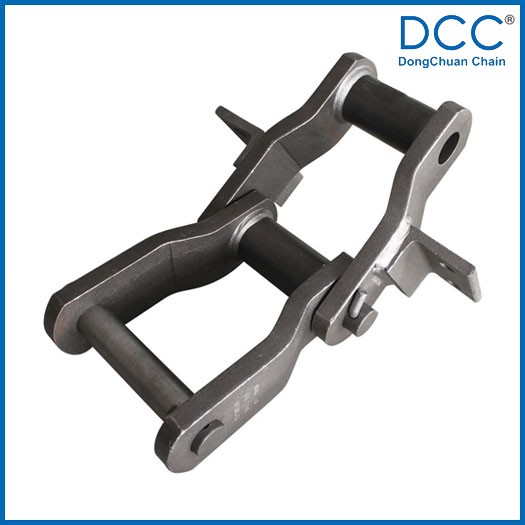
A WH chain consists of welded steel links formed into a continuous loop for power transmission and material conveyance. Manufacturers produce these chains by welding individual links together, creating a permanent connection that eliminates mechanical fasteners. The welded construction provides superior strength and reliability compared to mechanically assembled alternatives. Each link features a specific wire diameter and pitch dimension that determines the chain's load capacity and compatibility with sprockets. The robust design handles tension, impact, and abrasive conditions common in industrial environments. This construction method separates WH chains from engineered class chains that use removable pins and plates.
Note: The welded design means WH chains cannot be easily shortened or repaired in the field, requiring careful length specification during ordering.
| Component | Description |
Link Wire | Round steel wire forming the chain structure |
Weld Joint | Permanent connection between adjacent links |
Pitch | Distance between corresponding points on adjacent links |
Wire Diameter | Thickness of the steel wire used in construction |
Breaking Strength | Maximum load capacity before failure |
Working Load Limit | Recommended maximum operating load (typically 4:1 to 6:1 safety factor) |
Chain Categories
WH chains span several size categories to accommodate different application requirements. The WH78 chain provides a compact solution for lighter applications where space constraints exist. The WH82 chain offers balanced performance for standard agricultural conveying systems. Medium-duty applications benefit from WH124 chain and WH132 chain configurations that handle increased loads. The WH157 chain delivers maximum strength for heavy industrial operations. This range allows engineers to select chains precisely matched to their operational demands while maintaining cost efficiency.
Material Construction
The chains utilize high-carbon steel wire (typically 0.40% to 0.70% carbon content) that undergoes heat treatment processes including quenching and tempering to achieve optimal strength and wear resistance. Manufacturing procedures ensure consistent wire diameter and proper weld penetration at each joint. Quality control measures verify dimensional accuracy and structural integrity. Surface treatments may include zinc plating or hot-dip galvanizing to enhance corrosion resistance in challenging environments. This material selection and processing creates chains capable of sustained operation under demanding conditions.
Tip: Always verify the material specifications and any surface treatments when selecting chains for corrosive or high-temperature environments.
Types and Specifications
WH78 Chain
The WH78 chain features a compact design suitable for applications requiring space efficiency combined with moderate load capacity. This configuration typically uses approximately 7.8mm wire diameter with corresponding pitch dimensions optimized for smaller sprockets. Common applications include agricultural equipment, light industrial conveyors, and material handling systems where physical space limitations constrain component sizing. The reduced dimensions enable tighter turning radii and smaller drive assemblies while maintaining adequate strength for the intended loads.
- Light to medium-duty material handling operations
- Agricultural machinery with space constraints
- Compact conveyor systems in processing facilities
- Equipment requiring smaller sprocket diameters (minimum 8-10 teeth recommended)
WH82 Chain
The WH82 chain represents a widely adopted standard for agricultural and industrial applications. With approximately 8.2mm wire diameter, this configuration balances strength, cost, and versatility. Bucket elevators, drag conveyors, and agricultural handling systems frequently specify this chain size. The dimensions accommodate standard sprocket designs while providing reliable performance across diverse operating conditions. This popularity ensures excellent parts availability and broad technical support.
| Application | WH82 Usage | Typical Environment |
Grain elevators | Bucket attachment and vertical transport | Agricultural facilities |
Feed mills | Material conveying systems | Processing plants |
Fertilizer plants | Bulk material transport | Industrial settings |
General industry | Drag and scraper conveyors | Manufacturing floors |
WH124 Chain
The WH124 chain delivers increased capacity for demanding agricultural operations. The larger wire diameter (approximately 12.4mm) and pitch dimensions provide greater breaking strength while maintaining compatibility with appropriately sized sprockets. This configuration suits applications involving heavier materials, longer conveyor runs, or higher operating speeds where standard chains would experience premature wear. Agricultural operations handling bulk materials frequently select this specification for enhanced durability and extended service life.
WH132 Chain
Operating in a similar capacity range as WH124, the WH132 chain offers an alternative specification for medium-duty applications. With approximately 13.2mm wire diameter, the specific dimensions may better match certain equipment designs or sprocket configurations. Some manufacturers standardize on this size for particular product lines. Understanding the exact dimensional requirements of existing equipment guides selection between comparable chain specifications. Both WH124 and WH132 chains typically operate with working load limits in the medium-heavy range with safety factors of 4:1 to 6:1.
WH157 Chain
The WH157 chain provides maximum strength within the standard WH series. With approximately 15.7mm wire diameter, this configuration delivers the highest breaking strength for heavy industrial applications, large-capacity elevators, and operations involving significant loads or shock impacts. The larger wire diameter increases breaking strength substantially compared to smaller sizes. While more expensive, this specification proves economical in demanding applications where premature chain failure would create costly downtime or safety hazards.
Note: The WH157 chain requires larger sprockets and more robust mounting structures due to its increased dimensions and load capacity.
Specialized Variations
Beyond standard configurations, specialized variations address specific needs. Extended pitch chains accommodate unique equipment designs. Chains with attachment points enable bucket mounting or pusher dog installation. Corrosion-resistant treatments extend service life in wet or chemical environments. Enhanced heat-treated variants provide superior strength for extreme applications. These specialized options expand the versatility of the WH chain platform for demanding industrial requirements.
Installation and Setup
Planning Requirements
Successful chain installations begin with thorough system analysis. Engineers must assess the conveyed material characteristics including density, abrasiveness, and particle size. Operating parameters such as belt speed, capacity requirements, and duty cycle affect chain selection. Environmental factors including temperature, moisture, and chemical exposure influence material specifications. Document the conveyor length, elevation changes, and any special features requiring consideration. Accurate planning prevents costly specification errors and ensures optimal system performance consistent with conveyor safety standards.
Sprocket Selection
Choose sprockets with tooth counts and bore sizes matched to the selected chain specification and drive requirements. Minimum tooth counts should be 8-10 teeth for WH chains to ensure adequate engagement and minimize wear concentration on individual teeth. Sprocket material should withstand the operational environment and loading conditions. Proper alignment between drive and driven sprockets is critical for even chain wear and maximum service life. Verify that sprocket mounting provisions accommodate the installation configuration and shaft alignment tolerances.
Tip: Select sprockets with at least 8-10 teeth for WH chains to ensure adequate engagement and minimize wear concentration on individual teeth, extending both chain and sprocket service life.
Tension Adjustment
Install appropriate tensioning mechanisms to maintain proper chain tension throughout the service life. Take-up devices compensate for chain elongation that occurs during break-in (typically 1-2% initial stretch) and subsequent wear. Spring-loaded tensioners automatically maintain optimal tension, while manual adjusters require periodic attention. Insufficient tension causes sag, excessive wear, and potential sprocket tooth jumping. Over-tensioning increases component stress and accelerates wear. Manufacturer guidelines specify proper tension values for each chain size and application.
Alignment Procedures
Precise alignment between sprockets prevents uneven loading that accelerates wear. Use laser alignment tools or precision straightedges to verify parallel shaft positioning within 0.5 degrees tolerance. Check that sprockets sit in the same plane perpendicular to the shaft axis. Misalignment causes the chain to run to one side, creating concentrated wear patterns and premature failure. Document alignment measurements for future maintenance reference and verification during routine inspections.
Lubrication Requirements
Proper lubrication dramatically extends WH chain service life in most applications. Select lubricants appropriate for the operating temperature range (-20°C to +150°C typical) and environmental conditions. Application methods include drip systems, spray bars, or manual application depending on the installation accessibility and duty cycle. Lubricant must penetrate into the link interfaces where wear occurs. Establish regular lubrication intervals based on operating hours and observed chain condition. Some environments preclude lubrication due to contamination concerns with the conveyed material (food processing, pharmaceutical applications).
Testing and Break-In
After installation, operate the system at reduced speed (50% of rated capacity) and load to allow proper break-in for the first 8-24 hours of operation. Monitor the chain for unusual noise, binding, or irregular motion indicating installation issues. Check tension after the initial operating period as new chains experience initial elongation of 1-2%. Verify that all guards and safety devices function correctly before returning to full production operation. Address any identified issues promptly to prevent damage to the chain or associated equipment.
Technical Specifications
Dimensional Standards
WH chains follow established dimensional specifications ensuring compatibility with standard sprockets and equipment. Each chain size designates specific wire diameter and pitch measurements that determine component sizing. Tolerances on these dimensions (typically ±0.2mm for wire diameter) affect sprocket engagement and load distribution. Manufacturers provide detailed specification sheets documenting exact measurements for proper system design and equipment integration.
| Chain Size | Wire Diameter | Typical Pitch | Relative Breaking Strength | Working Load Category |
WH78 | ~7.8mm | 50-80mm | Moderate | Light-Medium |
WH82 | ~8.2mm | 50-80mm | Standard | Medium |
WH124 | ~12.4mm | 80-120mm | High | Medium-Heavy |
WH132 | ~13.2mm | 80-120mm | High | Medium-Heavy |
WH157 | ~15.7mm | 100-150mm | Very High | Heavy-Duty |
Note: Exact specifications vary by manufacturer. Always consult specific product documentation for precise dimensions and load ratings. Working load limits typically incorporate 4:1 to 6:1 safety factors below breaking strength.
Strength Ratings
Each WH chain size carries defined breaking strength and recommended working load limits. Breaking strength represents the force at which chain failure occurs under controlled testing conditions per welded steel chain industry standards. Working load limits typically range from 4:1 to 6:1 safety factors below breaking strength, accounting for dynamic loads, wear, and operating conditions. Engineers must consider peak loads including starting torque, material surges, and impact forces when calculating required chain capacity. Exceeding working load limits accelerates wear and increases failure risk substantially.
Material Properties
High-carbon steel provides the strength and wear resistance required for WH chain applications. Typical carbon content ranges from 0.40% to 0.70%, with specific compositions varying by manufacturer and application requirements. Heat treatment processes including austenitizing (heating to 850-950°C), quenching (rapid cooling in water or oil), and tempering (reheating to 400-650°C) develop optimal mechanical properties. Hardness testing verifies proper heat treatment, with surface hardness values typically ranging from 40-50 HRC (Rockwell C scale) for wear resistance. The material properties directly influence chain performance and service life in demanding environments.
Corrosion Resistance
Standard WH chains use plain steel that requires protection in corrosive environments. Zinc electroplating (typically 8-12 microns thickness) provides economical corrosion resistance for moderately challenging conditions. Hot-dip galvanizing (50-80 microns zinc coating) offers superior protection for outdoor installations or aggressive chemical exposure. Stainless steel chains (AISI 304 or 316 grades) address extreme corrosion requirements but at 3-5 times higher cost. Environmental assessment during planning determines the appropriate corrosion protection level based on expected service conditions.
Tip: In agricultural applications involving moisture and organic materials, regular inspection and preventive maintenance prove more economical than specifying premium corrosion-resistant materials for most installations.
Selection Guidelines
Application Assessment
Begin selection by clearly defining the operational requirements. Material characteristics including density (kg/m³), abrasiveness (measured by Mohs hardness scale), temperature, and particle size affect chain wear rates. Conveying capacity determines the mass flow rate (tonnes/hour) the chain must handle. Operating speed (meters/minute) influences dynamic forces and wear patterns. Duty cycle whether continuous (24/7 operation) or intermittent (8-16 hours/day) impacts component selection. Each application presents unique requirements that guide appropriate chain specification for optimal performance and longevity.
Load Calculations
Calculate the actual chain loading including material weight, conveyor components, and dynamic factors. For elevators, include the static load of filled buckets plus acceleration forces (typically 1.5-2.0 times static load). Conveyors require material weight calculations plus friction forces throughout the system length. Add safety margins (minimum 25% reserve capacity) accounting for material surges, starting loads, and potential overload conditions. Compare calculated loads against chain working load limits to verify adequate capacity with proper safety factors of 4:1 to 6:1 minimum.
Quality Considerations
Chain quality varies significantly between manufacturers. Premium products use better materials, employ rigorous heat treatment processes with documented temperature profiles, and include comprehensive dimensional and mechanical testing. Certifications and testing documentation provide confidence in published specifications and compliance with industry standards. Warranty coverage (typically 12-24 months for industrial chains) reflects manufacturer confidence in product durability. Reviewing detailed specifications reveals important differences in performance expectations and service life potential between comparable chain offerings.
Compatibility Verification
Ensure selected chains match existing sprockets and equipment dimensions precisely. While standardization exists per ISO 6971 cranked-link drag chain specifications, slight dimensional variations between manufacturers can create compatibility issues. When replacing existing chains, verify the original specification including wire diameter, pitch, and overall length to ensure proper fitment. For new installations, select chains and sprockets from compatible sources or the same manufacturer. Dimensional verification prevents costly installation delays and equipment damage from incompatible components.
Cost vs. Service Life
Balance initial chain cost against expected service life and replacement expenses. Inexpensive chains may require replacement every 6-12 months, while quality chains with proper specifications deliver 2-5 years service despite 20-30% higher initial pricing. Consider installation labor costs ($500-2000 per replacement) and production downtime (typically $1000-5000 per hour for industrial operations) during replacements. Life cycle cost analysis often favors premium chains in demanding applications where total ownership costs over 3-5 years are 30-50% lower.
Note: For critical applications where failure creates significant downtime costs exceeding $5,000 per hour, selecting chains with higher safety factors (6:1 vs. 4:1) and quality specifications proves economical despite 25-40% premium pricing.
Maintenance and Troubleshooting
Regular Inspection
Implement scheduled inspections to identify wear patterns and potential problems before failures occur. Visual examination reveals elongation, link deformation, or surface wear indicating replacement needs. Measure chain elongation at multiple 10-link sections along the length, as wear may occur unevenly due to loading variations. Replacement is typically recommended when elongation exceeds 3% of original length. Check sprocket teeth for wear patterns, hooked profiles (indicating excessive wear), or damage. Verify that tensioning devices function properly and maintain appropriate chain tension. Document inspection findings to track wear rates (mm/1000 operating hours) and predict remaining service life accurately.
Lubrication Monitoring
Maintain consistent lubrication schedules appropriate for the operating conditions. For continuous operations, lubrication intervals of 8-24 hours are typical depending on environmental conditions. Verify that automatic lubrication systems deliver proper flow rates (typically 1-5 drops per minute per chain strand) and coverage across all link interfaces. Check for lubricant accumulation indicating excessive application or inadequate distribution. In manual lubrication applications, ensure personnel follow specified intervals and techniques including penetrating lubricant into link interfaces. Adjust lubrication frequency based on observed chain condition and wear rates measured during inspections.
Common Issues
Rapid wear often results from insufficient lubrication, abrasive materials, or misalignment beyond 0.5 degrees tolerance. Chain elongation exceeding 3% of original length typically indicates replacement needs within 100-200 operating hours. Uneven wear patterns (differences exceeding 1% elongation between sections) point to alignment problems or inconsistent loading requiring immediate correction. Noise or vibration suggest loose chains (insufficient tension), damaged sprockets (worn teeth), or bearing problems requiring investigation. Corrosion accelerates in inadequately protected chains exposed to moisture or chemicals, reducing service life by 50-70% in severe environments.
| Problem | Likely Cause | Solution | Prevention |
Rapid elongation (>3% in <1000 hrs) | Poor lubrication | Improve lubrication frequency to every 8-24 hours | Implement automatic lubrication system |
Uneven wear (>1% variation) | Misalignment | Re-align sprockets within 0.5 degree tolerance | Laser alignment verification quarterly |
Chain jumping | Excessive wear or loose tension | Replace chain and worn sprockets simultaneously | Monitor elongation monthly |
Corrosion (visible rust) | Environmental exposure | Add zinc plating or hot-dip galvanizing | Select appropriate coating initially |
Breaking (unexpected failure) | Overload or material defect | Install larger capacity chain with higher WLL | Calculate loads with 25% safety margin |
Chain Replacement
Replace chains when elongation reaches 3% of original length or visible damage (cracked welds, deformed links) occurs. Order replacement chains with accurate length specifications (measure existing chain under no load), as welded chains cannot be field-adjusted. Prepare replacement procedures to minimize downtime including staging materials, tools, and coordinating maintenance windows during low-production periods. Inspect and replace worn sprockets (teeth worn >25% or showing hooking) simultaneously to maximize new chain service life and prevent accelerated wear. Document replacement dates, chain specifications, and operating hours for maintenance records and service life analysis.
Performance Optimization
Optimize system performance through attention to operational parameters affecting chain longevity. Operating at lower speeds (reducing by 20% below maximum rated speed) reduces dynamic forces and can extend component life by 30-50%. Minimizing material loading variations (maintain consistent feed rates within ±10%) decreases shock loading and wear. Maintaining consistent operating temperatures (avoiding thermal cycling >50°C) prevents thermal expansion issues and reduces stress. Regular cleaning (weekly or monthly depending on environment) removes abrasive accumulations that accelerate wear rates by 40-60%. These operational practices significantly impact chain service life and reduce total ownership costs.
Tip: Track chain replacement intervals and costs by application (cost per operating hour) to identify opportunities for specification improvements or operational adjustments that extend service life. Many facilities achieve 25-40% cost reductions through systematic tracking and optimization.
Industry Applications
Agricultural Operations
Agricultural facilities extensively utilize WH chains in grain handling systems processing millions of tonnes annually. Bucket elevators lift grain from ground level to storage bins (heights typically 15-50 meters) using chains to carry 500-5000 buckets per hour. Drag conveyors move grain horizontally through processing facilities at rates of 50-500 tonnes per hour. Feed mills incorporate chains in ingredient handling and finished product distribution systems operating 16-24 hours daily. The cost-effectiveness and reliability of WH chains suit agricultural budget constraints while delivering adequate performance for seasonal peak operations.
Industrial Manufacturing
Manufacturing facilities employ WH chains in diverse material handling applications supporting production throughput requirements. Production lines use chain conveyors to move work pieces between process stations at speeds of 5-50 meters per minute. Assembly operations incorporate chain systems for component delivery and work-in-progress handling. Warehousing operations may use chain-driven conveyors for package handling with capacities of 1000-5000 units per hour. The versatility of available WH chain sizes accommodates various load requirements from light components (5-50 kg) to heavy assemblies (200-1000 kg) across different manufacturing sectors.
Bulk Material Handling
Industries processing bulk materials rely on WH chains for efficient conveying of materials ranging from fine powders to large aggregate. Mining operations use chain conveyors for ore and coal transport with capacities exceeding 500 tonnes per hour. Chemical plants specify chains for moving powdered or granular materials in controlled environments. Construction material facilities handle sand, gravel, and cement using chain systems operating in harsh, abrasive conditions. The robust welded construction withstands the severe abrasive conditions common in bulk material environments where chain service life of 10,000-20,000 operating hours is achievable with proper maintenance.
Power Transmission
Some applications utilize WH chains for power transmission rather than material conveying in systems requiring positive engagement. Agricultural machinery may incorporate chains for driving equipment components (rotary tillers, augers) transmitting 10-100 kW power. Industrial processes use chain drives where positive engagement advantages outweigh alternative drive systems for high-torque, low-speed applications. The flexibility to accommodate misalignment (up to 2 degrees) and shock loads suits certain power transmission requirements where precision timing and consistent speed ratios are essential.
Future Considerations
Enhanced Materials
Material science advances continue improving chain performance characteristics for demanding applications. New alloy compositions (adding molybdenum, nickel, chromium) provide enhanced strength-to-weight ratios increasing breaking strength by 15-25% without dimensional changes. Improved heat treatment processes (controlled atmosphere furnaces, precise temperature profiling) deliver more consistent mechanical properties with hardness variation <2 HRC across batches. Surface treatments with superior corrosion resistance (zinc-nickel alloys, ceramic coatings) extend service life by 2-3 times in challenging environments. These material improvements allow existing chain designs to handle more demanding applications previously requiring larger, more expensive chains.
Manufacturing Innovations
Manufacturing technology evolution enhances chain quality and consistency beyond traditional methods. Automated welding systems (robotic MIG/TIG welding) improve joint quality and reduce variability to <5% strength variation between welds. Advanced inspection equipment (ultrasonic testing, X-ray inspection) detects internal defects that visual examination misses, improving quality control rejection rates from 5% to <1%. Precision forming equipment ensures tighter dimensional tolerances (±0.1mm vs. ±0.2mm historically), improving sprocket engagement and reducing wear rates. These manufacturing improvements translate to more reliable chain performance and 20-30% longer service life in demanding applications.
Design Optimization
Ongoing design refinement addresses specific application challenges identified through field performance analysis. Modified link geometries may improve strength by 10-15% or wear characteristics through stress distribution optimization using finite element analysis. Specialized coatings (PTFE, molybdenum disulfide) enhance performance in unique operating environments requiring reduced friction or extreme temperatures. Engineering analysis tools enable more precise chain selection for complex applications, reducing over-specification costs by 15-25% while maintaining required performance margins. This continuous improvement extends the applicability of WH chain systems to increasingly demanding industrial requirements.
Conclusion
The WH chain system delivers a proven, cost-effective solution for material handling and conveying applications across agricultural and industrial sectors processing billions of tonnes of materials annually. The welded construction provides reliable strength (breaking loads from 15 kN to over 150 kN depending on size) while maintaining economic viability for operations with budget constraints. Multiple size options including WH78 chain, WH82 chain, WH124 chain, WH132 chain, and WH157 chain configurations enable precise matching to application requirements from light-duty (5 tonnes/hour) to heavy-duty (500+ tonnes/hour) operations.
Understanding chain specifications, installation requirements, and maintenance practices ensures successful implementations meeting operational demands for 10,000-30,000 operating hours service life. Proper chain selection considering load requirements (with 4:1 to 6:1 safety factors), environmental conditions, and duty cycle establishes reliable material handling infrastructure. The established design and broad adoption provide confidence in long-term parts availability and technical support from multiple suppliers globally.
Regular maintenance and monitoring preserve chain performance over extended service periods with total ownership costs 30-50% lower than inferior alternatives. The permanent welded construction requires attention to initial specification accuracy but delivers superior reliability (failure rates <1% when properly specified) compared to mechanically assembled alternatives. These characteristics make WH chains suitable for diverse applications where robust, economical performance is essential for competitive operations.
For those seeking a reliable welded steel chain supplier committed to quality and customer satisfaction, DCC offers comprehensive WH chain solutions designed to meet demanding industrial and agricultural requirements with proven performance.
FAQ
What is the main difference between WH chain and engineered class chains?
WH chains use welded links creating permanent connections, while engineered class chains employ removable pins allowing field repair and length adjustment. Welded construction provides 20-30% higher strength for a given wire diameter but cannot be easily modified. Engineered chains offer maintenance flexibility at 40-60% higher cost. Application requirements including maintenance accessibility, load requirements, and budget constraints determine which approach proves optimal.
How can someone identify the correct WH chain size for their application?
Identifying the correct size requires calculating the actual loads including material weight, dynamic forces (typically 1.5-2.0 times static load), and appropriate safety factors (minimum 4:1, preferably 6:1 for critical applications). Compare calculated loads against published working load limits for each chain size. Consider operating speed (higher speeds increase dynamic loads), duty cycle (continuous vs. intermittent), and environmental conditions (temperature, corrosion, abrasives) that affect wear rates. Consulting with experienced engineers or chain suppliers helps validate selection for critical applications where failure costs exceed $5,000 per hour.
Are all WH chains compatible with standard sprockets?
WH chains generally fit sprockets designed for their specific size designation, but slight dimensional variations (±0.2mm wire diameter, ±1mm pitch) between manufacturers can create compatibility issues affecting sprocket engagement and wear patterns. Verify exact pitch and wire diameter specifications match between chains and sprockets within ±0.1mm tolerance for optimal performance. When replacing chains, maintaining the same manufacturer ensures compatibility and proper dimensional match. For new installations, source chains and sprockets from compatible suppliers or preferably the same manufacturer to guarantee proper engagement and maximum service life.
How often should WH chains be inspected?
Inspection frequency depends on application severity and operating hours accumulated. Continuous high-load operations (24/7, heavy materials) benefit from monthly inspections measuring elongation and wear. Moderate-duty applications (8-16 hours daily, standard loads) typically require quarterly checks. Light-duty or intermittent operations (seasonal use, <8 hours daily) may need only semi-annual inspection. Any unusual noise, vibration, or performance changes warrant immediate investigation regardless of schedule. Track elongation percentages to predict replacement timing when approaching 3% limit.
Can welded chains be repaired if damaged?
The welded construction prevents field repair of damaged links due to permanent weld joints. Unlike engineered chains with removable pins allowing link replacement, WH chains require complete replacement when significant damage (cracked welds, deformed links) or excessive wear (>3% elongation) occurs. This limitation emphasizes proper initial specification with adequate safety factors (4:1 minimum, 6:1 preferred) and preventive maintenance to maximize service life of 10,000-30,000 operating hours. Some operations maintain spare chains (typically 10-15% of total cost) to minimize downtime during replacements.
What makes WH82 chain different from WH124 chain?
The WH82 chain uses approximately 8.2mm wire diameter providing moderate breaking strength (typically 30-50 kN) suitable for standard agricultural and light industrial applications handling 50-200 tonnes per hour. The WH124 chain features approximately 12.4mm wire diameter delivering higher breaking strength (typically 80-120 kN) for more demanding operations handling 200-500 tonnes per hour. Selection between these sizes depends on calculated loads with proper safety factors (4:1 to 6:1), required service life expectations (longer with larger chains), and economic considerations balancing initial cost (WH124 costs 40-60% more) against expected service life (often 50-100% longer in heavy-duty applications).
Why would someone choose WH157 chain over smaller sizes?
Operators select WH157 chain when application loads exceed smaller chain capacities (>100 kN breaking strength required) or when maximum safety factors (6:1 or higher) are desired for critical applications. Heavy industrial operations (mining, bulk cement), large elevators (>50 meter lift height), or applications involving shock loads (>2.0 times static load) benefit from the robust construction providing breaking strengths exceeding 150 kN. While 50-80% more expensive than WH82 or WH124 chains, this specification prevents premature failures that would create costly downtime ($5,000-50,000 per incident) or safety hazards in demanding service conditions where replacement costs are minimal compared to failure consequences.

