


The Ultimate Guide to Proper Lubrication Techniques for Heavy-Duty Conveyor Chains
Heavy-duty conveyor chains are the backbone of countless industrial operations, from mining and manufacturing to food processing and material handling. Yet despite their critical importance, many facilities struggle with premature conveyor chain failure, unexpected downtime, and excessive maintenance costs. The root cause of these problems is often surprisingly simple: improper lubrication. Research consistently shows that properly lubricated conveyor chains can last up to 100 times longer than those operating without adequate lubrication. This comprehensive guide explores proven lubrication techniques for conveyor chains that maintenance professionals and plant managers can implement immediately to maximize the performance and lifespan of their systems.
Key Takeaways
Proper conveyor chain lubrication can extend service life by up to 100 times compared to unlubricated chains
The lubrication method must match operating speed, with manual application for slow speeds, drip systems for moderate speeds, and continuous oil stream for high-speed operations
Lubricant viscosity should range from ISO 100 to ISO 220 for most heavy-duty applications, with higher viscosities for elevated temperature environments
Oil should always be applied to the upper edges of link plates on the lower chain span to maximize penetration into bearing surfaces
Regular inspection and consistent application frequency are more important than excessive lubricant quantity
Environmental conditions including temperature, contamination, and moisture significantly influence lubricant selection and application methods
Understanding Why Lubrication Matters for Conveyor Chains
A conveyor chain is essentially a series of traveling journal bearings connected together. Each pin-bushing interface functions as a bearing surface that experiences continuous sliding contact under load. Without proper lubrication, these bearing surfaces in heavy-duty conveyor chains rapidly wear through friction, leading to chain elongation, poor sprocket engagement, and eventually complete failure.
The lubricant film serves multiple critical functions for conveyor chain operation beyond simply reducing friction. It carries away wear particles and contaminants that would otherwise accelerate degradation. It dissipates heat generated by friction, preventing thermal expansion that can cause binding. It provides corrosion protection in environments exposed to moisture or chemical vapors. For conveyor chains operating in impact-loading conditions, the lubricant cushions shock loads that would otherwise concentrate stress at individual joints.
According to industry standards established by the American Society of Mechanical Engineers (ASME) B29.1, which governs precision roller chains, proper lubrication is essential for achieving the rated service life of any chain drive system.
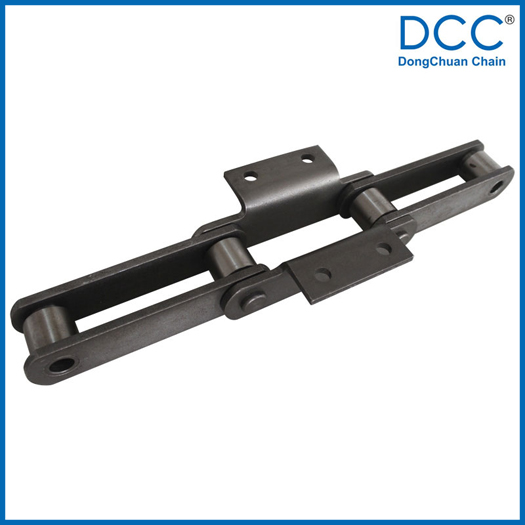
Selecting the Right Lubricant for Your Conveyor Chain Application
Choosing the appropriate lubricant represents the foundation of any effective lubrication program. The selection process must account for multiple operating variables including chain speed, load intensity, ambient temperature, and environmental contamination levels.
Viscosity Selection Guidelines
Viscosity measures a lubricant's resistance to flow and directly affects its ability to maintain a protective film under pressure. For heavy-duty conveyor chains, petroleum-based industrial oils with viscosities equivalent to SAE 30, AGMA Grade 3, or ISO 100 provide an excellent starting point for most applications. Higher viscosity lubricants such as ISO 150 or ISO 220 work better in elevated temperature environments where thinner oils would quickly break down.
| Operating Condition | Recommended Viscosity Range | Typical Grade Examples |
|---|---|---|
| Standard ambient temperature, moderate loads | ISO 68 - ISO 100 | SAE 20, SAE 30, AGMA 2-3 |
| Heavy loads, moderate temperature | ISO 100 - ISO 150 | SAE 30, SAE 40, AGMA 3-4 |
| High temperature operations (above 50°C) | ISO 150 - ISO 220 | SAE 40, SAE 50, AGMA 4-5 |
| Low temperature environments (below 0°C) | ISO 32 - ISO 68 | SAE 10, SAE 20, AGMA 1-2 |
Special Application Lubricants
Certain industrial environments require specialized lubricant formulations. Food processing facilities must use NSF-approved food-grade lubricants that meet regulatory requirements for incidental food contact. High-temperature oven conveyors need synthetic lubricants capable of withstanding continuous exposure to temperatures exceeding 200°C without breaking down or carbonizing. Outdoor installations in corrosive environments benefit from lubricants containing rust and oxidation inhibitors.
For applications involving extreme pressure or shock loading, lubricants containing additives such as molybdenum disulfide provide enhanced film strength. However, these specialty additives may not be suitable for all environments, particularly food processing areas where they could constitute contamination hazards.
Matching Lubrication Methods to Operating Speed
The most critical factor determining the appropriate lubrication method is chain operating speed. As velocity increases, centrifugal force becomes progressively more effective at distributing lubricant, but it also makes it more difficult for manually applied oil to reach bearing surfaces before being thrown off. Industry practice recognizes four primary lubrication methods, each suited to specific speed ranges.
Manual Lubrication for Low-Speed Applications
For conveyor chains operating below 100 feet per minute, manual application using a brush or oil can provides adequate lubrication when performed on a consistent schedule. The lubricant should be applied directly to the upper edges of the link plates on the lower (slack) span of the chain, allowing gravity to carry the oil down into the pin-bushing bearing surfaces. This method works well for intermittent-duty conveyors where accessibility permits regular maintenance attention.
The key to successful manual lubrication is establishing and adhering to a consistent application schedule. Visual inspection should guide frequency, with the goal of maintaining a visible oil film on all bearing surfaces. In clean environments, this might require application once per shift, while dusty or contaminated conditions may necessitate more frequent attention.
Drip Lubrication Systems
As chain speed increases into the 100-500 feet per minute range, drip lubrication becomes the preferred method. These systems deliver a controlled flow of lubricant through adjustable valves or wick-fed applicators positioned above the chain. The oil drips onto the link plates at a predetermined rate, typically measured in drops per minute, ensuring continuous lubrication without operator intervention.
Proper drip system setup requires precise positioning of each drip point to target the upper link plate edges on the slack span. Multiple drip points distributed along the chain length provide more uniform coverage than a single concentrated application point. The flow rate must be adjusted so that lubricant penetrates into bearing areas without excessive throw-off that wastes oil and creates housekeeping problems.
| Chain Speed Range | Recommended Method | Application Notes |
|---|---|---|
| 0-100 ft/min (0-0.5 m/s) | Manual application | Apply oil with brush or can to link plates on lower span, frequency based on visual inspection |
| 100-500 ft/min (0.5-2.5 m/s) | Drip lubrication | Position drip applicators above chain, adjust flow rate to maintain visible film without excess throw-off |
| 500-1500 ft/min (2.5-7.6 m/s) | Oil stream/spray | Use pressurized system with multiple nozzles delivering continuous stream to lower span |
| Above 1500 ft/min (7.6 m/s) | Oil bath or mist | Requires enclosed housing with oil reservoir or pressurized mist system with collection/recirculation |
Continuous Oil Stream Lubrication
High-speed conveyor chains running above 500 feet per minute generate significant centrifugal forces that quickly throw off dripped lubricant before it can penetrate bearing surfaces. These applications require pressurized lubrication systems that deliver a continuous stream or spray of oil directly onto the chain. The increased volume and velocity of lubricant application overcomes centrifugal force, ensuring adequate penetration into the critical pin-bushing interfaces.
Oil stream systems incorporate a pump that draws lubricant from a reservoir and delivers it under pressure to multiple spray nozzles positioned along the chain path. Each nozzle should target the inside link plate edges on the lower span, with nozzle spacing designed to ensure every chain joint receives lubrication at least once per revolution. These systems often include filtration to remove contamination from recirculated oil and monitoring to alert operators to low reservoir levels or system malfunctions.
Implementing Proper Application Techniques
Even with the correct lubricant and appropriate delivery method selected, improper application technique can undermine lubrication effectiveness. Understanding where and how to apply lubricant makes the difference between adequate protection and premature failure.
Critical Application Points
The most critical bearing surfaces in any conveyor chain are the pin-bushing interfaces where pins articulate inside bushings during flexing around sprockets. These wear points are located inside the chain structure, protected by the outer link plates. To reach them, lubricant must be applied to the upper edges of the link plates, then allowed to work its way down by gravity and capillary action into the internal bearing areas.
Application should always occur on the lower (slack) span of the chain where tension is minimal and link plates are slightly separated, creating pathways for oil penetration. On the upper (tight) span, tension squeezes plates together, blocking oil entry. Centrifugal force developed as the chain wraps around sprockets helps drive lubricant into bearing surfaces, making the lower span application point optimal.
Preventing Over-Lubrication Problems
While inadequate lubrication clearly causes problems, excessive application also creates issues. Over-lubrication wastes expensive lubricant, creates housekeeping problems from oil dripping onto floors or products, and can attract contamination that accelerates wear rather than preventing it. In food processing environments, excess lubricant presents contamination hazards that violate safety regulations.
The proper amount of lubrication produces a thin, visible film on all bearing surfaces without dripping or pooling. Operators should adjust application rates based on visual inspection, increasing frequency only when the oil film begins disappearing between applications. More frequent, smaller applications generally prove more effective than occasional heavy applications.
Adapting Lubrication Programs to Environmental Challenges
Operating environment significantly influences both lubricant selection and application methodology. Successful lubrication programs account for temperature extremes, contamination sources, and exposure to chemicals or moisture that can degrade lubricant performance.
High Temperature Applications
Conveyor chains operating in ovens, dryers, or other elevated-temperature environments face unique lubrication challenges. Standard petroleum oils break down rapidly above 150°C, losing viscosity and forming carbon deposits that cause more harm than good. These applications require synthetic lubricants specifically formulated for high-temperature stability, capable of maintaining their protective properties at temperatures exceeding 200°C.
High-temperature lubrication often employs mist systems that deliver a fine spray of synthetic oil mixed with compressed air. The air-oil mixture penetrates bearing surfaces effectively while the air provides cooling. Alternative approaches include solid film lubricants or specialty greases that cure onto chain surfaces, providing long-lasting protection without continuous reapplication.
Contaminated and Abrasive Environments
Operations in dusty, dirty, or abrasive conditions require more aggressive lubrication programs. Contamination carried into bearing surfaces by lubricant causes accelerated wear, making proper lubricant selection and application method critical. These environments benefit from low-viscosity lubricants that flush contaminants from bearing areas rather than holding them in place.
Some severely contaminated applications may actually perform better with minimal lubrication combined with regular chain cleaning. The chain should be thoroughly cleaned with a non-flammable solvent before each lubrication to remove accumulated contamination. Fresh lubricant applied to clean surfaces provides far better protection than additional oil applied over existing contamination.
Outdoor and Corrosive Installations
Chains exposed to weather require lubricants with superior water displacement and corrosion inhibition properties. Moisture accelerates corrosion of steel chain components, with rust forming on pins and bushings creating abrasive wear that quickly destroys bearings. Lubricants formulated with rust inhibitors provide a protective barrier that prevents moisture contact with metal surfaces.
In marine or chemical processing environments where chains face exposure to corrosive vapors or wash-down procedures, stainless steel chains combined with food-grade synthetic lubricants often provide the most reliable solution. For more information on corrosion-resistant chain materials and protective measures, the Machinery Lubrication guide on chain lubrication best practices offers comprehensive technical guidance.
Establishing an Effective Maintenance Schedule
Consistent execution of a well-designed lubrication schedule produces far better results than irregular attention, regardless of how thorough each individual application might be. Maintenance teams should develop documented procedures specifying lubricant type, application method, frequency, and inspection criteria.
Inspection and Monitoring
Regular visual inspection guides lubrication frequency adjustments. Operators should examine chains daily for visible oil film presence, checking for dry spots that indicate insufficient lubrication or excessive wear that might signal inadequate protection. Any unusual noise, binding, or rough operation warrants immediate investigation, as these symptoms often precede catastrophic failure.
Chain elongation measurement provides quantitative assessment of wear progression. As pins and bushings wear, the chain gradually elongates beyond its original pitch dimension. Measuring chain length over a fixed number of pitches reveals wear trends, allowing maintenance teams to adjust lubrication programs before excessive elongation compromises sprocket engagement. Most manufacturers recommend chain replacement when elongation reaches 2-3 percent of original length.
Documentation and Continuous Improvement
Maintaining detailed records of lubrication activities, chain inspections, and failure incidents enables data-driven program optimization. Records should capture lubricant consumption rates, chain replacement intervals, and any operating condition changes that might affect performance. Analyzing this data reveals patterns that guide improvements in lubricant selection, application methods, or frequency.
Successful programs treat lubrication as a continuous improvement process rather than a static procedure. Maintenance teams should regularly review performance data, investigate any unexpected failures, and implement corrective actions to prevent recurrence. This systematic approach gradually optimizes lubrication effectiveness while building organizational knowledge.
Summary: Keys to Successful Conveyor Chain Lubrication
Implementing proper lubrication techniques for heavy-duty conveyor chains delivers dramatic improvements in reliability, performance, and total cost of ownership. The fundamental principles remain consistent across all applications: select lubricants matched to operating conditions, choose application methods appropriate for chain speed, apply oil to the correct locations using proper technique, and maintain consistent schedules guided by regular inspection.
The difference between adequate and exceptional chain life lies in attention to detail. Taking time to position drip applicators precisely, adjusting flow rates based on visual inspection results, and documenting performance trends separates facilities that struggle with frequent chain failures from those that achieve design life and beyond. With conveyor chains potentially lasting 100 times longer when properly lubricated compared to unlubricated operation, the return on investment from implementing systematic lubrication practices proves compelling.
For facilities seeking to maximize their conveyor chain investment, partnering with experienced suppliers makes a significant difference. Quality chain products combined with technical support and application guidance help maintenance teams implement effective lubrication programs tailored to their specific operational requirements.
Finding a Reliable Conveyor Chain Supplier
When implementing lubrication best practices, starting with high-quality chain products provides a solid foundation for success. DCC (Changzhou DONGCHUAN Chain Transmission Technology Co., Ltd.) has served global industries since 2000 as a trusted conveyor chain supplier, offering comprehensive solutions that include engineering chains, conveyor chains, forged chains, and specialized chains for demanding applications.
With over 20 years of manufacturing expertise, DCC maintains API and ISO9001 certifications while operating from modern facilities spanning 100,000 square meters with 400+ sets of specialized production equipment. Their engineering team works directly with customers to develop application-specific solutions, with over 40% of annual production representing custom non-standard specifications. Whether a facility requires standard conveyor chains or specialized chains for sugar mills, palm oil processing, or metallurgical applications, DCC provides the technical expertise and manufacturing capability to deliver reliable solutions backed by comprehensive quality assurance.
Frequently Asked Questions
How often should heavy-duty conveyor chains be lubricated?
Lubrication frequency depends primarily on operating speed and environment. Slow-speed chains in clean conditions may require lubrication only once per shift, while high-speed or contaminated applications might need continuous automated lubrication. The best approach is visual inspection to maintain a visible oil film on all bearing surfaces.
What viscosity oil should be used for conveyor chain lubrication?
Most heavy-duty conveyor chains perform well with petroleum-based oils equivalent to SAE 30, AGMA Grade 3, or ISO 100 viscosity. Higher viscosity (ISO 150-220) suits elevated temperature applications, while lower viscosity (ISO 68) works better in cold environments. Always consult manufacturer recommendations for specific applications.
Where should lubricant be applied on a conveyor chain?
Always apply lubricant to the upper edges of the link plates on the lower (slack) span of the chain. This allows gravity and centrifugal force to carry oil into the critical pin-bushing bearing surfaces. Application to the tight span proves ineffective as tension squeezes plates together, blocking penetration.
Can you over-lubricate a conveyor chain?
Yes, excessive lubrication wastes oil, creates housekeeping problems, and can attract contamination that accelerates wear. The proper amount produces a thin visible film on bearing surfaces without dripping. More frequent small applications prove more effective than occasional heavy applications.
What lubrication method is best for high-speed conveyor chains?
Chains running above 500 feet per minute require continuous oil stream or spray systems that deliver pressurized lubricant directly onto the chain. Centrifugal forces at high speeds throw off manually applied or dripped oil before it can penetrate bearing surfaces, making pressurized systems necessary.
How does temperature affect conveyor chain lubrication?
Elevated temperatures thin lubricants, reducing their protective film strength, while very high heat (above 150°C) breaks down standard petroleum oils. High-temperature applications require synthetic lubricants formulated for thermal stability. Cold environments thicken oil, requiring lower viscosity grades for proper flow and penetration.
What is the difference between chain oil and regular motor oil?
Chain lubricants are formulated with tackiness additives that help them cling to metal surfaces despite centrifugal forces and exposure to the elements. They also typically contain enhanced anti-wear and extreme pressure additives. While motor oil can work in emergency situations, dedicated chain lubricants provide superior protection and longevity.
How can you tell if a conveyor chain needs more lubrication?
Visual inspection is the primary indicator. Chains should show a visible oil film on link plates and bearing areas. Dry, dusty appearance indicates insufficient lubrication. Other warning signs include increased noise, rough or jerky operation, accelerated wear, and excessive chain elongation measured over time.

