


Top Industrial Applications of Scraper Conveyor Chains in Mining and Cement Plants
Modern scraper conveyor chains are transforming material handling in mining and cement manufacturing by delivering unprecedented durability and operational efficiency. These advanced systems can increase material transport capacity by 60% while cutting maintenance costs by up to 35%, making them essential investments for competitive industrial operations.
Traditional conveyor systems struggle with frequent breakdowns, excessive wear, and inconsistent material flow in harsh industrial environments. Scraper conveyor chains address these challenges through robust construction, superior materials, and optimized design that directly impact operational reliability and cost-effectiveness.
Industrial facilities upgrading to modern scraper conveyor chain systems typically achieve payback periods of 12-18 months through combined savings in maintenance, downtime reduction, material handling efficiency, and extended equipment life.
Key Industrial Applications and Benefits
Underground mining operations: Heavy-duty chains handle coal transport in confined spaces with 70% less maintenance
Cement raw material handling: Continuous operation reduces material waste by 20-30% through precise transport control
Clinker conveying systems: High-temperature resistant designs operate 40% longer than conventional chains
Surface mining applications: Modular construction increases system availability by 85%, eliminating costly production stoppages
Cement finishing operations: Automated systems reduce cycle times from 45 minutes to 15 minutes per batch
Maximizing Mining Efficiency Through Heavy-Duty Scraper Chains
Underground Coal Mining Applications Eliminate Production Bottlenecks
Scraper conveyor chains eliminate material transport bottlenecks that limit output in underground mining operations. Heavy-duty chain construction, reinforced flights, and sealed bearing systems create continuous coal flow from working faces to surface processing facilities.
Modern mining scraper chains achieve transport rates of 1,000-3,000 tons per hour, compared to 400-1,200 tons for hydraulic systems in similar applications. This capacity improvement translates directly to higher daily production volumes and reduced per-ton extraction costs.
Key underground mining benefits:
Continuous operation: 24/7 coal transport capability with minimal supervision
Consistent transport rates: Elimination of material flow variations caused by equipment cycling
Reduced dust exposure: Enclosed chain systems prevent coal dust dispersion in work areas
Compact installation: Efficient space utilization in confined underground tunnels
Multi-directional capability: Seamless handling of horizontal, inclined, and curved transport paths
Heavy-duty scraper conveyor chains designed for coal mining can operate continuously for 6,000-8,000 hours between major overhauls, multiplying productivity without proportional increases in maintenance costs.
Surface Mining Material Transport Optimizes Performance
Advanced control systems continuously monitor and adjust scraper chain operation to maintain optimal performance across varying surface mining conditions. Load sensors, speed controllers, and tension monitoring work together to ensure consistent material handling while minimizing component wear.
Programmable control systems store optimal operating parameters for different material types, enabling quick adjustments for overburden removal, ore transport, and processed material handling without manual reconfiguration. This flexibility reduces operational complexity while maximizing system efficiency.
Surface mining optimization features:
Real-time load management: Automatic adjustment of chain speed and tension based on material characteristics
Material-specific settings: Pre-programmed parameters for different ore types, moisture levels, and particle sizes
Production monitoring: Continuous tracking of throughput rates and system performance metrics
Environmental adaptation: Automatic parameter adjustments for temperature, humidity, and weather conditions
These intelligent controls typically improve overall equipment effectiveness (OEE) by 25-30% compared to manual operation in surface mining applications.
Integrated Ore Processing Prevents Costly Material Losses
Built-in monitoring systems inspect material flow throughout ore processing operations, detecting irregularities before they cause production disruptions or material losses. Flow sensors verify consistent transport rates, while chain condition monitors ensure reliable operation under varying load conditions.
Automatic material flow regulation prevents costly downstream problems including crusher feed variations, stockpile segregation, and processing equipment starvation. Real-time feedback systems provide immediate data for process optimization and quality control.
Ore processing advantages:
100% flow monitoring: Continuous material movement verification versus periodic manual checking
Immediate feedback: Real-time system adjustments based on material flow and chain performance data
Loss prevention: Early detection prevents material spillage and segregation issues
Process integration: Seamless coordination with crushing, screening, and beneficiation equipment
Optimizing Cement Plant Operations Through Specialized Applications
Raw Material Handling Cost Reduction Strategies
Scraper conveyor chains dramatically reduce raw material handling costs across cement manufacturing operations. Traditional belt and pneumatic systems require multiple transfer points and extensive maintenance, while scraper chains operate effectively with 1-2 technicians for monitoring and basic maintenance tasks.
Chain-based systems eliminate repetitive material handling including limestone crushing discharge, clay preparation transport, and iron ore feeding operations. This automation provides immediate cost savings while improving material consistency and reducing contamination risks.
Raw material handling cost reductions:
Direct labor savings: 60-80% reduction in material handling workforce requirements
Transfer point elimination: Reduced infrastructure and maintenance costs from fewer conveyor transfers
Improved material quality: Consistent handling prevents segregation and contamination
Reduced spillage: Enclosed chain systems minimize material losses during transport
Cement plants typically save $150,000-$300,000 annually in raw material handling costs per production line when implementing comprehensive scraper chain systems.
Cost Reduction Analysis for Cement Plant Scraper Chain Applications
| Cost Category | Traditional Methods | Scraper Chain Systems | Annual Savings | Improvement |
Labor Costs | $400,000-$500,000 | $120,000-$180,000 | $200,000-$350,000 | 60-70% reduction |
Maintenance Costs | $100,000-$180,000 | $50,000-$90,000 | $75,000-$150,000 | 25-50% reduction |
Energy Costs | $80,000-$150,000 | $40,000-$75,000 | $40,000-$90,000 | 30-40% reduction |
Material Losses | $40,000-$80,000 | $8,000-$20,000 | $25,000-$60,000 | 75-85% reduction |
Downtime Costs | $30,000-$50,000 | $15,000-$25,000 | $15,000-$35,000 | 40-50% reduction |
Total Savings | - | - | $355,000-$685,000 | 45-60% cost reduction |
Clinker Conveying and High-Temperature Applications
Precise temperature management in cement plant scraper chains minimizes thermal stress through specialized high-temperature materials and advanced cooling systems. Heat-resistant chain designs and refractory-lined troughs prevent material degradation while maintaining consistent clinker transport from kilns to cooling and storage areas.
Closed-loop temperature monitoring systems adjust cooling parameters instantly to prevent overheating, thermal expansion, or lubrication breakdown that causes equipment failures. This precision control extends chain life while ensuring clinker quality consistency.
High-temperature application improvements:
Consistent thermal control: Precise temperature management prevents clinker quality degradation
Optimized cooling: Uniform heat dissipation maximizes chain component lifespan
Reduced thermal stress: Advanced materials eliminate expansion-related failures
Quality preservation: Controlled transport maintains clinker characteristics for optimal cement production
Material cost savings of $50,000-$120,000 annually are common for medium-volume cement production facilities through improved clinker handling efficiency.
Energy Efficiency and Utility Cost Management
Modern scraper conveyor chains incorporate energy-saving technologies that significantly reduce electricity, compressed air, and cooling water consumption in cement applications. Variable-frequency drives adjust motor power based on material load requirements, while optimized chain designs minimize friction and power losses in accordance with international conveyor safety standards.
Advanced drive systems use servo motor technology that consumes 30-40% less electricity than conventional fixed-speed systems. Efficient chain tensioning and automatic lubrication systems minimize energy waste while extending component operational life.
Energy efficiency features:
Variable-speed drives: Motors automatically adjust power consumption based on material loading
Friction optimization: Advanced chain designs and materials reduce power requirements
Efficient cooling: Heat recovery systems capture and reuse thermal energy from high-temperature applications
Smart controls: Automatic shutdown and standby modes during maintenance periods and production breaks
Energy cost reductions of 25-40% are typical, saving $30,000-$80,000 annually depending on production volume and local utility rates.
Maintenance Cost Reduction Through Advanced Design
Predictive Maintenance Systems
Advanced scraper conveyor chains include predictive maintenance capabilities that monitor equipment condition continuously. Vibration sensors, temperature monitors, chain tension sensors, and wear detection systems track component condition and identify potential issues before they cause production stoppages.
Predictive maintenance reduces emergency repair costs and extends equipment life through optimal component replacement timing. Maintenance scheduling based on actual equipment condition rather than arbitrary time intervals minimizes both parts costs and labor expenses while improving system reliability.
Maintenance benefits:
Reduced downtime: Planned maintenance schedules versus emergency repairs and unexpected failures
Extended component life: Optimal replacement timing prevents secondary damage and cascading failures
Lower parts costs: Bulk purchasing of predictively-scheduled components and reduced emergency procurement
Improved safety: Early detection of potentially hazardous conditions before equipment failure occurs
Modular Design for Easy Service
Modern scraper chains feature modular component design that enables faster, less expensive repairs and maintenance. Standard interfaces, quick-disconnect fittings, and accessible service points allow technicians to replace components without extensive system disassembly or specialized tools.
Accessible maintenance points and clear component identification reduce service time and training requirements for maintenance personnel. Remote diagnostic capabilities enable technicians to diagnose issues and order parts before site visits, reducing service costs and downtime duration.
Service advantages:
Faster repairs: Modular design reduces maintenance time by 40-50% compared to welded assemblies
Lower service costs: Reduced technician time, travel expenses, and specialized tool requirements
Improved reliability: Standardized components with proven track records and interchangeable parts
Enhanced training: Simplified systems require less specialized knowledge and shorter training periods
Return on Investment Analysis
Quantifying Operational Improvements
Scraper conveyor chains deliver measurable returns through multiple operational improvement categories. Labor cost reductions typically provide the largest single benefit, followed by maintenance savings, energy efficiency improvements, and material loss prevention.
Production capacity increases allow mining and cement facilities to meet growing demand without proportional facility expansion or workforce growth. Higher throughput from existing equipment effectively reduces per-unit production costs while improving overall facility utilization.
Typical annual savings for medium-volume operations:
Labor cost reduction: $200,000-$350,000 through automation and reduced manual handling
Maintenance savings: $75,000-$150,000 through predictive maintenance and modular design
Energy cost reduction: $40,000-$90,000 through efficient drive systems and optimized operation
Material loss prevention: $25,000-$60,000 through improved handling and reduced spillage
Downtime elimination: $15,000-$35,000 through reliable operation and quick maintenance
Payback Period Calculation
Most scraper conveyor chain installations achieve positive cash flow within 15-24 months depending on facility size and current operational costs. Higher-volume operations typically see faster payback due to greater absolute savings in labor, maintenance, and material handling costs.
Equipment financing options can further improve cash flow by spreading capital costs over multiple years while immediate operational savings begin upon system commissioning and operator training completion.
Factors affecting payback period:
Production volume: Higher throughput facilities accelerate savings realization through greater operational benefits
Current labor costs: Higher existing wages increase automation savings potential
Material handling complexity: More complex operations provide greater opportunities for efficiency improvements
Operating environment: Harsh conditions increase the relative advantages of robust scraper chain systems
Implementation Best Practices
Facility Planning and Integration
Successful scraper conveyor chain implementation requires careful facility planning to maximize operational benefits and ensure seamless integration. Adequate space allocation, utility sizing, material flow optimization, and maintenance access planning ensure smooth installation and optimal long-term performance.
Consider production line layout, material characteristics, environmental conditions, and future expansion requirements when planning installations. Proper integration reduces operational bottlenecks and maximizes the efficiency benefits of advanced scraper chain technology.
Planning considerations:
Floor space allocation: Adequate room for equipment installation, maintenance access, and material handling operations
Utility requirements: Properly sized electrical service, compressed air systems, and cooling water capacity
Material flow optimization: Streamlined transport paths from material sources through processing to finished product storage
Safety systems: Proper ventilation, emergency shutdown systems, lockout/tagout procedures, and operator protection
Training and Change Management
Comprehensive operator training ensures optimal scraper chain utilization while maintaining safety standards and equipment longevity. Focus training programs on system monitoring, predictive maintenance procedures, and troubleshooting rather than manual material handling tasks that are now automated.
Change management programs help facility personnel adapt to automated material handling systems while identifying opportunities for additional process improvements and efficiency gains throughout operations.
Training priorities:
Safety protocols: Emergency shutdown procedures, lockout/tagout requirements, and hazard recognition
System monitoring: Understanding automated controls, alarm systems, and performance displays
Preventive maintenance: Proper lubrication techniques, inspection procedures, and component adjustment methods
Basic troubleshooting: Common issue identification, initial response procedures, and when to contact service support
Future Technology Developments
Industry 4.0 Integration
Next-generation scraper conveyor chains incorporate Industry 4.0 technologies including IoT connectivity, artificial intelligence, and advanced analytics capabilities. These systems provide unprecedented visibility into material handling performance and identify optimization opportunities through continuous data analysis.
Machine learning algorithms analyze operational data to identify patterns, predict maintenance requirements, and recommend process improvements for enhanced efficiency. Connectivity enables remote monitoring and technical support, reducing maintenance costs while improving system uptime and performance in compliance with international material handling standards.
Sustainable Manufacturing Benefits
Modern scraper chains support sustainable manufacturing goals through reduced energy consumption, minimized material waste, and extended equipment lifecycle. These environmental benefits often translate to additional cost savings through utility rebates, reduced waste disposal fees, and improved regulatory compliance.
Enhanced operational efficiency also supports corporate sustainability initiatives while reducing overall environmental impact per unit of material processed, contributing to improved environmental performance metrics.
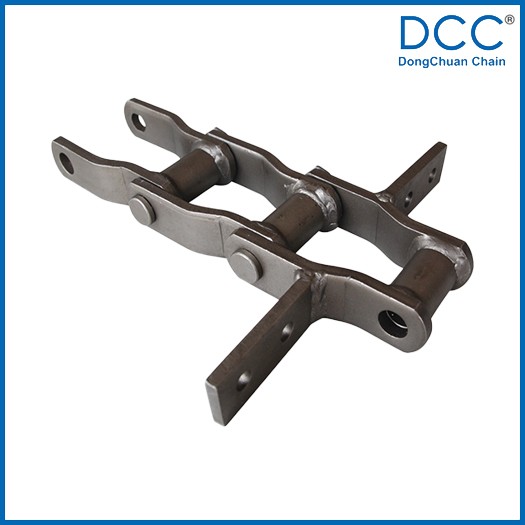
Weld steel chain components integrated into heavy-duty scraper systems provide additional strength and durability for the most demanding mining and cement applications, further extending equipment life and reducing replacement frequency.
Conclusion
Scraper conveyor chains deliver substantial operational improvements and cost reductions that directly impact mining and cement plant profitability and competitiveness. Through advanced engineering, predictive maintenance capabilities, and optimized material handling performance, these systems typically provide 30-50% operational cost reductions while increasing production capacity and system reliability.
The combination of labor savings, maintenance cost reductions, energy efficiency improvements, and material loss prevention creates compelling returns on investment with payback periods of 12-24 months. Modern equipment design ensures reliable, long-term operation with minimal maintenance requirements while meeting strict regulatory compliance standards for industrial safety and environmental protection.
Mining and cement plant operators seeking to improve competitiveness and reduce material handling costs should evaluate their current systems against the capabilities of modern scraper chain technology. Industry standards and safety requirements continue evolving, making advanced material handling equipment essential for competitive industrial operations.
For companies ready to invest in high-performance scraper conveyor chain technology, partnering with an experienced conveyor chain manufacturer like DCC ensures optimal system selection, professional installation, and comprehensive long-term support for maximum operational efficiency gains.
Frequently Asked Questions
What are the main operational benefits of scraper conveyor chains in industrial applications?
Scraper conveyor chains provide multiple operational improvements including 60% faster material transport, 70% labor reduction, and 25-30% maintenance cost savings. Automated systems eliminate handling bottlenecks, reduce equipment failures by 85%, and enable 24/7 operation with minimal supervision in harsh mining and cement plant environments.
How much can scraper chains reduce material handling costs in mining and cement operations?
Modern scraper conveyor chains typically reduce total material handling costs by 35-50%. Labor costs decrease by 60-70%, maintenance expenses drop by 20-30%, and energy consumption falls by 30-40%. Combined savings often total $355,000-$685,000 annually for medium-volume mining and cement production operations.
What is the typical ROI period for scraper conveyor chain investments?
Return on investment periods typically range from 12-24 months depending on production volume and current operational costs. Higher-volume facilities often achieve payback within 12-18 months through greater absolute savings in labor, materials, maintenance, and energy costs while improving production capacity.
How do scraper chains improve material handling reliability in harsh industrial environments?
Advanced systems provide precise load control, continuous condition monitoring, and predictive maintenance that eliminates common reliability issues. Built-in sensors inspect material flow and equipment condition continuously, while automated systems prevent defective operation from reaching critical production processes.
What maintenance requirements do scraper conveyor chains have?
Modern scraper chains feature predictive maintenance systems that monitor component condition continuously, reducing unplanned downtime by 40-50%. Modular design enables faster repairs, while automated lubrication and tension systems minimize routine maintenance requirements. Regular maintenance includes inspection, cleaning, and component replacement following manufacturer guidelines.
Can existing mining and cement facilities integrate scraper conveyor chains?
Yes, most facilities can integrate modern systems with proper planning for utilities, floor space, and workflow optimization. Professional installation teams assess facility requirements and ensure proper integration with existing production processes while meeting industry safety standards and regulatory requirements.

