


Bucket Elevator Chain Materials Compared: Carbon Steel vs. Stainless Steel vs. Alloy
Selecting the right bucket elevator chain material directly impacts operational efficiency and maintenance costs. Carbon steel provides cost-effective strength for standard applications. Stainless steel excels in corrosive environments requiring hygiene. Alloy materials offer specialized performance for extreme conditions.
The bucket elevator chain market continues expanding, with applications in mining, food processing, and manufacturing. Carbon steel chains deliver robust performance, wear resistance, and economical operation across diverse industries.
This guide helps engineers quickly determine which material meets their operational requirements.
Key Takeaways
• Carbon steel bucket elevator chains are ideal for standard applications where cost-effectiveness and strength are priorities.
• Stainless steel excels in food processing and chemical environments, providing superior corrosion resistance.
• Carbon steel offers the widest range of configurations and treatments for diverse industrial applications.
• Alloy chains feature specialized compositions that provide enhanced performance in extreme conditions.
• Both stainless steel and alloy materials are easy to sanitize, making them suitable for hygienic applications.
• Consider operational conditions carefully; carbon steel works best for dry environments, while stainless steel handles moisture and chemicals.
• Budget considerations matter; carbon steel is generally more economical, while stainless steel and alloys require higher investment.
• Customization options are available for all materials, allowing for tailored solutions in design and specifications.
Carbon Steel Bucket Elevator Chain Basics
Carbon Steel Construction
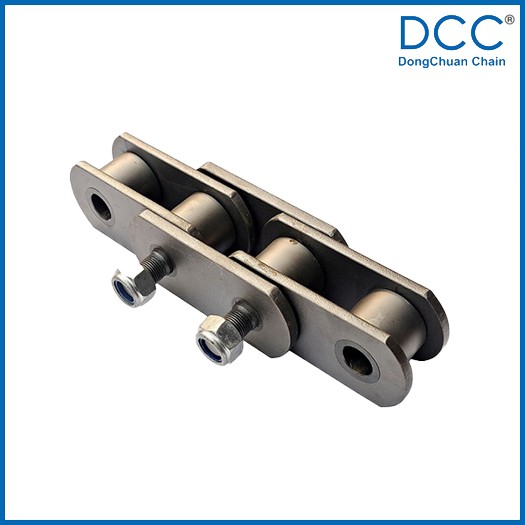
Carbon steel bucket elevator chains feature a robust structure engineered for strength and durability. Manufacturers produce these chains using high-quality carbon steel alloys, then heat-treat them for optimal hardness and wear resistance. This process creates a dense, resilient chain suitable for demanding applications. The carbon content of these conveyor chains varies depending on intended use. Most standard carbon steel chains contain 0.15% to 0.30% carbon, while high-strength variants reach up to 0.45% carbon for heavy-duty applications. Heat treatment and surface hardening serve specific needs, such as abrasion resistance or extended life.
Tip: The following table summarizes standard carbon steel chain types and their construction methods.
| Type of Chain | Carbon Content | Construction Method |
Standard Grade | 0.15% to 0.30% | Suitable for general industrial applications |
High Strength | Up to 0.45% | Heat-treated for heavy-duty operations |
Surface Hardened | Variable | Hardened surface layer over tough core |
Special Alloy | Variable | Includes additional elements for specific properties |
Heat Treated | Variable | Controlled heating and cooling for optimal properties |
Carbon Steel Features
Carbon steel bucket elevator chains stand out for their exceptional strength-to-cost ratio in industrial environments. The material resists wear, impacts, and mechanical stress, making it ideal for mining and bulk handling operations. The ferrous composition provides excellent magnetic properties for magnetic separation systems. Fatigue resistance allows carbon steel chains to handle millions of cycles without failure. Load capacity reaches impressive levels, often exceeding 50 tons per square inch.
Economic advantages remain a key benefit, with carbon steel available in numerous grades and treatments. The material accepts various surface treatments, including galvanizing and coating applications. Heat treatment options enhance specific properties while maintaining core toughness.
Carbon Steel Applications
Engineers and maintenance teams select carbon steel bucket elevator chains for various industrial settings. The material excels in mining operations, where abrasion resistance is essential. Cement plants benefit from carbon steel's ability to withstand dusty, high-temperature environments. Agricultural facilities use these conveyor chains for grain handling and feed processing. Power plants rely on carbon steel for coal and ash handling systems. Manufacturing plants utilize these chains for bulk material transport.
While carbon steel offers many advantages, stainless steel provides superior corrosion resistance for projects requiring chemical compatibility or food-grade applications.
Note: Standard carbon steel remains the most popular choice for general industrial applications, offering proven reliability and cost-effectiveness.
Applications include:
• Mining operations
• Cement plants
• Agricultural facilities
• Power plants
• Manufacturing plants
Stainless Steel Overview
Stainless Steel Structure
Stainless steel bucket elevator chains stand out for their corrosion-resistant, hygienic construction. Manufacturers produce these chains using chromium-containing steel alloys, creating a passive oxide layer that prevents rust and contamination. The chromium content typically ranges from 10.5% to 20%, with higher grades containing nickel and molybdenum additions. Leading grades such as 304, 316, and 316L offer products within different corrosion resistance levels, each using specific alloy compositions.
| Grade | Chromium Content | Structural Composition |
304 | 18-20% | General purpose food-grade applications |
316 | 16-18% | Enhanced corrosion resistance with molybdenum |
316L | 16-18% | Low carbon version for welding applications |
Note: The non-magnetic properties of austenitic stainless steel allow for use in environments where magnetic interference must be avoided.
Stainless Steel Features
Stainless steel bucket elevator chains offer superior corrosion resistance compared to carbon steel and standard alloy options. The passive oxide layer prevents chemical attack, making it ideal for food processing and pharmaceutical environments. The chains resist temperature extremes, chemicals, and harsh cleaning agents. Their non-porous surface eliminates bacterial growth, reducing contamination risks. The self-supporting nature of heavy-duty stainless steel chains eliminates substrate corrosion concerns. Manufacturers design food-grade stainless steel chains for sanitary applications, offering enhanced surface finishes and validated cleanliness.
Key features include:
- Self-passivating surface for automatic corrosion protection
- Hygienic properties for food and pharmaceutical use
- Superior chemical and temperature resistance
- Non-magnetic properties for sensitive applications
- Excellent cleanability and sanitization capability
- Long-term durability in corrosive environments
Stainless Steel Applications
Engineers and facility managers select stainless steel bucket elevator chains for demanding industrial and commercial projects. The material excels in environments requiring cleanliness and corrosion resistance. Common applications include food processing facilities, pharmaceutical manufacturing, chemical plants, and marine environments. Stainless steel also appears in water treatment plants, brewery operations, and clean room facilities. Conveyor chain surfaces in healthcare and laboratory settings benefit from its hygienic properties. Food-grade applications provide reliable solutions for dairy processing and beverage production exposed to cleaning chemicals.
| Application Type | Description |
Food Processing | Hygienic, easy-to-clean surfaces |
Pharmaceutical | Contamination-free material transport |
Chemical Plants | Corrosion-resistant chain systems |
Marine Environments | Salt-resistant conveyor applications |
Water Treatment | Chemical-resistant processing equipment |
Brewery Operations | Sanitary material handling |
Clean Rooms | Particle-free conveyor systems |
Dairy Processing | Food-safe material transport |
Laboratory Equipment | Contamination-free sample handling |
Beverage Production | Hygienic bottling and packaging lines |
Tip: Stainless steel provides a versatile solution for both sanitary and corrosive environments, outperforming carbon steel in wet and chemical exposure conditions.
Durability Comparison
Impact Resistance
Superior durability defines carbon steel, stainless steel, and alloy bucket elevator chains, but their performance in impact resistance varies significantly. Carbon steel chains feature hardened surfaces that absorb shocks from dropped materials or equipment contact. This structure prevents deformation and maintains chain geometry even under severe impact loads. Stainless steel, while corrosion-resistant, offers moderate impact strength suitable for food processing environments. Alloy chains may show enhanced impact resistance depending on their specific composition and heat treatment.
Maintenance managers often choose carbon steel for mining operations, quarries, and heavy industrial applications. They report fewer failures and longer service intervals between replacements. Stainless steel remains reliable for food processing and chemical plants, where impact risks are lower but corrosion protection is critical.
Tip: For applications with frequent impact loading or abrasive materials, carbon steel offers superior protection and durability.
Longevity
Longevity plays a crucial role in conveyor chain selection. Carbon steel maintains its mechanical properties and load capacity for years under proper maintenance. Its heat-treated structure resists wear, fatigue, and deformation. Stainless steel demonstrates excellent longevity in corrosive environments, maintaining surface integrity and dimensional stability. Alloy chains often outlast both standard materials in specialized high-temperature or chemical applications.
Industrial users value all materials for their service life potential. Carbon steel often provides the longest operational life in dry, abrasive conditions. Stainless steel delivers superior longevity in wet, corrosive, or sanitary environments. The durability comparison highlights that material selection should match environmental conditions.
| Material | Expected Lifespan | Best Environments |
Carbon Steel | 10-20+ years | Dry, abrasive, heavy-duty |
Stainless Steel | 15-25+ years | Wet, corrosive, sanitary |
Alloy Steel | Variable | Specialized extreme conditions |
Heavy-Duty Applications
Heavy-duty applications demand bucket elevator chains with exceptional durability and minimal downtime. Carbon steel, stainless steel, and alloy materials receive positive feedback from facility managers in mining, manufacturing, and processing industries. They note that these conveyor chains endure constant loading, abrasive materials, and demanding duty cycles without significant wear.
Performance characteristics include:
- Minimal maintenance requirements, reducing operational costs
- Surfaces resist wear and maintain dimensional accuracy
- Carbon steel excels in mining and aggregate handling
- Stainless steel performs well in food processing and chemical plants
The durability comparison confirms that carbon steel is preferred for heavy-duty applications with abrasive materials. Stainless steel remains practical for sanitary heavy-duty operations in food and pharmaceutical industries.
Corrosion Resistance
Carbon Steel in Industrial Areas
Carbon steel bucket elevator chains offer practical solutions for many industrial applications, but their performance in corrosive environments requires careful consideration. Manufacturers design carbon steel chains with protective coatings and treatments to handle moderate exposure. However, material specifications reveal important limitations. Extended exposure to moisture, chemicals, or salt air may result in rust, pitting, or structural degradation. These conditions indicate that while carbon steel can withstand brief chemical contact, continuous exposure requires protective measures such as galvanizing, painting, or regular maintenance.
Facility managers often recommend using carbon steel conveyor chains in controlled environments, such as enclosed facilities, dry storage areas, or climate-controlled plants. In applications where chemical exposure is frequent or unpredictable, alternative materials may provide better long-term performance.
Tip: Always review environmental conditions and maintenance capabilities before specifying carbon steel for potentially corrosive environments.
Stainless Steel in Corrosive Areas
Stainless steel bucket elevator chains stand out as the preferred choice for corrosive or chemically aggressive environments. The chromium oxide layer prevents chemical attack, making it highly effective where corrosion resistance is essential. Industry standards highlight several advantages of stainless steel in these settings:
| Feature | Application Area |
Chromium oxide layer | Chemical plants, marine environments |
Self-passivating surface | Food processing, pharmaceuticals |
| Advantage | Application Area |
Chemical resistance | Wastewater treatment, chemical processing |
Salt water resistance | Marine applications, coastal facilities |
| Performance Feature | Application |
Passive corrosion protection | Chemical plants, food processing |
Long-term durability | Marine environments, chemical exposure |
Engineers specify stainless steel conveyor chains for chemical plants, food processing facilities, marine applications, and pharmaceutical manufacturing. The material maintains its structural integrity and appearance even after years of exposure to corrosive substances. Its durability and corrosion resistance make it a reliable solution for both industrial and commercial projects where chemical compatibility is essential.
Performance and Engineering
Load Capacity Options
Engineers and facility managers value bucket elevator chains that offer reliable load handling capabilities. Carbon steel, stainless steel, and alloy materials provide different load capacities based on their mechanical properties and construction methods.
Carbon steel conveyor chains feature the highest tensile strength, often exceeding 800 MPa for heat-treated grades. Stainless steel chains typically range from 500-700 MPa, suitable for most industrial applications. Alloy chains offer variable strength depending on composition, with some specialty grades exceeding carbon steel performance.
Load capacity factors include:
- Ultimate tensile strength for maximum loading
- Working load limits for safe operation
- Fatigue strength for cyclic loading
- Safety factors for operational reliability
This variety ensures that every application, from light-duty food processing to heavy mining operations, can achieve appropriate load handling capability. The ability to select from multiple strength levels helps engineers match chain capacity to actual operational requirements.
Tip: When specifying bucket elevator chains, review the manufacturer's load capacity data to ensure adequate safety margins for your specific application.
Customization
Customization plays a crucial role in meeting specific operational requirements. Manufacturers of carbon steel, stainless steel, and alloy bucket elevator chains offer products in various pitches, attachments, and treatments. This flexibility allows for tailored solutions in mining, food processing, and industrial applications.
| Customization Aspect | Details |
Chain Pitch | Available in standard and custom pitches from 3" to 24" |
Attachment Types | Welded or bolted attachments for specific bucket designs |
Surface Treatment | Galvanizing, coating, or heat treatment as specified |
Special Alloys | Custom compositions for unique environmental conditions |
Engineers can request specific attachment configurations and chain pitches to match existing bucket elevators or new system designs. Both standard and specialty materials adapt well to custom installations, whether for curved elevator paths or specialized bucket configurations. The ability to specify treatments and alloys ensures optimal performance in any operational environment.
Available features:
- Multiple pitch options and attachment styles
- Supports custom solutions for unique applications
- Provides consistent quality across specialized configurations
Stainless steel chains excel for food-grade customization requirements. Carbon steel offers the widest range of standard and custom options for industrial applications.
Note: Customization capabilities allow all materials to meet the demands of specialized conveyor systems and unique operational requirements.
Cost Factors
Material Price
Material price significantly influences decisions between carbon steel, stainless steel, and alloy bucket elevator chains. Carbon steel typically offers the most economical option for projects requiring high strength without specialized corrosion resistance. Manufacturers produce carbon steel chains in high volumes, reducing per-unit costs. Stainless steel commands premium pricing due to its chromium and nickel content. This construction increases material costs by 2-4 times compared to carbon steel. Alloy chains represent the highest price category, justified by their specialized compositions and enhanced performance characteristics.
When evaluating material costs, project managers should consider the intended application environment. For large-scale mining or bulk handling projects, the cost comparison may favor carbon steel for primary conveyor systems. Stainless steel justifies its higher price in food processing, pharmaceutical, or chemical applications where corrosion resistance outweighs initial expense.
Installation Cost
Installation costs vary based on the material's handling requirements and system complexity. Carbon steel bucket elevator chains require standard installation procedures with conventional tools and techniques. Stainless steel installation may involve specialized handling to prevent surface contamination or cross-contamination from carbon steel tools. This requirement can increase labor time and require specific installation procedures. Alloy chains often include handling specifications that must be followed to maintain material properties and warranties.
A cost comparison shows that while carbon steel offers lower material prices, installation differences are generally minimal. Stainless steel's cleanliness requirements may add modest labor costs, particularly in food-grade applications. Alloy chain installation costs align with stainless steel in most cases.
| Feature | Carbon Steel | Stainless Steel | Alloy Steel |
Material Price | Lowest | 2-4x higher | Highest |
Installation Cost | Standard | Slightly higher | Standard to higher |
Long-Term Value
Long-term value depends on service life, maintenance frequency, and replacement costs. Carbon steel bucket elevator chains can operate for 10-20+ years in appropriate environments, with some industrial applications reporting extended service before replacement. Stainless steel delivers even greater longevity in corrosive environments, reducing replacement frequency and associated downtime costs.
Facility managers often evaluate total cost of ownership when comparing options. Carbon steel provides excellent value in dry, non-corrosive applications where its strength advantages are fully utilized. Stainless steel offers superior value in environments where corrosion would degrade carbon steel performance. Alloy materials justify their premium cost in specialized applications where standard materials cannot meet performance requirements.
| Feature | Carbon Steel | Stainless Steel | Alloy Steel |
Service Life | 10-20+ years in dry conditions | 15-25+ years in corrosive environments | Variable, often exceeds others |
Maintenance Cost | Moderate, coating renewal | Lower, minimal treatment needed | Low, specialized as needed |
Replacement Cost | Lowest material cost | Higher material, less frequent replacement | Highest, longest intervals |
Project owners should assess total lifecycle costs, including maintenance and replacement intervals. Stainless steel may cost more initially, but its corrosion resistance leads to savings in chemical or food processing environments. Carbon steel remains the smart choice for cost-effective, high-strength applications in controlled environments.
Maintenance
Cleaning
Proper cleaning extends the operational life of carbon steel, stainless steel, and alloy bucket elevator chains. Manufacturers recommend specific maintenance routines for each material type. For carbon steel conveyor chains, users should remove accumulated material and debris, then apply appropriate rust-preventive lubricants. Regular inspection prevents moisture accumulation that could cause corrosion. For stainless steel chains, cleaning involves removing process residues with appropriate solvents or detergents, followed by thorough rinsing and drying.
For food-grade applications, sanitizing procedures must follow industry standards. Clean stainless steel surfaces with approved detergents, rinse thoroughly, and sanitize according to facility protocols. This method maintains hygienic conditions and prevents bacterial growth.
Tip: Always use appropriate cleaning agents for each material type, as improper chemicals can damage protective coatings or surface finishes.
Wear Resistance
Carbon steel, stainless steel, and alloy bucket elevator chains offer different levels of wear resistance. Carbon steel chains, particularly heat-treated grades, provide excellent resistance to abrasive materials. Their hardened surfaces maintain dimensional accuracy even when handling sand, ore, or aggregate materials. Stainless steel offers moderate wear resistance, sufficient for most industrial applications but optimized for corrosion protection rather than abrasion resistance.
In high-abrasion environments, carbon steel demonstrates superior performance. Food processing applications benefit from stainless steel's easy cleaning and corrosion resistance, even with moderate wear rates. Users find that proper material selection based on operational conditions provides the best wear performance.
Note: Regular lubrication and proper tensioning help maximize wear resistance for all chain materials.
Replacement
Component replacement may become necessary over time, even with durable materials. Carbon steel bucket elevator chains may require replacement due to wear, corrosion, or fatigue after years of service. Stainless steel chains typically need replacement due to wear or mechanical damage rather than corrosion. Alloy chains usually require replacement only after extended service in extreme conditions.
Replacement procedures involve system shutdown, chain removal, and installation of new components. Stainless steel and alloy chains may require specific handling procedures during replacement to maintain material properties. Carbon steel replacement is typically straightforward using conventional tools and methods.
Planning for eventual replacement includes stocking critical spare parts and scheduling maintenance windows. Proper documentation of chain specifications ensures correct replacement parts are available when needed.
Tip: Maintain replacement part inventory based on expected service life and operational criticality of each conveyor system.
Applications
Food Processing Chains
Stainless steel bucket elevator chains deliver exceptional performance in food processing environments. Engineers and plant managers select these conveyor systems for their ability to withstand frequent cleaning, sanitizing chemicals, and food contact requirements. Stainless steel chains excel in dairy processing, where cleanliness and corrosion resistance are essential. Food manufacturers appreciate the versatility of stainless steel chains, which can handle both wet and dry food products while maintaining sanitary conditions.
Key advantages include:
- Hygienic surfaces prevent bacterial growth and contamination
- Chemical resistance handles cleaning and sanitizing agents
- Easy cleaning supports HACCP and food safety protocols
- Non-porous surfaces prevent food particle accumulation
- Corrosion resistance maintains chain integrity in wet conditions
- FDA-approved materials meet food contact requirements
- Temperature resistance handles both hot and cold applications
- Durability reduces replacement frequency and downtime
- Various surface finishes available for specific food applications
- Compatible with Clean-in-Place (CIP) systems
| Application Area | Description |
Food Processing | Used for grain, flour, sugar, and ingredient handling due to hygienic properties and easy cleaning |
Mining Industry Uses
Carbon steel bucket elevator chains support extensive applications in mining operations. Engineers specify carbon steel chains for mining environments such as coal mines, metal ore processing, and aggregate operations. These environments demand conveyor systems that resist abrasion, handle heavy loads, and operate reliably in dusty conditions. Carbon steel provides the strength and wear resistance needed for continuous operation with minimal maintenance.
Mining applications include:
- Coal handling from extraction to processing
- Iron ore transport in beneficiation plants
- Copper concentrate elevation in processing facilities
- Aggregate handling in quarry operations
- Limestone transport in cement plants
- Sand and gravel processing systems
| Application Area | Specific Uses | Requirements |
Mining Operations | Coal mines, ore processing, aggregate handling | High strength, abrasion resistance, heavy-duty construction |
Bulk Material Handling | Grain elevators, cement plants, chemical processing | Load capacity, reliability, dust resistance |
Carbon steel chains adapt to both surface and underground mining applications. Engineers use these conveyor systems for raw material transport, processed material handling, and waste removal. The material's magnetic properties also support magnetic separation processes common in mineral processing.
Industrial Manufacturing Applications
Carbon steel and stainless steel bucket elevator chains remain top choices for manufacturing applications. Carbon steel offers high strength and cost-effectiveness, making it suitable for heavy manufacturing, automotive plants, and steel production facilities. Stainless steel provides corrosion resistance for chemical manufacturing, pharmaceutical production, and electronics assembly where contamination control matters.
| Scenario | Carbon Steel | Stainless Steel |
Strength Requirements | High tensile strength for heavy loads | Moderate strength, adequate for most applications |
Environmental Resistance | Good in dry conditions | Excellent corrosion and chemical resistance |
Cost Effectiveness | Most economical option | Higher cost justified by performance |
Maintenance | Regular lubrication and protection | Minimal treatment required |
Contamination Control | Standard industrial cleanliness | Superior cleanliness for sensitive processes |
Ideal Applications | Heavy manufacturing, automotive, steel | Chemical, pharmaceutical, electronics |
Manufacturing applications include automotive parts handling, steel coil processing, and chemical batch processing. Carbon steel handles heavy components and abrasive materials effectively. Stainless steel serves pharmaceutical tablet production, electronic component manufacturing, and chemical processing where purity is essential.
Note: Project managers often compare carbon steel and stainless steel bucket elevator chains to determine the optimal solution for specific manufacturing applications.
How to Choose
Operational Requirements
Every application has specific operational demands. The right bucket elevator chain material depends on environmental conditions, load requirements, and maintenance capabilities. For mining operations, engineers often prioritize strength, abrasion resistance, and cost-effectiveness. In food processing facilities, hygiene, corrosion resistance, and cleanability matter most.
Designers should evaluate these factors:
Environmental Conditions: Mining and heavy industry face abrasive materials and high loads. Carbon steel offers superior strength and wear resistance in these applications.
Corrosion Exposure: Food processing and chemical plants require materials that resist corrosion and contamination. Stainless steel provides optimal performance and hygienic properties.
Load Requirements: Applications with extreme loads need maximum tensile strength. Carbon steel delivers the highest strength-to-cost ratio for heavy-duty operations.
Maintenance Capabilities: Facilities with limited maintenance resources benefit from low-maintenance materials. Stainless steel requires minimal treatment in corrosive environments.
Budget Constraints: Projects with cost limitations favor economical solutions. Carbon steel provides excellent performance at the lowest material cost.
Tip: Identify the most critical operational requirements before selecting a bucket elevator chain material. This ensures the chosen material delivers required performance and reliability.
Selection Checklist
A comprehensive checklist helps engineers and facility managers make informed material decisions. Use this guide to compare options for various applications:
What type of materials will be handled?Abrasive materials, food products, chemicals, or bulk commodities?
What is the operational environment?Stainless steel provides better performance in wet, corrosive, or sanitary environments.
Are high loads or impact forces expected?Carbon steel offers superior strength and impact resistance for heavy-duty applications.
How important is corrosion resistance?Stainless steel excels in chemical and food processing applications.
What is the budget for materials and installation?Carbon steel delivers high performance at lower cost, while stainless steel justifies higher investment with specialized properties.
What are the maintenance capabilities?Stainless steel requires less maintenance in corrosive environments.
How long should the system operate?Both materials provide long service life when properly matched to applications.
| Decision Factor | Carbon Steel | Stainless Steel | Alloy Steel |
Strength | Highest tensile strength | Moderate strength | Variable, often high |
Corrosion Resistance | Limited (requires protection) | Excellent | Variable, often excellent |
Cost | Lowest | Higher | Highest |
Food Grade | Not suitable | FDA approved | Depends on composition |
Maintenance | Regular lubrication needed | Minimal | Specialized as required |
Best Applications | Mining, heavy industry | Food, chemical, marine | Specialized extreme conditions |
Note: Review this checklist with equipment suppliers to ensure all operational requirements are addressed.
When to Consult Experts
Some applications require professional guidance to ensure optimal material selection. Consulting with conveyor chain specialists ensures the selected material meets all technical and operational requirements.
Consider expert consultation for:
- Applications involving extreme temperatures, pressures, or chemical exposure
- Food processing systems requiring FDA compliance and HACCP validation
- Mining operations with severe abrasion or impact conditions
- Custom bucket elevator designs with unique operational requirements
- Facilities with specific maintenance or reliability constraints
Qualified suppliers can assess operational conditions, recommend appropriate materials, and provide performance data. They can also explain the differences in properties and maintenance requirements for each material type.
Professional consultation helps avoid costly material selection errors and ensures long-term operational success and reliability.
Conclusion
Choosing between carbon steel, stainless steel, and alloy materials for bucket elevator chains depends on operational requirements, environmental conditions, and cost considerations. Carbon steel provides excellent strength and value for mining and heavy industrial applications. Stainless steel offers superior corrosion resistance and hygiene for food processing and chemical environments. Alloy materials deliver specialized performance for extreme conditions.
The comparison highlights key differences between materials:
| Factor | Carbon Steel | Stainless Steel | Alloy Steel |
Strength | Highest tensile strength | Good strength for most applications | Variable, often superior |
Corrosion Resistance | Limited, requires protection | Excellent in most environments | Excellent in specific conditions |
Cost | Most economical | 2-4x carbon steel cost | Premium pricing |
Applications | Mining, heavy industry | Food, chemical, marine | Specialized extreme service |
Engineers should review operational requirements to select the optimal bucket elevator chain material. For reliable conveyor chain suppliers with expertise across all material options, DCC provides the technical knowledge and quality products to ensure optimal system performance and reliability.
FAQ
What is the main difference between carbon steel and stainless steel bucket elevator chains?
Carbon steel offers higher strength and lower cost but requires protection from corrosion. Stainless steel provides superior corrosion resistance and hygienic properties but costs more than carbon steel.
Can carbon steel bucket elevator chains be used in food processing?
Carbon steel is not suitable for direct food contact due to corrosion potential and hygiene concerns. Stainless steel is the preferred material for food processing applications.
Which material is better for mining applications?
Carbon steel typically performs better in mining due to its superior strength, abrasion resistance, and cost-effectiveness. Its high tensile strength handles the heavy loads and abrasive materials common in mining operations.
Is stainless steel more expensive than carbon steel?
Stainless steel generally costs 2-4 times more than carbon steel due to its chromium and nickel content. However, its corrosion resistance and longer service life in appropriate applications often justify the higher initial cost.
How do you maintain carbon steel and stainless steel bucket elevator chains?
Carbon steel requires regular lubrication and protection from moisture to prevent corrosion. Stainless steel needs routine cleaning with appropriate detergents but requires minimal protective treatment.
Can bucket elevator chains be customized for specific applications?
Manufacturers offer both carbon steel and stainless steel chains in various pitches, attachments, and surface treatments. Custom configurations are available for unique operational requirements.
Which material lasts longer in industrial applications?
Service life depends on application conditions. Carbon steel lasts longer in dry, abrasive environments. Stainless steel provides superior longevity in wet, corrosive, or chemical environments.
Are both carbon steel and stainless steel suitable for high-temperature applications?
Both materials can handle elevated temperatures, but carbon steel typically offers better high-temperature strength. Stainless steel maintains its corrosion resistance at elevated temperatures, making it suitable for hot, corrosive environments.

