


Factory buyers and system engineers must pick the right drop forged chain to keep plants running smoothly. You need to check basic weight limits, outer hardness, metal types, and work area conditions before buying equipment. Choosing the right chain prevents early stretching, sudden machine breaks, and expensive work delays. Working in tough conditions requires strong hardware. A forged chain offers a better metal pattern and outstanding strength against hard hits. You must balance inner toughness with outer hardness to handle sudden heavy forces. Matching every forged chain to your exact work needs protects your machines and helps your conveyor systems last as long as possible.
Drop forged chains offer strong inner metal patterns to stop sudden machine breakdowns.
Correct heat treatment gives chain links a hard outside surface and a strong inside center.
Checking the link length regularly helps you notice when a chain stretches before major line jams happen.
Fitting special chain scrapers to your material helps lessen total machine damage.
Selecting the Right Drop Forged Chain for Industrial Applications
Working Load Calculations and Dynamic Fatigue Limits
You need to figure out all forces on your machinery before picking parts. Start your load review by finding the highest still and moving forces on your line. Still weight includes the real physical mass of your chain, attached parts, and moved items. Moving force covers sudden hits, motor speed shifts, line surges, and changing item weights. You can find the full working load by adding this base still weight to all peak moving forces.
Conveyors face their highest pulling forces when motors start up with a full load. You must add a good safety margin to this highest force. This margin stops metal bending, lowers stress points, and avoids metal wear from nonstop use. Strong dynamic resistance stops chain links from stretching during fast, repeated factory work. Length stretching causes bad gear lining, uneven wear, shaking, and early drive breaks. Standard engine rules say you must match motor power to tested dynamic strength limits.
Thermal Exposure, Corrosion, and Abrasion Factors
Work areas strongly change how long a forged chain lasts. You must pick parts that match your true work settings to stop early wear and damage. Very high work or item heat weakens normal steel strength and lowers pull limits. Changing heat makes metal grow and shrink, which changes joint fits over time. High-heat work needs special alloy steel and custom heat steps to stay strong under heavy weight.
Chemical exposure creates another big danger for heavy factory conveyor lines. Rusting liquids, acid gases, and damp air attack open steel surfaces fast. Work in acid areas needs special outer coats or platings to build good rust defense against chemical damage.
Gritty dust makes strong rubbing force between moving chain links. Fine rock dust gets into pin joints and grinds inner parts constantly. This grinding speeds up metal loss, hurts surface smoothness, and widens joint spaces.
| Environmental Stress | Impact on Chain Assembly | Engineering Solution |
|---|---|---|
| Extreme Heat | Reduces yield strength and core hardness | High-alloy steel with high-temperature tempering |
| Chemical Exposure | Accelerates surface pitting and stress corrosion | Carburizing, protective coatings, or blackening |
| Abrasive Dust | Increases friction and pin joint wear | Case-hardened pins and sealed link joints |
Picking parts for big item handling needs a full check of item features. Wet loose items stick to link faces and trap rough grit inside pin joints. Dry powder flows into tiny pin gaps under high work force. You must check chemical acid levels, moisture, and dust size together when planning system parts. A drop forged chain offers the tight grain shape needed to fight hard hits and rough wear at the same time. You protect your full conveyor line by matching steel types and outer hardeners to these harsh area conditions. Good area checks ensure steady power, less factory stop time, and smooth long-term work on all item lines.
Material Selection and Heat Treatment Specifications
Carbon and Alloy Steel Grades for Heavy-Duty Use
Picking raw steel grades sets the maximum working power of your conveyor system. Plain carbon steel works fine for light loads. But heavy factory work needs strong alloy steel. Carbon steel lacks the hardening elements needed for extreme pulling forces. Alloy steel includes extra elements like chromium, manganese, and nickel. These added metals improve core strength, toughness, and wear resistance across every chain link.
Forging uses heavy drop hammers to press red-hot metal inside shaped steel dies. This heavy hammering packs the steel structure into tight, smooth parts. Drop forged chain links offer key structural benefits over standard cast chain links:
High-density forged alloy steel eliminates inner air holes and metal weak spots.
Steel grain lines follow the link shape to create one continuous internal pattern.
Aligned grain lines lower stress points and increase strength against repeated moving loads.
Strong fatigue resistance supports heavy overhead conveyors and tough mining systems.
Cast chain links lack this aligned grain line pattern. Liquid metal cools unevenly inside open mold spaces. This cooling creates small air pockets, inner holes, and uneven metal grains. Heavy pulling forces push work stress right into these inner metal flaws. These stress points create fast crack growth during repeated work cycles. By contrast, a forged chain uses smooth internal grain lines to spread tension evenly across each link section. This solid structure prevents sudden link breaks under heavy shock loads. You protect your drive machines from early pulling breaks by picking drop forged alloy parts.
Heat Treatment for Drop Forged Chain Durability
Raw forged steel needs special heat steps to reach its highest working strength. Forging shapes the final part, but controlled heat sets the ultimate metal strength. Heat steps turn raw steel parts into tough, long-lasting working zones. Workers place forged parts inside high-heat furnaces for deep surface hardening. This process pushes extra carbon deep into the outer steel layers. Carburizing creates a very hard outer skin on chain pins, sidebars, and link contact faces. This hard outer shell provides high resistance against abrasive dust, grit, and sliding wear.
Controlled liquid cooling fast-cools hot steel to lock in this hardened outer layer. Quenching creates a very stiff outer layer across the part surface. But fast liquid cooling leaves strong inner stress inside the steel core. Engineers quickly pass cooled parts through tempering furnaces to clear inner structural stress. High-heat tempering balances core hardness with core flexibility beneath the hard outer skin.
This two-zone heat process delivers ideal dynamic working qualities. The hard outer shell stops surface grinding, pin necking, joint stretching, and pin wear. Meanwhile, the softer steel core gives great shock resistance during hard motor starts or line jams. Brittle links without core tempering break easily under sudden mechanical hits. Properly heat-treated forged chain sets blend deep core shock defense with hard surface wear resistance. This careful metal control increases total working life in tough factory plant settings.
Need a Custom Drop Forged Chain Solution for Your Conveyor System?
Get professional load calculation and custom heat treatment recommendations from DCC's engineering team.
Request Free Quotation & Design SupportDesign Customization and Component Matching
Dimensional Precision and Pitch Tolerances
You need exact part sizes to keep your heavy conveyor systems running right. Chain pitch means the true space between pin centers. Normal pin and bushing wear slowly stretches this inner pitch space over time. You must track length growth closely to safeguard your plant equipment.
Well-oiled drive lines work at nearly 96–98% energy output during basic factory work.
Maintenance rules suggest replacing a chain when joint wear stretches pitch by 3%.
Stretched links ride up high on sprocket teeth and jam at entry spots, causing sudden chain jumps and quick load drops.
Matching your pitch to sprocket teeth keeps dynamic movements moving smoothly. Large size errors create extra rub force and wear down sprocket teeth quickly. High-torque lines or angled Cardan setups require extra pitch precision to prevent severe machine binding.
Custom Flight Attachments for Industrial Conveying Systems
Scraper systems carry loose items using metal push flights. Item traits like fine dust size or large lump size set your best flight shapes and spaces. Picking proper attachments lowers chain stress across heavy conveyor setups.
| Design factor | Recommended attachment/configuration | Effect on carry-back and chain wear |
|---|---|---|
| Flight-to-trough clearance | 5-10 mm clearance between flight and trough | Limits fines recirculation while preventing liner gouging. |
| Flight rake/orientation | 5-10° rake back from vertical | Shears material smoothly without increasing cutting force. |
| Flight pitch on steep conveyors | 300-400 mm pitch above 45° instead of 600-1,000 mm | Stops material back-sliding on incline lines. |
| Chain configuration | Single-strand below ~75 kW and <150 mm lumps; double-strand above ~75 kW or >200 mm lumps | Double-strand prevents flight twisting and gives 5-10x longer chain life. |
Small grain items flow smoothly and need fewer flights along your conveyor track. Tiny dry powders stick to metal parts and require much closer flight spaces. Fitting flight designs to true item traits ensures steady product movement while saving extra repair dollars.
Checking DONGCHUAN Forged Chain Quality Levels
ISO 9001 and API Quality Certifications
Check factory quality rules before buying parts for big machinery. ISO 9001 systems guarantee steady output and dependable part build [1]. API rules confirm that drive parts pass tough field tests. Top plants run strict pull tests on raw steel and finished links. These checks prove metal strength, joint accuracy, and wear limits. Strong factory checks ensure each drop forged chain lasts as planned under heavy pulling loads.
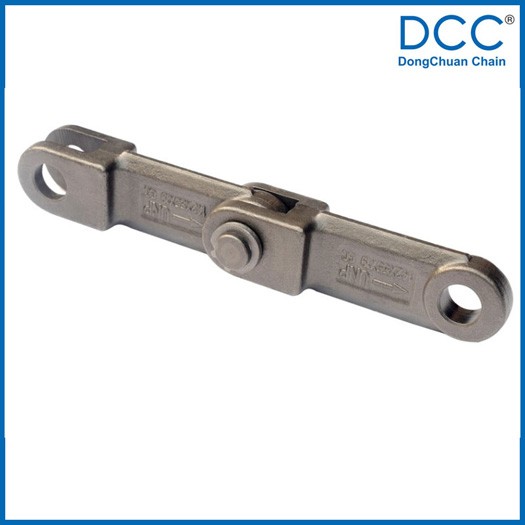
Simple rivetless designs need no tools for setup and bend easily on overhead tracks. For instance, X348 links use a 3.015-inch pitch and reach a 24,000-pound breaking force in treated steel. Medium X458 links use a 4.031-inch pitch for a 60,000-pound rating. Heavy X678 links offer a 6.031-inch pitch with a 100,000-pound rating for hard factory work.
Finding Trusted Options for Heavy Machinery
Choosing a skilled forged chain maker ensures easy work in harsh plant setups. Changzhou DONGCHUAN Chain Transmission brings twenty years of factory practice to heavy industry sectors. DONGCHUAN ships tough conveyor parts to mines, metal mills, and bulk handling sites. Every forged chain uses solid link builds to drop soft spots and resist heavy hits during sudden power shifts.
Plant experts often need special conveyor parts to fit custom building plans. DONGCHUAN builds custom chain setups with special pitch sizes, flight parts, and heat steps. Tech teams help you match sprocket teeth and adjust Cardan drives for strong motor systems. Buying parts from a trusted forged chain maker stops sudden plant stops and extends machine life across tough jobs.
Smart planning and careful checks help factory teams pick the best machinery parts. Use this simple guide to choose the right forged chain for your project:
Collect work details, figure out heavy pulling forces, and check for harsh conditions like high heat, rust, or rough dust.
Select strong steel types and hardening steps to get a tough outer shell with a shatter-proof inner core.
Match scraper designs to your exact conveyor slope angle and the type of items you plan to move.
Check factory certifications like ISO 9001 and API to ensure your chain will run reliably for a long time.
You protect your machines from sudden breaks by choosing a well-built forged chain. Talk with the experts at DONGCHUAN to build strong custom options for your plant.
FAQ
What is the main difference between a forged chain and a cast chain?
Forged chain links feature a dense, continuous grain structure without hidden air holes inside. Cast links cool unevenly and contain tiny inner flaws. Forging provides far greater fatigue strength, which protects your drive system against sudden breaks from heavy factory shocks.
How often should you inspect chain pitch for wear?
You should check link stretching during regular plant maintenance shifts. Industry standards suggest replacing your setup when pin joint wear increases total pitch space by 3%. Excessive pitch growth forces links to ride up sprocket teeth, causing severe line jams or total machine failure.
How do you select the correct flight attachments for your conveyor?
You choose custom flight attachments based on your main material features. Fine powders need closer attachment spacing to stop loose items from sliding backward. Large, rough lumps require wider spaces and double-strand lines. Proper part matching prevents flight twisting and extends total chain working life.
Why should you partner with a certified forged chain manufacturer?
A certified forged chain maker like DONGCHUAN follows ISO 9001 and API quality rules. You get strong parts crafted from premium alloy steel with controlled heat steps. Certified suppliers offer tested load ratings, custom engineering designs, and long-term working safety for your heavy plant machinery setups.

