


Apron Conveyor Chain Basics: What It Is and How It Works
An apron conveyor chain is a heavy-duty conveyor system made from overlapping steel pans (or aprons) attached to a rugged chain. This design creates a continuous, leak-resistant trough that can move very heavy materials such as sharp rocks, hot castings, or abrasive ores without damaging the equipment. You use this technology when standard belt conveyors cannot withstand harsh operating conditions. Related systems called apron feeders control material flow from hoppers, with different designs suited to specific loading tasks.
The global market reflects the importance of this equipment. Industry research estimates the apron conveyor market at approximately USD 3.8 billion in 2025, with projected growth to USD 6.2 billion by 2033—a compound annual growth rate of roughly 6.4%.[1] This growth is driven by demand in mining, metalworking, cement, and waste management. Understanding this equipment helps you determine whether it fits your material handling needs.
Key Takeaways
Apron conveyor chains use overlapping steel pans to form a leak-resistant trough, ideal for moving heavy, sharp, or hot materials.
The chain-driven, positive-engagement mechanism prevents slippage and performs reliably under heavy loads.
These systems operate in harsh environments, with specialized designs handling elevated temperatures and slopes up to 25 degrees, while the chain runs protected beneath the pans.
Regular maintenance, including chain tension and elongation checks, extends service life and prevents unexpected breakdowns.
Choose an apron conveyor when you need strength and reliability that belt conveyors cannot provide—especially in mining, foundries, and high-volume bulk material handling.
Core Components of an Apron Conveyor Chain
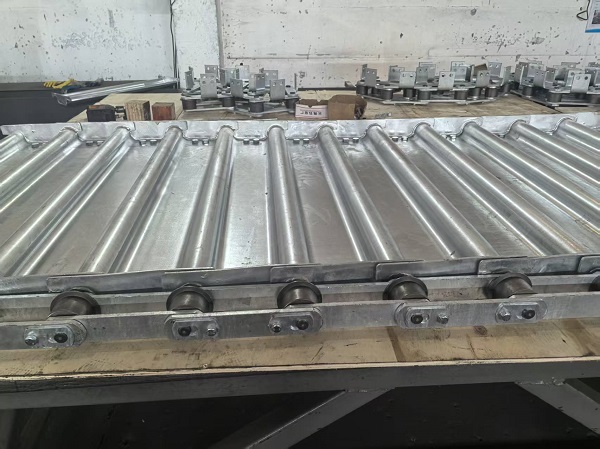
An apron conveyor chain has three main groups of parts. The steel pans form the carrying surface. The chain links provide the pulling force. The rollers, sprockets, and drive system create the movement. Knowing each part helps you select the right system.
Overlapping Steel Pans and Chain Links
Manufacturers typically make the steel pans from wear-resistant alloy steels such as 40Cr, 5140, or 41Cr4. These materials are through-hardened to resist wear and impact from heavy materials. Pan thicknesses commonly range from 1/4 inch to 1/2 inch. Standard widths can go up to 120 inches. Pitch options are typically 6 inches or 9 inches. Side wing (cheek plate) heights range from 3 inches to 6 inches.
Different pan styles fit different uses. Style A uses double-beaded, leak-resistant pans for fine or hot materials. Style B has deep, double-beaded pans for larger material volumes. Style C provides extra-deep pans for steeper slopes and higher capacities. The piano-hinge flat pan design works well for small and irregularly shaped items such as waste, with optional pusher cleats. The apron conveyor design relies on these overlapping pans for structural strength.
The overlapping design minimizes leakage. The pans form a continuous trough with very small gaps between them. Labyrinth-style seals between the pans help create a nearly enclosed surface. This structure reduces dust and fine material leakage through the bottom. You get minimal material loss even with abrasive powders or hot granules.
The chain links connect directly to the pans. These links use drop-forged or plate-style symmetrical designs suitable for bidirectional operation. The material is alloy steel with a fine-grain structure that resists fatigue and impact. Heat treatment includes carburizing or quenching and tempering, with case hardness typically reaching 45 to 55 HRC. Hardened pins and precision-made bushings reduce elongation over time. Each chain batch typically undergoes proof load testing at approximately 2 times the working load.
Chain sidebars are commonly 2 inches wide and 1/4 inch thick, made from precision die-punched 1045 alloy steel. Chain pins use 1045 cold-rolled steel with a typical diameter of 0.750 inch, and pin ends are milled flat to lock into outer sidebars. Hinge pans use 1/4 inch steel plate with fully closed loops welded on each side. Impact shoes are 1 inch plate, approximately 3 inches by 6 inches, welded on the underside at regular intervals for extra protection. You might see this pan style in an apron feeder used for controlled material flow. Other apron feeder designs use different configurations for specific jobs.
Rollers, Sprockets, and Drive System
The sprocket teeth engage the chain rollers. With a properly designed tooth profile, the driving tooth pushes against the chain tension. In a well-designed system, the load is distributed across multiple engaged teeth rather than concentrated on a single tooth. This positive mechanical engagement eliminates the need for high back tension and prevents slip.
The chain pitch matches the sprocket tooth pitch exactly. Each link engages a tooth, locking the rotation. This positive engagement provides approximately 96 to 98 percent efficiency on a clean, properly tensioned chain. Unlike friction-based V-belts that require pretension, the chain only needs enough slack-side tension to keep rollers seated. Slip is physically prevented by the tooth-roller engagement.
Power transmission works through tooth-to-roller contact. The driving sprocket pulls the chain. The chain wraps around the driven sprocket. The sprocket teeth fit into the gaps between rollers. Since every roller meshes with a tooth, the speed ratio is fixed by the tooth count ratio.
The drive system includes a motor, gearbox (speed reducer), and sprocket assembly. Proper tensioning keeps the conveyor running smoothly. Tracking adjustments ensure the chain stays centered on the sprockets. When you maintain these parts correctly, the system delivers reliable performance for years. The conveyor handles heavy loads without problems.
Need a Heavy-Duty Apron Conveyor Chain for Your Operation?
DONGCHUAN manufactures apron conveyor chains, drop-forged chains, and custom conveyor attachments for mining, cement, foundry, and bulk material handling. Get engineering support for pan design, chain pitch, and material selection tailored to your application.
Request a Quote / Send InquiryHow an Apron Conveyor Chain Works
Understanding how it works helps you see why this equipment handles tough conditions so well. The system converts rotational power into linear material movement through a straightforward mechanical process.
The Mechanical Movement and Material Flow
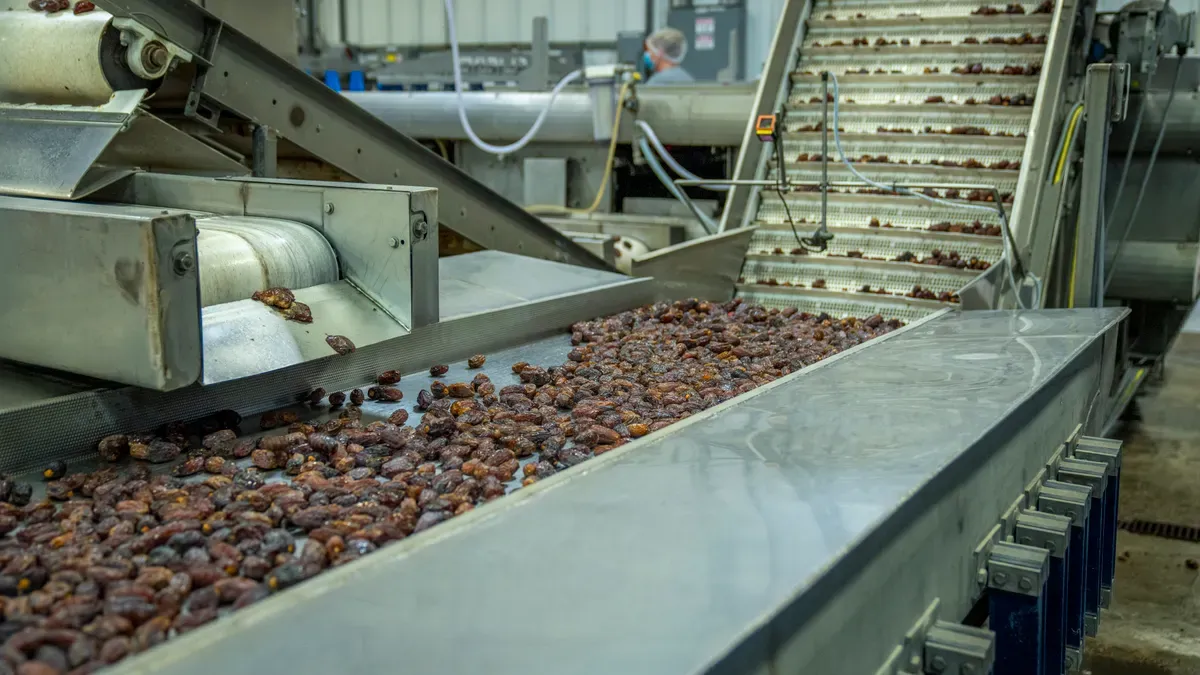
The drive motor starts the process. It connects to a speed reducer that multiplies torque. This reducer turns the main sprocket. The sprocket teeth engage the chain links, pulling the entire loop forward. As the chain moves, the attached steel pans travel along the conveyor frame, creating a continuous moving surface.
You can visualize the material path clearly. Material enters from a hopper or feed chute at the inlet end. The moving pans carry it along the frame. The conveyor runs horizontally or on an incline. Standard designs handle slopes up to 25 degrees. Some special configurations, called steep-transport apron conveyors, handle steeper angles with additional pan features such as deep cleats.
The chain stays protected under the pans. It never comes into direct contact with the conveyed material. This design significantly reduces wear. Abrasive rocks, hot slag, or sharp metal pieces only contact the steel pans, not the chain components. You get longer chain life and fewer replacements.
The overlapping pan shape plays a key role in material flow. The fish-scale arrangement keeps gaps between pans very small. Material cannot escape through the bottom. This containment reduces spillage and dust. The smooth surface also helps material move steadily across the full conveyor length.
Several factors determine your material flow rate. The pan width should be at least twice the largest lump size. The material layer thickness should be appropriate—not too thin or too deep. The chain speed should match your downstream processing capacity. The installation angle should be 3 to 5 degrees below the material's angle of repose. You can adjust the hopper discharge opening and chain speed to achieve precise flow control.
Typical conveying speeds range from 0.05 to 1.60 meters per second. The maximum incline angle for standard apron conveyor systems is approximately 25 degrees. Some heavy-duty feeders operate at different settings depending on the application.
Tensioning, Tracking, and Discharge
Proper tensioning prevents many operational problems. You install tension adjustment devices, such as a screw rod or hydraulic cylinder, on the system. You check the chain tension regularly to keep both sides even. When you notice uneven tension, you tighten the looser side to balance the system.
Uneven tension causes chain tracking deviation. This happens because wear and elongation create different chain lengths on each side. The deviation makes the chain rub against side plates and guide rails. This rubbing accelerates wear on both parts. In severe cases, the chain can derail completely.
You should follow a regular inspection schedule to maintain correct tracking. The table below shows key checkpoints.
| Inspection Interval | Key Measurement/Action | Purpose for Tracking |
|---|---|---|
| Every 25,000 tonnes | Drive chain tension at midspan (sag measurement) | Ensures proper tension to prevent chain jumping or deviation |
| Every 50,000 tonnes | Chain pitch measurement against baseline and OEM limit | Detects elongation beyond 1.5% to trigger preemptive replacement |
| Every 50,000 tonnes | Sprocket tooth profile gauge check (drive and tail) | Identifies hooked-profile wear for scheduled replacement |
| Condition-Triggered | Chain replacement when elongation exceeds 1.5% of nominal pitch | Prevents poor sprocket engagement and jump-tooth events |
| Condition-Triggered | Immediate shutdown if chain jump event occurs | Prevents catastrophic failure before restart |
You also monitor the mid-span sag of the chain plates, keeping it under 20 millimeters. The gap between side-guiding baffles and chain plates should measure 5 to 10 millimeters. You clean accumulated material from the guiding device to maintain a stable running path.
Discharge occurs at the end of the conveyor. Material falls off the pans by gravity or is directed by baffles into the next processing stage. An apron feeder uses this same principle to control material flow from hoppers. Different apron feeders handle various bulk materials such as ore, coal, and clinker. The chain conveyor design ensures reliable discharge without clogging, even with sticky or irregular materials. This full cycle, from intake to discharge, repeats continuously for years of dependable service.
Key Applications of the Apron Conveyor
Heavy-Duty Industries: Mining, Foundry, and Metallurgy
You find these systems in the most demanding industrial environments. Mining operations use them to move crushed rock, ore, coal, and clinker. These machines commonly handle from 100 to 5,000 tons per hour, with very large custom units capable of higher throughput. Pan widths range between 24 and 96 inches. You need a sealed chain design to keep sand and dust out of the chain components. Self-lubricating pins and sleeves reduce friction without frequent manual lubrication. Drop-forged links provide higher strength and better impact resistance from ore dumping. Manganese steel (Hadfield steel) pans work-harden under impact, providing excellent wear resistance against hard ores.
Foundry and metalworking applications present different challenges. You move hot castings, sinter, coke, and steel slag at elevated temperatures. L-shaped chain links act as custom attachments for mounting slats. Large-pitch, forged chain plates resist high heat and heavy loads. Sealed heavy-duty rollers maintain reliable performance. Steel mills use these systems in sintering plants, ironmaking, and continuous casting. The design follows standards such as ISO 2140 (which specifies main dimensions for apron conveyors, including chain pitch, apron width, and cheek plate height) and ISO 7189 (design rules for apron conveyors).[2][3] You can customize the chain with additional metallurgical requirements, such as high-strength alloy steel for demanding applications.
The Apron Feeder in Bulk Material Handling
An apron feeder is a specialized type of apron conveyor. You use an apron feeder to control the flow of bulk materials from hoppers and bins. An apron feeder handles cement, clinker, ore, coal, and lime. The variable-speed drive system on an apron feeder lets you adjust the feed rate. An apron feeder prevents surges that can overload downstream machinery. An apron feeder acts as a bridge between storage and processing equipment. Every apron feeder requires proper sizing for your specific material.
Apron feeders provide excellent control over the material flow rate. You find apron feeders in cement plants, mines, and coal handling facilities. Different apron feeders handle different material sizes and temperatures. Large apron feeders can handle 800-mm limestone chunks at slow speeds. Smaller apron feeders feed bucket elevators and other processing equipment. You can also use apron feeders in high-temperature environments. Heavy-duty apron feeders handle clinker at approximately 150 degrees Celsius and higher with specialized designs.
You also find DONGCHUAN's chains in waste handling, food processing, and forging applications. You can choose stainless steel 304 or 316 for food processing, keeping the transport clean and hygienic. The chains handle heavy workpieces in forging and construction waste in environmental applications.
Advantages of Apron Conveyor Systems
When you compare an apron conveyor to a belt conveyor, the differences are clear. Belt systems struggle with sharp, heavy, or hot materials—they tear, melt, and wear out quickly. An apron conveyor chain handles these same conditions without failing. You get a system built for the toughest jobs in your facility.
Durability, Temperature Resistance, and Leak-Resistant Design
The steel construction provides exceptional durability. Heavy-duty steel plates and chain roller drives keep the system stable under heavy loads. You can move coarse ores, coal, and large castings that would damage a belt conveyor. The wear resistance of steel plates and chains remains excellent, even with very abrasive materials such as quartz sand and iron ore.
Temperature resistance is a key advantage. You can operate reliably in elevated heat, dust, and humidity where belts fail quickly. Standard designs handle materials up to several hundred degrees Celsius, while specialized foundry-grade apron conveyors can handle hot castings and slag at temperatures approaching 400–600°C with appropriate pan materials and heat shielding. The overlapping pan design creates a leak-resistant trough. Material stays contained, so you lose very little through gaps. The fish-scale arrangement of the pans prevents fine particles and powders from escaping.
Impact resistance matters in mining and foundry work. The system handles heavy impact loading without damage. You can accept large lump sizes, up to 2.5 to 3 cubic meters, under proper feed conditions. Belts tear and puncture under these loads. Steel pans absorb the impact and continue moving.
Low Maintenance and High Load Capacity
Your long-term costs decrease with this design. The durability of steel parts means fewer replacements and less downtime. You pay more upfront, but the return on investment appears over time. Maintenance stays simple because the chain runs protected beneath the pans, away from abrasive material.
The load capacity is substantial. Standard operating capacities commonly reach 1,000–5,000 tons per hour, with very large custom mining units capable of significantly higher throughput. Slower speeds and raised edges (called grousers or cleats) reduce material slippage on inclines. You get steady, controlled flow without product loss. The system handles large, heavy, and sharp materials without the risk of tearing or puncturing that belts face.
An apron feeder uses these same advantages for controlled material discharge. Different apron feeders serve various bulk handling needs. Every conveyor in this category shares the same core benefit: durability in tough environments where impact and abrasion are unavoidable. You choose this system when you need reliability that belts cannot offer.
You now understand why an apron conveyor chain serves as the workhorse for extreme material handling. Its overlapping steel pans create a leak-resistant trough that withstands elevated temperatures while moving heavy, sharp materials that destroy belt conveyors. The chain-driven mechanism carries loads on inclines up to 25 degrees, keeping the chain protected beneath the pans for extended service life.
When you need this level of durability, choose a manufacturer with proven credentials. Look for ISO 9001 certification and extensive industry experience. DONGCHUAN offers both, plus custom engineering tailored to your specific application. Whether you need an apron feeder for controlled discharge or a full conveyor system, their engineering team can support your project.
FAQ
How long does an apron conveyor chain last?
You replace the chain when it stretches beyond 1.5% of its nominal pitch. Checking it every 25,000 to 50,000 tonnes of moved material helps you detect wear early. This routine prevents unexpected breakdowns. Actual service life varies significantly based on material abrasiveness, load, and maintenance practices.
Can you use an apron conveyor chain in food processing?
Yes. You can specify the system with stainless steel 304 or 316 pans and components. These materials keep the transport clean and corrosion-resistant. Food processors choose this option to handle ingredients without contamination risk.
How does an apron feeder differ from a standard apron conveyor?
An apron feeder manages the flow rate of bulk materials from hoppers. It runs on a variable-speed drive, allowing you to fine-tune the feed rate. Standard apron conveyors primarily move material over a distance without that level of flow control. Both use the same overlapping pan and chain technology.
What maximum incline can an apron conveyor chain handle?
Standard systems handle slopes up to approximately 25 degrees. Special steep-transport designs can handle steeper angles with additional pan features such as deep cleats or grousers. You select the appropriate configuration based on your material's angle of repose and your layout constraints.
References & Sources
DataHorizzon Research. "Apron Conveyor Market Size, Share & Growth Analysis." https://datahorizzonresearch.com/apron-conveyor-market-22471
International Organization for Standardization (ISO). "ISO 2140:1975 — Continuous mechanical handling equipment for loose bulk materials: Apron conveyors: Main dimensions." https://www.iso.org/obp/ui/#!iso:std:6931:en
International Organization for Standardization (ISO). "ISO 7189:1983 — Continuous mechanical handling equipment: Apron conveyors: Design rules." https://www.iso.org/cms/render/live/en/sites/isoorg/contents/data/standard/01/38/13806.html

