


How to Determine the Right Chain Dimensions for Your Industrial Project: A Complete 2026 Guide
Industrial projects demand precision, and selecting the correct chain dimensions can make the difference between smooth operations and costly downtime. Whether managing a new conveyor system installation or upgrading existing material handling equipment, understanding how to determine proper chain dimensions for industrial conveyor chains is crucial for project success. This comprehensive guide walks through the essential factors, practical calculations, and decision-making processes that engineering teams and facility managers need to specify the right chain for any industrial application.
Key Takeaways
Chain pitch directly affects load capacity, speed compatibility, and equipment selection—the most critical dimension to determine first
Pin diameter and roller dimensions must match the actual working loads and environmental conditions of the specific application
ISO 606 and ANSI B29.1 standards provide reliable dimensional references for short-pitch transmission and industrial conveyor chains
Proper chain selection requires calculating total chain pull, considering safety factors between 7:1 and 10:1 depending on load conditions
Inside width, plate thickness, and attachment spacing are secondary dimensions that affect long-term reliability and maintenance costs
Working with experienced manufacturers ensures accurate dimension specification and reduces costly field modifications
Why Chain Dimensions Matter More Than You Think
In 2026, industrial facilities operate under tighter margins than ever before. A conveyor system running with incorrectly specified chain dimensions creates cascading problems—excessive wear, frequent breakdowns, increased maintenance costs, and unplanned production stoppages. The global material handling equipment market has seen dimension standardization improve dramatically, yet many projects still suffer from basic specification errors during the planning phase.
When engineers select industrial conveyor chain components, they are essentially specifying the mechanical heart of a material handling system. Each dimension carries functional implications. Pitch determines how the chain engages with sprockets and influences the smoothness of operation. Roller diameter affects bearing pressure on tracks and wear rates. Pin diameter governs the chain's ability to handle tensile loads without plastic deformation or fracture. Understanding these relationships transforms chain selection from guesswork into engineering precision.
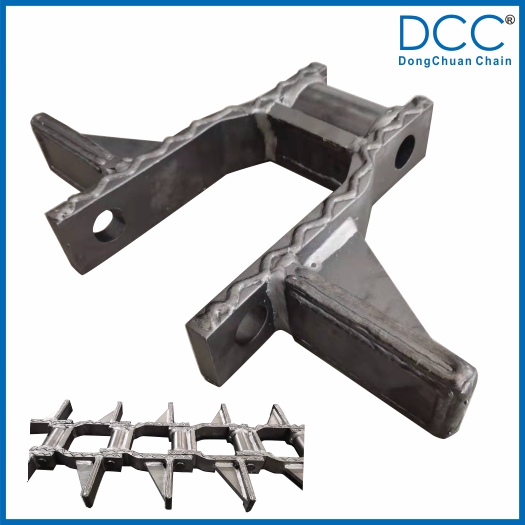
Understanding the Core Dimensions of Industrial Conveyor Chains
Before diving into selection procedures, it helps to establish exactly what dimensions define a chain and why each one matters to system performance.
Chain Pitch: The Foundation Dimension
Pitch represents the distance between the centers of two adjacent pins in the chain assembly. It is measured in millimeters or inches and serves as the primary identification parameter for any chain series. Common pitch sizes for material handling applications range from 38.1mm to 200mm, though specialty applications may use larger or smaller pitches.
The pitch directly determines which sprocket the chain will engage with and affects the maximum permissible chain speed. Smaller pitch chains typically run at higher speeds but carry lighter loads. Larger pitch chains handle heavier loads but operate at slower speeds due to mechanical limitations and increased impact forces during engagement. The relationship between pitch and load capacity is not linear—doubling the pitch does not double the load capacity, which is why proper calculation based on recognized standards becomes essential.
Pin Diameter and Material Strength
The pin connects individual chain links and represents the primary load-bearing element in tension. Pin diameter directly influences the chain's ultimate tensile strength and fatigue life. Pins are typically manufactured from case-hardened alloy steel to provide surface hardness while maintaining core toughness. The diameter must be sufficient to resist both tensile loads and the bearing pressures that occur at the pin-bush interface during articulation.
Standard chains use solid pins, but some heavy-duty and specialty applications employ hollow pins that allow through-bolting of attachments or the passage of lubrication systems. When specifying pin diameter, engineers must consider not only static loads but also shock loading conditions and the cumulative fatigue effects of millions of articulation cycles over the chain's service life.
Roller Diameter and Track Contact
Rollers rotate on the bush and contact the sprocket teeth during driving, or run on tracks and guides during conveying. The roller diameter affects bearing pressure at contact points—larger rollers distribute loads over a greater area, reducing wear rates on both the chain and supporting structures. For conveyor applications where the chain runs on guides or wear strips, proper roller sizing becomes critical to achieving acceptable service life.
Roller material and surface treatment also matter. Standard carbon steel rollers suit general applications, while hardened rollers or those with specialized coatings handle abrasive environments or extreme temperatures. Some high-precision applications use rollers with tight diameter tolerances to minimize vibration and ensure smooth operation at elevated speeds.
Inside Width and Plate Dimensions
Inside width measures the distance between the inner faces of the chain's link plates and determines the space available for bushings, pins, and attachments. This dimension must accommodate the designed components with appropriate clearances for lubrication and articulation while providing sufficient lateral rigidity to prevent chain distortion under load.
Plate thickness and height affect the chain's resistance to bending and impact loads. Thicker plates increase strength but also add weight and cost. Plate height influences the overall rigidity of the chain strand and affects how well it resists catenary sag in unsupported spans. The balance between strength requirements and practical limitations defines the optimal plate dimensions for any given application.
Step-by-Step Process to Determine the Right Chain Dimensions
Selecting proper chain dimensions follows a logical engineering process. Missing steps or making assumptions without verification leads to specification errors that manifest as field problems during commissioning or early operation.
Step 1: Define Operating Parameters
Begin by documenting the conveyor's fundamental operating conditions. This includes the total conveyor length, horizontal and vertical distances, chain speed in meters per minute or feet per minute, and the operating environment including temperature range, presence of moisture or chemicals, and exposure to abrasive materials. Also specify whether the return strand will be supported or unsupported, as this affects chain pull calculations.
Material characteristics matter significantly. Record the bulk density or unit weight of conveyed material, the flow rate or throughput required, and the method of loading and discharge. Shock loading conditions—such as material dropping from height onto the conveyor—require special consideration in safety factor selection.
Step 2: Calculate Total Chain Pull
Chain pull represents the total force the chain must exert to move the load through the conveying system. The calculation depends on conveyor configuration. For horizontal conveyors, chain pull equals the weight of the material plus the weight of moving parts, multiplied by the coefficient of friction of the chain on guides or tracks. For inclined conveyors, add the component of weight acting parallel to the incline. The general formula for a simple horizontal conveyor is:
Chain Pull (P) = [(Weight of chain per meter × Length) + (Weight of material per meter × Length) + (Weight of attachments per meter × Length)] × Friction coefficient × Service factor
The friction coefficient typically ranges from 0.1 to 0.5 depending on guide material and lubrication conditions. Service factors account for starting loads and operational variations, usually ranging from 1.2 to 2.0. For complex conveyor paths with multiple bends, inclines, and transfer points, calculate the chain pull for each section and sum them to obtain total pull.
Step 3: Determine Required Tensile Strength
Once total chain pull is known, calculate the required minimum ultimate tensile strength using an appropriate safety factor. Industry practice recommends a minimum safety factor of 7:1 for standard operating conditions—meaning the chain's rated breaking strength should be at least seven times the maximum calculated working tension. For applications with shock loading, higher speeds, or critical consequences of failure, increase the safety factor to 10:1 or higher.
This calculation provides the minimum tensile strength specification, which then guides the selection of chain series and pitch from standard catalogs or specifications tables.
Step 4: Select Chain Series from Standards
With the required tensile strength established, refer to recognized standards such as ISO 606 for short-pitch roller chains or industry-specific specifications for larger conveyor chains. These standards provide tables listing pitch, pin diameter, roller diameter, inside width, plate thickness, and minimum tensile strength for each chain designation.
Select the smallest pitch chain that meets or exceeds the required tensile strength. Smaller pitch generally offers smoother operation and lower cost, but verify that the selected pitch is compatible with the intended operating speed and sprocket arrangements.
Step 5: Verify Roller Load and Bearing Pressure
For conveyor applications where the chain runs on guides or where material weight is supported by the chain's rollers, calculate the bearing pressure at roller-guide contact points. This pressure must not exceed the allowable limits for the guide material and roller hardness. The formula is:
Bearing Pressure = Load per roller ÷ (Roller diameter × Roller width)
If bearing pressure exceeds recommended limits, consider a larger chain pitch with larger rollers, or increase the number of chains in parallel to distribute the load. Excessive bearing pressure accelerates wear on both rollers and guides, dramatically reducing service life.
Step 6: Confirm Attachment Compatibility
Many conveyor chains carry attachments such as flights, slats, buckets, or pusher dogs. Verify that the selected chain dimensions provide adequate clearances and mounting points for the required attachments. Standard attachment types and spacings are defined in specifications, but custom attachments require careful dimensional coordination to avoid interference with guides, sprockets, or adjacent components.
Attachment weight must be included in chain pull calculations. Heavy or complex attachments may require chains with extended pins or special plate configurations to provide secure mounting and load distribution.
Need Help Selecting the Right Chain Dimensions?
Choosing the correct industrial conveyor chain specifications requires both technical knowledge and practical experience. DCC specializes in engineering chain solutions for complex industrial applications with over 20 years of manufacturing expertise.
Common Chain Dimension Standards and Their Applications
Industrial chains conform to various national and international standards that define precise dimensions, tolerances, and performance characteristics. Understanding these standards helps ensure component compatibility and simplifies procurement across global supply chains.
| Standard | Region | Typical Pitch Range | Common Applications |
|---|---|---|---|
| ISO 606 | International | 6.35mm - 76.2mm | Short-pitch roller and bush chains for power transmission and light conveying |
| ANSI B29.1 | North America | 0.25" - 3.0" | Precision roller chains, widely used in industrial drives and conveyors |
| DIN 8187/8188 | Germany/Europe | 8mm - 50mm | European standard roller chains for drive and conveyor applications |
| BS 228 | United Kingdom | 6.35mm - 76.2mm | Short-pitch precision roller chains similar to ISO 606 |
| ISO 1275 | International | 50mm - 200mm | Double-pitch conveyor chains for long-span, light-duty applications |
Each standard defines specific dimensions for pitch, pin diameter, roller diameter, inside width, plate thickness, and ultimate tensile strength. When specifying chains for international projects, verify that the selected standard is recognized in the destination market and that replacement parts will be readily available throughout the equipment's operational life.
Practical Considerations That Affect Dimension Selection
Beyond the fundamental calculations, several practical factors influence the final choice of chain dimensions for real-world installations.
Environmental Conditions and Material Selection
Corrosive environments, extreme temperatures, or exposure to abrasive materials may require special chain materials or coatings that affect available dimension options. Stainless steel chains offer excellent corrosion resistance but may have different dimensional specifications than carbon steel equivalents. Chains for high-temperature applications may use special alloys with modified clearances to accommodate thermal expansion.
In food processing or pharmaceutical applications, sanitary design requirements may dictate specific chain constructions that limit dimensional choices. These factors must be considered early in the selection process rather than as afterthoughts during procurement.
Sprocket Availability and Center Distances
The selected chain pitch must match available sprockets, and the number of teeth on drive and driven sprockets affects center distance calculations and chain length requirements. Minimum recommended sprocket sizes typically range from 12 to 17 teeth for the smaller sprocket, depending on chain pitch and speed. Smaller sprockets increase chain articulation frequency and accelerate wear.
Center distance between shafts should allow for proper chain tension adjustment. A general rule suggests center distance should be 30 to 50 times the chain pitch, though specific applications may require different values. Too short a center distance limits adjustment capability, while excessive center distance may require support idlers to prevent catenary sag.
Maintenance and Inspection Access
Chains with larger dimensions typically offer easier inspection and maintenance compared to small-pitch chains. Consider whether maintenance personnel can easily access the chain for lubrication, tension adjustment, and wear monitoring. Some applications benefit from chains with extended pins that allow quick attachment or link removal without complete disassembly.
The availability of spare parts and replacement links in the local market also factors into dimension selection. Choosing a widely-used standard pitch reduces lead times for replacement components and simplifies inventory management.
Common Mistakes to Avoid When Specifying Chain Dimensions
Even experienced engineers occasionally make specification errors that cause operational problems. Being aware of common pitfalls helps avoid these costly mistakes.
Underestimating Starting Loads
Many conveyors experience peak loads during startup that exceed normal running loads by 50 to 100 percent. Failing to account for these starting forces in chain pull calculations results in selecting undersized chains that experience premature failure or chronic overload conditions. Always include appropriate service factors that reflect actual starting conditions.
Ignoring Articulation Frequency
High-speed operations cause the chain to articulate through sprockets thousands or millions of times per day. Each articulation cycle generates wear at pin-bush interfaces. Chains running at high speeds or through small-diameter sprockets may require upgraded materials or larger dimensions to achieve acceptable fatigue life despite having adequate static strength.
Mixing Standards Across Components
Attempting to use an ISO-dimensioned chain with ANSI-dimensioned sprockets, or vice versa, creates compatibility problems. Even when pitch values appear similar, subtle differences in roller diameter, tooth profiles, and tolerances prevent proper engagement and cause accelerated wear or premature failure. Always source chains and sprockets to the same standard.
Neglecting Thermal Expansion
Temperature variations cause materials to expand and contract. For conveyors operating across wide temperature ranges or in environments with significant thermal cycling, account for dimensional changes when specifying chain length and tension adjustment provisions. Inadequate adjustment range leads to excessive tension in cold conditions or slack chains in hot conditions.
Working with Manufacturers for Optimal Dimension Selection
While standardized selection procedures provide a solid foundation, collaboration with experienced chain manufacturers adds valuable insights that improve final specifications.
Reputable manufacturers maintain extensive application databases documenting successful installations across diverse industries. This institutional knowledge helps identify potential issues that might not be obvious from calculations alone. They can recommend proven chain dimensions for similar applications, suggest material upgrades for challenging environments, and offer guidance on attachment configurations that optimize performance.
Manufacturers can also verify calculations, review operating conditions for overlooked factors, and propose alternative solutions that may offer better performance or lower total cost of ownership. When dealing with custom or non-standard applications, their engineering support becomes essential for translating application requirements into manufacturable specifications.
For projects requiring customized chains or special attachments, early manufacturer involvement during the design phase prevents costly redesigns later. They can advise on design modifications that simplify manufacturing, improve reliability, or reduce lead times without compromising functionality.
Summary: Key Principles for Determining Chain Dimensions
Selecting the right industrial conveyor chain dimensions requires systematic analysis of operating conditions, careful calculation of loads and forces, and thoughtful consideration of practical installation and maintenance factors. The process begins with thoroughly documenting application requirements including loads, speeds, environmental conditions, and conveyor layout.
Calculate total chain pull using appropriate formulas for the conveyor configuration, apply proper safety factors based on operating conditions, and use this information to identify chains meeting minimum tensile strength requirements. Verify that selected dimensions provide adequate roller load capacity and bearing pressures within acceptable limits. Confirm compatibility with available sprockets and consideration for maintenance access.
Reference recognized standards such as ISO 606, ANSI B29.1, or applicable regional specifications to ensure dimensional accuracy and component interchangeability. When applications involve special conditions, custom attachments, or particularly demanding environments, engage manufacturer engineering resources to validate selections and identify potential improvements.
By following these principles and avoiding common specification mistakes, engineering teams can confidently determine chain dimensions that deliver reliable, long-lasting performance for their industrial projects. The extra effort invested in thorough dimension selection pays dividends through reduced maintenance costs, fewer unplanned outages, and optimized operational efficiency throughout the equipment's service life.
Partner with DCC for Reliable Chain Solutions
When your industrial project demands precision-engineered conveyor chains backed by technical expertise, DCC delivers comprehensive solutions. With over two decades of manufacturing experience, ISO 9001 and API certifications, and a 30,000+ square meter production facility, DCC specializes in engineering chains, forged chains, welded steel chains, and custom solutions for demanding applications across metallurgy, mining, cement, sugar, palm oil, and general material handling industries.
Their engineering team provides application analysis, dimension verification, and custom design support to ensure every chain specification meets exact project requirements. From standard roller chains to specialized heavy-duty conveyor systems, DCC combines manufacturing capability with practical engineering knowledge that helps projects succeed.
Frequently Asked Questions
What is the most important dimension when selecting an industrial conveyor chain?
Chain pitch is the most critical dimension because it determines load capacity, speed compatibility, and which sprockets the chain will work with. Once pitch is established based on calculated loads and operating conditions, other dimensions follow from standard specifications for that pitch.
How do I calculate the required chain tensile strength for my application?
Calculate total chain pull by accounting for material weight, chain weight, attachment weight, friction forces, and elevation components. Multiply this maximum working tension by a safety factor of 7:1 for normal conditions or 10:1 for shock loading to determine minimum required ultimate tensile strength.
Can I use ISO standard chains with ANSI standard sprockets?
No, mixing standards between chains and sprockets is not recommended. While pitch values may appear similar, differences in roller diameter, tooth profiles, and tolerances prevent proper engagement and cause premature wear or failure. Always match chain and sprocket standards.
What dimensions affect chain wear life the most?
Pin diameter and roller diameter have the greatest impact on wear life. Larger pin diameters better resist bearing pressure at articulation points, while larger roller diameters reduce bearing pressure on tracks and guides. Proper lubrication and operating within rated capacities also significantly extend service life.
How do environmental conditions affect chain dimension selection?
Corrosive environments may require stainless steel chains with different dimensional specifications. High temperatures demand special clearances for thermal expansion. Abrasive conditions benefit from hardened rollers and pins. Always specify materials and treatments appropriate to the environment when selecting dimensions.
What safety factor should I use when sizing conveyor chains?
Industry standard recommends a minimum 7:1 safety factor (chain breaking strength divided by maximum working tension) for normal conveying applications. Increase to 10:1 or higher for shock loading, high speeds, or critical applications where failure consequences are severe.
Do larger chains always last longer than smaller chains?
Not necessarily. When properly selected for the application, a smaller pitch chain operating within its rated capacity can provide excellent service life. Oversizing beyond requirements adds unnecessary cost and weight without proportional life extension. Proper selection based on calculated loads yields optimal life and economy.
How does chain speed affect dimension selection?
Higher speeds require smaller pitch chains with tighter manufacturing tolerances to minimize dynamic forces and vibration. Speed also affects lubrication requirements and articulation frequency, which impacts wear rates. Maximum recommended speeds are specified for each pitch size in standard specifications.

