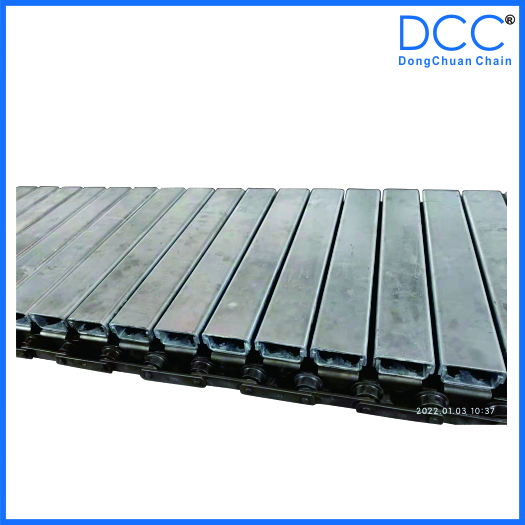
Industrial Roller Chain vs Engineering Class Chain: How to Choose the Right Solution
Selecting between industrial roller chain and engineering class chain determines operational efficiency, maintenance costs, and equipment longevity in power transmission systems. Understanding the fundamental differences between these two chain categories helps engineers and procurement professionals make informed decisions that optimize performance while controlling total ownership costs.
Key Takeaways
Industrial roller chain serves general-purpose applications with moderate loads and speeds, while engineering class chain handles heavy-duty industrial environments
Engineering class chain offers 2-3 times the working load capacity compared to equivalent-sized industrial roller chain
Material composition and heat treatment processes distinguish these chain types, affecting fatigue resistance and service life
Application environment, load characteristics, and operating conditions determine optimal chain selection
Total cost of ownership includes initial investment, maintenance requirements, and expected service life rather than purchase price alone
Proper chain selection prevents premature failure, reduces downtime, and maximizes equipment productivity
Understanding Industrial Roller Chain Fundamentals
Construction and Design Principles
Industrial roller chain represents the most widely used power transmission component in mechanical systems worldwide. The basic design consists of alternating inner and outer link plates connected by pins and bushings, with rollers positioned on the bushings to reduce friction during sprocket engagement. This standardized construction follows specifications established by industry standards organizations, ensuring global compatibility and interchangeability.
The manufacturing process typically involves stamping link plates from medium-carbon steel, forming pins and bushings from case-hardened steel, and assembling components through precision press-fitting. Standard industrial roller chain undergoes basic heat treatment to achieve adequate hardness for general applications. The rollers rotate freely on bushings during operation, distributing wear and extending service life compared to non-roller designs.
Common Applications and Load Capacity
Industrial roller chain excels in applications involving moderate power transmission requirements, operating speeds below 1,000 feet per minute, and environments without extreme temperatures or contamination. Typical applications include agricultural equipment, food processing machinery, packaging systems, and light manufacturing conveyors. Working load capacities range from approximately 200 pounds for small chains to over 10,000 pounds for heavy roller chains.
The versatility of industrial roller chain stems from availability in multiple configurations: single-strand for basic applications, double-strand for increased capacity without changing pitch, and specialized variants including nickel-plated chains for corrosive environments and self-lubricating designs for food-grade applications. Standard pitch sizes from 0.25 inches to 3 inches accommodate diverse speed reduction and power transmission needs across industrial sectors.

Engineering Class Chain Characteristics and Advantages
Enhanced Material Specifications
Engineering class chain distinguishes itself through superior material selection and advanced heat treatment processes. Manufacturers utilize alloy steels containing chromium, nickel, and molybdenum rather than standard carbon steel, significantly improving tensile strength and fatigue resistance. The link plates undergo through-hardening or case-hardening to depths exceeding those in industrial roller chain, creating a harder surface that resists wear while maintaining a tough core that absorbs shock loads.
Pin and bushing materials in engineering class chain receive specialized heat treatment including carburizing, quenching, and tempering sequences that produce optimal hardness gradients. This metallurgical enhancement extends wear life by 3-5 times compared to industrial roller chain operating under identical conditions. The improved material properties also enable higher design safety factors, reducing the risk of catastrophic failure in critical applications.
Heavy-Duty Application Performance
Engineering class chain serves demanding applications where equipment downtime creates substantial financial impact. Cement production facilities, steel mills, mining operations, and power generation equipment rely on engineering class chain to transmit high torque loads reliably. These chains operate effectively in environments with extreme temperatures ranging from -40°F to 600°F, resist contamination from dust and abrasives, and maintain performance despite shock loading from intermittent operation cycles.
The working load capacity of engineering class chain typically exceeds industrial roller chain by 200-300% for equivalent pitch sizes. This capacity advantage allows engineers to specify smaller chain sizes, reducing sprocket dimensions, bearing loads, and overall system cost despite higher chain unit pricing.

Critical Selection Factors for Chain Applications
| Selection Factor | Industrial Roller Chain | Engineering Class Chain |
|---|---|---|
| Working Load Capacity | Moderate (1,000-15,000 lbs) | Heavy-duty (3,000-45,000+ lbs) |
| Operating Speed | Up to 1,000 ft/min | Up to 600 ft/min typically |
| Temperature Range | -10°F to 200°F | -40°F to 600°F |
| Environment Resistance | Standard conditions | Extreme dust, moisture, chemicals |
| Shock Load Tolerance | Light to moderate | High shock absorption |
| Maintenance Interval | Frequent lubrication required | Extended service intervals |
| Cost per Foot | Lower initial investment | Premium pricing (2-4x standard) |
Load Analysis and Safety Factor Determination
Proper chain selection begins with accurate load calculation including transmitted horsepower, operating speed, and service factors accounting for shock loading. The formula P = (HP × 33,000) / V calculates chain pull in pounds, where HP represents horsepower, and V equals chain velocity in feet per minute. Engineers must apply appropriate service factors: 1.0-1.2 for uniform loads like conveyors, 1.3-1.5 for moderate shock applications, and 1.5-2.0 for severe shock conditions such as reciprocating machinery.
Chain manufacturers publish working load ratings representing maximum recommended loads under ideal conditions. Best practices suggest designing systems to operate at 50-70% of published working loads, creating adequate safety margin for unexpected overloads, manufacturing tolerances, and gradual wear degradation. Engineering class chain accommodates these safety factors more easily due to inherently higher strength ratings.
Environmental Condition Assessment
Operating environment significantly influences chain type selection and expected service life. Facilities should evaluate ambient temperature extremes, presence of corrosive substances, exposure to moisture or process fluids, and contamination from dust or abrasive particles. Industrial roller chain performs adequately in climate-controlled facilities with minimal contamination, while engineering class chain becomes essential in foundries, outdoor installations, chemical processing plants, and mining operations where harsh conditions prevail.
Lubrication accessibility affects chain selection as well. Applications where regular maintenance proves difficult due to elevated mounting positions, continuous operation requirements, or hazardous environment entry restrictions benefit from engineering class chain's extended lubrication intervals. Some specialized chains incorporate self-lubricating features through sintered bushings impregnated with lubricant, though these typically cost more than standard configurations.
Maintenance Requirements and Service Life Expectations
Lubrication Protocols and Frequencies
Proper lubrication represents the single most important factor determining chain service life regardless of type. According to industry lubrication standards, industrial roller chain requires lubrication every 8-40 hours of operation depending on speed and load conditions. Manual brush application suffices for slow-speed applications below 150 feet per minute, while drip lubrication or oil bath systems serve moderate speeds. High-speed applications demand automatic lubrication systems delivering measured quantities at specified intervals.
Engineering class chain tolerates longer intervals between lubrication due to superior surface hardness and precision manufacturing. Heavy-duty applications may extend maintenance cycles to 100-200 operating hours, reducing labor costs and production interruptions. However, facility managers should never interpret extended intervals as permission to neglect lubrication entirely, as this remains the primary wear prevention method for all chain types.
Wear Pattern Monitoring and Replacement Indicators
Both industrial roller chain and engineering class chain exhibit predictable wear patterns allowing proactive replacement before catastrophic failure occurs. Elongation measurement provides the most reliable wear indicator: chain pitch increases gradually as pins and bushings wear. When elongation reaches 2-3% of original pitch length, replacement becomes necessary to prevent excessive sprocket wear and potential tooth jumping under load.
Visual inspection should identify damaged rollers, cracked link plates, and pin-bushing binding indicating lubrication deficiency or overload conditions. Engineering class chain typically demonstrates more gradual wear progression compared to industrial roller chain under equivalent operating conditions, often delivering 2-5 times longer service before reaching replacement thresholds. Facilities should maintain wear measurement records to optimize replacement scheduling and identify application issues requiring corrective action.
Economic Analysis and Total Cost of Ownership
Initial Investment Comparison
Engineering class chain costs 2-4 times more per foot than equivalent-sized industrial roller chain due to premium materials, advanced heat treatment, and stricter manufacturing tolerances. However, focusing solely on initial purchase price overlooks significant operational considerations. A comprehensive economic analysis must account for installation labor, required maintenance, expected service life, and downtime costs during replacement procedures.
For a practical comparison, consider a conveyor system requiring 100 feet of standard chain. Industrial roller chain might cost $500 total, while engineering class chain could reach $1,500-$2,000. If the industrial roller chain lasts 18 months before replacement while engineering class chain delivers 5 years of service, the annual cost becomes $333 versus $300-$400 respectively, effectively neutralizing the price differential before considering downtime and labor expenses.
Downtime and Productivity Impact
Unplanned equipment stoppages for emergency chain replacement create costs far exceeding material pricing. Production facilities lose revenue during downtime, incur overtime wages for maintenance personnel, and may disappoint customers through delayed shipments. If a production line generates $5,000 profit per hour, and premature chain failure causes a 4-hour outage, the total impact reaches $20,000 plus replacement parts and labor—dwarfing any initial cost savings from selecting cheaper chain.
Engineering class chain reduces failure probability through superior strength margins and extended wear life. The reliability advantage proves particularly valuable in continuous process industries operating 24/7 schedules where shutdown windows occur infrequently. Facilities can schedule engineering class chain replacement during planned maintenance periods rather than reacting to unexpected failures, improving overall equipment effectiveness and production planning predictability.
Industry-Specific Application Guidelines
Manufacturing and Material Handling
Assembly line conveyors, parts washing systems, and overhead material transport typically utilize industrial roller chain successfully. These applications involve relatively consistent loads, operate in controlled environments, and allow regular maintenance access. Facilities should specify engineering class chain for heavy pallet conveyors handling automotive assemblies, appliance manufacturing, or other high-weight products where failure consequences include equipment damage beyond chain replacement costs.
Mining and Aggregate Processing
Quarry operations, underground mining equipment, and aggregate processing plants represent ideal applications for engineering class chain. Crushers, conveyors, and material handling equipment operate under extreme loads with significant impact forces as rock and ore move through processing stages. The abrasive nature of these materials rapidly degrades standard industrial roller chain, while engineering class chain withstands contamination and delivers reliable performance measured in years rather than months.
Food and Beverage Production
Food processing requires specialized chain considerations beyond the industrial versus engineering class distinction. Stainless steel chains meeting sanitary design standards prevent contamination while resisting frequent washdown procedures using hot water and harsh detergents. Within the food industry, engineering class stainless chains serve heavy-duty applications like can filling lines and bottle packaging systems, while industrial roller chain in stainless or nickel-plated finishes handles lighter conveyor duties in bakeries and snack food production.
Installation Best Practices and System Optimization
Alignment and Tensioning Procedures
Proper installation significantly influences chain performance regardless of type selected. Sprockets must align within 0.010 inches per foot of center distance to prevent side loading that accelerates wear. Laser alignment tools ensure precision, though simple straightedge methods suffice for shorter center distances. Initial tension should allow 2-3% slack measured at the midpoint of the longest unsupported span—excessive tension overloads bearings while insufficient tension permits chain whip and potential derailment.
Both industrial roller chain and engineering class chain require running-in periods after installation. Operators should run new chains at reduced loads for 4-8 hours, monitoring for unusual noise or vibration. This break-in process allows components to seat properly, distributes lubricant throughout pin-bushing interfaces, and identifies any assembly issues before full production loading begins.
Sprocket Selection and Compatibility
Chain performance depends equally on sprocket quality and design. Minimum sprocket tooth counts of 17 teeth for driver sprockets and 32 teeth for driven sprockets optimize load distribution and reduce polygonal action affecting smooth operation. Engineering class chain systems should utilize hardened sprockets matching the chain's enhanced material properties—pairing premium chain with soft sprockets wastes the chain investment through accelerated sprocket wear.
Frequently Asked Questions
What is the primary difference between industrial roller chain and engineering class chain?
Engineering class chain features superior alloy steel materials, advanced heat treatment, and precision manufacturing compared to industrial roller chain. This results in 2-3 times higher working load capacity, extended service life, and better performance in extreme environments. Industrial roller chain serves general-purpose applications adequately at lower cost.
How do facilities calculate which chain type their application requires?
Calculate total transmitted load using the formula: Chain Pull = (HP × 33,000) / Chain Velocity (ft/min). Apply appropriate service factors (1.0-2.0) based on shock loading. Compare the result to published working load capacities, designing for 50-70% of maximum ratings. Engineering class chain becomes necessary when calculated loads approach or exceed industrial roller chain capacity limits.
Can industrial roller chain be replaced with engineering class chain in existing equipment?
Yes, engineering class chain maintains identical dimensional specifications to industrial roller chain for equivalent pitch sizes, ensuring direct interchange compatibility. However, verify that existing sprockets provide adequate hardness to match the superior chain properties. Upgrading to engineering class chain often extends service intervals without requiring other system modifications.
What lubrication schedule should facilities follow for each chain type?
Industrial roller chain requires lubrication every 8-40 hours depending on speed and load. Engineering class chain extends intervals to 100-200 hours due to superior wear resistance. Both types require appropriate lubricants: light oils for high-speed applications, heavy oils or greases for slow, heavily loaded systems.
How does operating environment affect chain selection?
Industrial roller chain performs well in clean, climate-controlled facilities. Engineering class chain becomes essential for extreme temperatures (-40°F to 600°F), corrosive atmospheres, heavy contamination, or applications with limited maintenance access. Outdoor installations, foundries, chemical plants, and mining operations typically require engineering class chain durability.
What determines chain replacement timing?
Measure chain elongation regularly—replacement becomes necessary at 2-3% elongation to prevent sprocket damage. Visual inspection should identify damaged rollers, cracked plates, or binding. Engineering class chain typically delivers 2-5 times longer service than industrial roller chain before reaching these replacement indicators.
Making the Right Chain Selection for Your Operation
Choosing between industrial roller chain and engineering class chain requires comprehensive evaluation of operational requirements, environmental conditions, and total cost of ownership rather than focusing solely on initial purchase price. Industrial roller chain serves countless applications successfully where moderate loads, controlled environments, and accessible maintenance prevail. These chains deliver excellent value through proven standardized designs manufactured to globally recognized specifications.
Engineering class chain justifies premium pricing in demanding applications where failure consequences extend beyond simple chain replacement costs. Heavy-duty loads, extreme environments, extended maintenance intervals, and critical process equipment represent ideal scenarios for engineering class chain investment. The enhanced materials, advanced heat treatment, and superior manufacturing precision deliver measurably longer service life and improved reliability.
Successful chain specification depends on accurate load calculation, realistic environmental assessment, and honest evaluation of maintenance capabilities. Organizations should consult detailed engineering data from reputable manufacturers, apply appropriate safety factors, and consider long-term operational costs rather than minimizing initial expenditure. Both industrial roller chain and engineering class chain offer proven performance when properly matched to application requirements—the key lies in understanding which solution optimizes performance, reliability, and value for specific operational needs.
Partner with Experienced Suppliers for Optimal Results
When facilities require reliable power transmission solutions for critical industrial applications, partnering with experienced manufacturers ensures product quality, technical support, and long-term value. Organizations seeking a trusted industrial conveyor chain manufacturer should consider DCC, a specialized supplier offering comprehensive chain solutions backed by rigorous quality standards and dedicated customer service for diverse industrial sectors worldwide.