Every day, countless machines around the world rely on a simple yet ingenious mechanical component to transfer power efficiently and reliably. From bicycles to manufacturing equipment, roller chains have been silently driving industrial progress for over a century. Understanding what a roller chain is and how it functions can help equipment operators, maintenance professionals, and curious minds make informed decisions about their mechanical systems.
A roller chain represents one of the most efficient methods of mechanical power transmission ever developed. This guide explores the essential aspects of roller chains, from their basic construction to practical applications, helping readers gain comprehensive knowledge about this fundamental mechanical component.
Key Takeaways
A roller chain is a mechanical power transmission device consisting of interconnected cylindrical rollers held together by side links
Standard roller chains achieve 96-98% mechanical efficiency in properly lubricated power transmission applications
These chains operate effectively across temperature ranges from -40°F to 400°F (-40°C to 204°C)
Proper maintenance can extend roller chain service life to 15,000+ hours of operation
Common applications range from simple bicycles to complex industrial conveyor systems
Understanding Roller Chain Fundamentals
A roller chain is a type of chain drive consisting of a series of short cylindrical rollers connected by side links. The design enables the chain to engage with toothed wheels called sprockets, creating an efficient mechanical power transmission system. Unlike belt drives or gear systems, roller chains offer a unique combination of strength, durability, and flexibility that makes them ideal for numerous applications.
The basic principle involves the chain wrapping around two or more sprockets. As one sprocket rotates (the driver), it moves the chain, which in turn rotates the other sprocket (the driven). This mechanical advantage allows power to be transmitted across distances ranging from a few inches to several feet, depending on the application requirements.
Core Components of a Roller Chain
Understanding the individual components helps explain how a roller chain achieves such reliable performance:
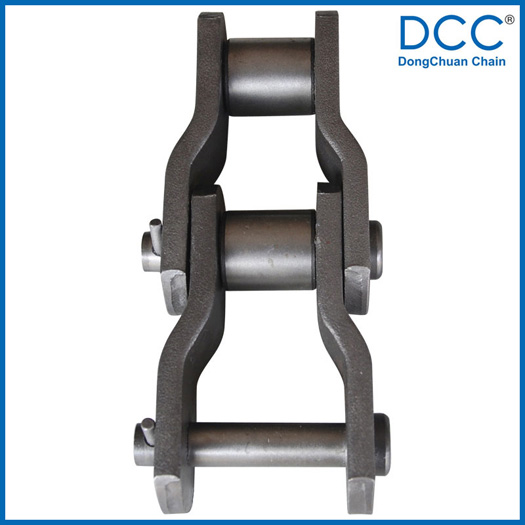
Rollers: These cylindrical components are the chain's namesake. They reduce friction between the chain and sprocket teeth during operation. The rollers rotate on bushings as the chain articulates around sprockets, minimizing wear and extending service life.
Pins: These solid or hollow cylinders connect the inner and outer link plates. Pins must withstand significant tensile forces while allowing smooth articulation as the chain flexes around sprockets.
Bushings: Positioned between the rollers and pins, bushings provide a bearing surface that allows rollers to rotate freely. This design reduces friction and distributes loads more evenly across the chain assembly.
Link Plates: Both inner and outer plates form the structural backbone of the chain. These plates are typically made from heat-treated steel and must resist both tensile stress and impact forces during operation.

How Roller Chains Work
The operating principle of a roller chain relies on positive engagement between the chain rollers and sprocket teeth. Unlike friction-based drives such as belts, this positive engagement prevents slippage and enables precise power transmission. As the drive sprocket rotates, its teeth engage with the chain rollers in sequence, pulling the chain forward.
During operation, each roller enters the sprocket at a specific engagement point and exits after rotating through the arc of contact. This engagement pattern distributes the transmission load across multiple teeth simultaneously, reducing stress on individual components. Properly designed roller chain systems can maintain consistent performance across millions of articulation cycles when correctly installed and maintained.
Power Transmission Efficiency
One of the most significant advantages of roller chains is their exceptional efficiency in converting input power to output power. When properly lubricated, the mechanical efficiency typically ranges from 96% to 98%, meaning only 2-4% of input energy is lost to friction and other factors. This efficiency level surpasses many alternative drive systems and contributes to reduced energy costs in industrial applications.
Types and Specifications of Roller Chains
Roller chains are manufactured in various configurations to meet different application requirements. The standardization established by organizations like the American National Standards Institute and International Organization for Standardization ensures compatibility across manufacturers and applications worldwide.
| Chain Size (ANSI) | Pitch (inches) | Roller Diameter (inches) | Average Tensile Strength (lbs) | Common Applications |
|---|---|---|---|---|
| 25 | 0.250 | 0.130 | 780 | Small machinery, office equipment |
| 35 | 0.375 | 0.200 | 1,760 | Light conveyors, small drives |
| 40 | 0.500 | 0.312 | 3,125 | Bicycles, light industrial equipment |
| 50 | 0.625 | 0.400 | 4,880 | Agricultural equipment, medium conveyors |
| 60 | 0.750 | 0.469 | 7,030 | Heavy conveyors, industrial drives |
| 80 | 1.000 | 0.625 | 12,500 | Heavy machinery, mining equipment |
Specialty Chain Variations
Beyond standard single-strand chains, manufacturers produce several specialized variations:
Multiple-strand chains: When applications require higher load capacity, multiple parallel strands connected by common pins provide increased strength without requiring larger sprockets.
Self-lubricating chains: These chains incorporate sintered metal bushings impregnated with lubricant, reducing maintenance requirements in applications where regular lubrication is difficult.
Corrosion-resistant chains: Manufactured from stainless steel or with special coatings, these chains withstand harsh environments including food processing, chemical plants, and marine applications.
Common Applications of Roller Chains
The versatility of roller chains has led to their adoption across virtually every industry. Their ability to transmit substantial power while maintaining precise timing makes them invaluable in numerous applications.
Transportation and Vehicles
Perhaps the most familiar application is the bicycle, where a roller chain connects the pedal cranks to the rear wheel. Motorcycles also utilize roller chains for final drive systems, with some models operating at speeds exceeding 100 mph. The reliability and efficiency of roller chains make them ideal for these applications where weight and performance are critical considerations.
Industrial Manufacturing
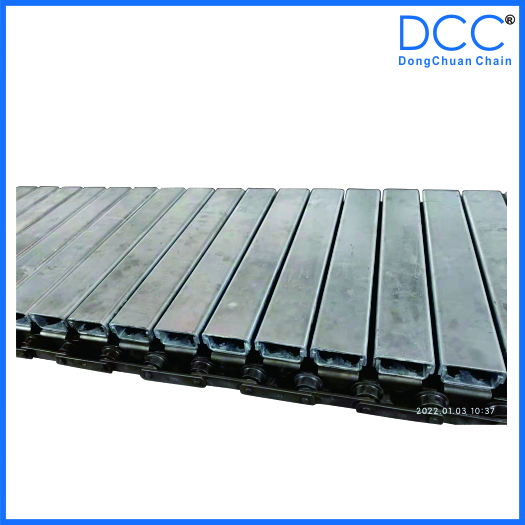
Manufacturing facilities worldwide depend on roller chains for conveyor systems that move products through assembly lines. These systems may operate continuously for years, demonstrating the durability inherent in well-maintained roller chain installations. Properly maintained industrial roller chains regularly achieve operational lifespans exceeding 15,000 hours in demanding production environments.
Agricultural Machinery
Farm equipment from combines to balers incorporates roller chains to transmit power from engines to working components. The chains must withstand exposure to dirt, moisture, and extreme temperatures while maintaining reliable operation during critical harvest periods.
Material Handling Equipment
Forklifts, overhead cranes, and automated storage systems use roller chains for lifting mechanisms and drive systems. The positive engagement characteristic prevents load slippage, enhancing safety in material handling operations.
Advantages and Limitations
Understanding both the strengths and constraints of roller chains helps in making informed decisions about their application.
Key Advantages
Roller chains offer numerous benefits that explain their widespread adoption. They deliver high mechanical efficiency, typically between 96-98% when properly lubricated, which translates to lower energy consumption compared to friction-based systems. The compact design allows power transmission in confined spaces where belt drives would be impractical. Additionally, roller chains operate reliably across a wide temperature range and can transmit substantial power relative to their size and weight.
The standardization of roller chain specifications ensures easy replacement and interchangeability. When a chain requires replacement, compatible components are readily available from multiple manufacturers, reducing downtime and inventory requirements.
Practical Limitations
Despite their advantages, roller chains do have limitations that must be considered. They require regular lubrication to prevent premature wear, which adds to maintenance requirements. Operating roller chains generate more noise than belt drives, which may be problematic in noise-sensitive environments. The chains also require precise alignment between sprockets to prevent premature wear and potential failure.
Additionally, roller chains cannot accommodate the same degree of misalignment as some belt systems. Center distance changes due to thermal expansion or settling foundations can introduce additional stress that reduces chain life.
Maintenance and Service Life Considerations
Proper maintenance significantly extends roller chain service life and ensures reliable operation. Well-maintained chains can outlast poorly maintained chains by a factor of five or more, making consistent maintenance practices essential for maximizing equipment reliability and minimizing total cost of ownership.
Lubrication Requirements
Regular lubrication is essential for roller chain performance. Lubricant reduces friction between pins and bushings, prevents corrosion, and helps dissipate heat generated during operation. The lubrication frequency depends on operating conditions, with clean, moderate-speed applications requiring lubrication every 8 hours of operation, while dirty or high-speed applications may need more frequent attention.
Tension Adjustment
As roller chains wear, they elongate due to pin and bushing wear. Proper tension must be maintained to prevent excessive vibration and ensure smooth engagement with sprockets. Most installations include adjustment mechanisms that allow periodic tension correction without chain replacement.
Inspection Procedures
Regular visual inspection helps identify potential issues before they cause failures. Operators should check for proper tension, adequate lubrication, unusual wear patterns, and damaged or distorted links. Early detection of problems allows corrective action that prevents costly downtime.
| Maintenance Task | Frequency | Expected Impact |
|---|---|---|
| Visual Inspection | Daily (operating equipment) | Early problem detection |
| Lubrication | Every 8-50 hours (varies by application) | Reduces wear by 50-70% |
| Tension Adjustment | Monthly or as needed | Prevents premature sprocket wear |
| Detailed Inspection | Quarterly | Identifies developing issues |
| Chain Replacement | Based on elongation (typically 3% max) | Maintains system efficiency |
Selecting the Right Roller Chain
Choosing an appropriate roller chain involves evaluating several factors including load requirements, speed, environmental conditions, and space constraints. The selection process typically begins with calculating the required power transmission capacity and determining the operating speed.
Load Calculations
Engineers must consider both the steady-state load and potential shock loads that may occur during operation. Service factors account for these variations, with smooth operations using factors near 1.0 and applications with heavy shock loads requiring factors of 1.5 or higher. The selected chain must have an ultimate tensile strength that provides an adequate safety margin above the calculated working load.
Environmental Considerations
Operating environment significantly influences chain selection. High-temperature applications may require special heat-treated chains, while corrosive environments necessitate stainless steel or specially coated chains. Food processing applications require chains manufactured from food-grade materials that can withstand frequent washdowns.
Future Developments in Roller Chain Technology
While the basic roller chain design has remained relatively unchanged for decades, ongoing research continues to improve performance and expand applications. Advanced materials including engineered polymers and composite link plates offer reduced weight while maintaining strength. Surface treatments improve corrosion resistance and reduce friction, extending service life in demanding applications.
Sensor integration represents an emerging trend, with smart chains incorporating embedded sensors that monitor tension, temperature, and wear. These systems enable predictive maintenance strategies that minimize unexpected failures and optimize replacement schedules.
Conclusion
Roller chains represent a fundamental technology that continues to power countless applications across industries worldwide. Their combination of high efficiency, reliability, and cost-effectiveness makes them an ideal choice for power transmission needs ranging from simple bicycles to complex industrial systems. Understanding the basic principles of roller chain construction, operation, and maintenance enables operators and engineers to maximize equipment performance and service life.
The key to successful roller chain application lies in proper selection, installation, and maintenance. By choosing the appropriate chain size for the application, ensuring correct tension and alignment, and implementing regular lubrication schedules, operators can achieve service lives exceeding 15,000 hours of operation. As technology advances, roller chains will continue to evolve, incorporating new materials and smart features while maintaining the core design principles that have proven effective for over a century.
Whether specifying a chain for a new application or maintaining existing equipment, the principles outlined in this guide provide a foundation for making informed decisions that optimize performance, minimize downtime, and reduce total cost of ownership.
Frequently Asked Questions
Q: How long does a roller chain typically last?
A: With proper maintenance and lubrication, a roller chain can last 15,000 hours or more of operation. Service life depends heavily on operating conditions, load, speed, and maintenance practices. Chains in clean, well-lubricated applications often outlast those in harsh environments by several times.
Q: Can roller chains operate in wet or outdoor conditions?
A: Yes, roller chains can operate outdoors or in wet conditions, though they require appropriate materials and more frequent maintenance. Stainless steel chains or chains with corrosion-resistant coatings perform best in these environments. Regular lubrication with water-resistant lubricants is essential to prevent rust and premature wear.
Q: What causes a roller chain to stretch?
A: Chain "stretch" actually results from wear between pins and bushings rather than actual elongation of the metal. Inadequate lubrication, contamination with abrasive particles, and excessive loads accelerate this wear. Proper lubrication and tension maintenance minimize elongation and extend chain life.
Q: How do I know when to replace a roller chain?
A: Replace a roller chain when elongation reaches 3% of its original length, when visible damage appears on links or rollers, or when the chain no longer maintains proper tension. Excessive noise, vibration, or difficulty maintaining adjustment also indicate replacement is necessary.
Q: What's the difference between a roller chain and a timing chain?
A: Both are types of roller chains, but timing chains are specifically designed for engine valve timing applications. Timing chains typically feature tighter manufacturing tolerances and may include specialized link designs. They operate in oil-bath lubrication and must maintain precise timing throughout millions of cycles.
Q: Can roller chains be repaired, or must they be replaced?
A: Individual damaged links can sometimes be replaced using connecting links or master links, allowing partial chain repair. However, if wear is distributed throughout the chain or if multiple links are damaged, complete replacement is more cost-effective and reliable than attempting extensive repairs.
Q: Why is my roller chain making noise?
A: Common causes include insufficient lubrication, improper tension, misaligned sprockets, or worn components. Check lubrication first, then verify proper tension and sprocket alignment. Persistent noise despite correct tension and lubrication typically indicates wear requiring chain or sprocket replacement.