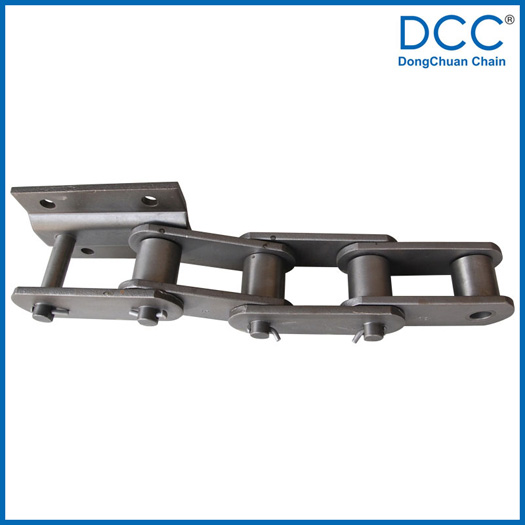
Complete Guide for Bucket Elevator Chain Types: Everything You Need to Know
Bucket elevators serve as the backbone of vertical material handling across industries ranging from agriculture to mining, cement production to chemical processing. At the heart of these critical systems lies the bucket elevator chain—a component whose selection directly impacts operational efficiency, maintenance costs, and system reliability. With various chain types available, each designed for specific applications and operating conditions, understanding the nuances between different bucket elevator chain configurations becomes essential for engineers, plant managers, and procurement professionals seeking optimal performance.
Key Takeaways
Bucket elevator chains fall into three primary categories: roller chains, welded steel chains, and malleable iron chains, each suited for different load capacities and operating conditions
Chain selection depends on critical factors including material characteristics, conveying capacity, lift height, operating speed, and environmental conditions
Proper attachment types (K-2, G-4, or A-type) ensure secure bucket mounting and optimal discharge performance
Material construction significantly affects wear resistance, with heat-treated alloy steel chains offering superior longevity in abrasive applications
Compliance with international standards such as ISO 606 ensures interchangeability and reliable performance specifications
Regular maintenance practices extend chain service life and prevent costly operational disruptions
Understanding Bucket Elevator Chain Fundamentals
A bucket elevator chain represents a specialized form of conveyor chain engineered to withstand the unique stresses of vertical material transport. Unlike standard conveyor applications where chains primarily handle horizontal loads, bucket elevator chains must support suspended weight while cycling through continuous tension and flexing at head and tail sprockets. This demanding service requires robust construction with enhanced fatigue resistance and precise dimensional control.
The basic anatomy of a bucket elevator chain consists of interconnected links forming a continuous loop, with attachments positioned at regular intervals to secure material-carrying buckets. Chain pitch—the distance between attachment points—varies according to bucket size and capacity requirements. Standard pitches range from 102mm to 305mm (4 inches to 12 inches), with 152mm (6-inch) pitch chains representing the most common configuration across general industrial applications.
The Role of Chain in Elevator Performance
Chain performance directly influences several critical operational parameters. Proper chain selection affects material throughput capacity, with stronger chains enabling larger bucket installations and higher lifting speeds. The chain's wear characteristics determine maintenance intervals and replacement frequency, impacting long-term operational costs. Additionally, chain flexibility influences discharge efficiency, particularly in centrifugal discharge elevators where bucket positioning at the head pulley affects material release patterns.
Primary Bucket Elevator Chain Types
Roller Chain Configurations
Roller chains dominate bucket elevator applications due to their versatility, availability, and cost-effectiveness. These chains feature cylindrical rollers that engage with sprocket teeth, reducing friction during operation. Standard roller chains utilize bushings between inner plates and pins, with rollers rotating freely around the bushings to minimize wear at sprocket contact points.
Single-strand roller chains suit light to medium-duty applications, typically handling materials up to 100 tons per hour. Their compact design makes them ideal for installations where space constraints limit elevator casing dimensions. For higher capacity requirements, double-strand configurations distribute loads across parallel chains, effectively doubling the system's load-carrying capacity while providing redundancy that enhances reliability.
Wide-series roller chains represent a specialized variant designed specifically for bucket elevator service. These chains feature increased plate width and larger diameter pins compared to standard roller chains of equivalent pitch, providing greater strength for heavy-duty applications. The enhanced construction proves particularly valuable in cement, mining, and aggregate processing where abrasive materials accelerate wear.
Welded Steel Chain Systems
Welded steel chains offer maximum strength for the most demanding elevator applications. These chains eliminate the traditional pin-and-bushing construction, instead using welded connections to create exceptionally robust links. The resulting assembly can handle extreme loads, making welded chains the preferred choice for heavy-duty elevators conveying dense materials like metal ores, cement clinker, or crushed stone.
The solid construction of welded chains provides superior resistance to shock loading—a common occurrence during startup or when material slugs enter the elevator boot. This durability comes at the cost of reduced flexibility compared to articulated roller chains, limiting welded chains primarily to larger elevator installations with generous sprocket diameters that minimize bending stress.
Malleable Iron Chain Applications
Malleable iron chains, also known as detachable chains, feature cast links that connect through specialized coupling mechanisms. While less common in modern installations, these chains still serve specific applications where easy disassembly for maintenance provides significant advantages. The robust cast construction handles moderate loads effectively, though fatigue resistance typically falls below that of steel roller chains.
These chains find particular favor in agricultural applications for grain handling, where their open construction facilitates self-cleaning and reduces material buildup. The ability to quickly disconnect individual links simplifies repairs in field installations where sophisticated tools may be unavailable.

Critical Chain Selection Factors
| Chain Type | Typical Pitch Range | Maximum Capacity | Best Applications | Key Advantages |
|---|---|---|---|---|
| Single-Strand Roller | 102mm - 152mm | 100 TPH | Light materials, moderate heights | Cost-effective, widely available |
| Double-Strand Roller | 102mm - 203mm | 200 TPH | Medium-duty, redundancy required | Higher capacity, improved reliability |
| Wide-Series Roller | 152mm - 229mm | 250 TPH | Abrasive materials, high loads | Enhanced strength, wear resistance |
| Welded Steel | 203mm - 305mm | 400+ TPH | Heavy-duty mining, cement | Maximum strength, shock resistance |
| Malleable Iron | 152mm - 229mm | 150 TPH | Agricultural, easy maintenance | Field serviceable, self-cleaning |
Material Characteristics Impact
The physical properties of conveyed materials fundamentally influence chain selection. Abrasive materials like sand, crushed limestone, or coal ash generate significant wear at pin-bushing interfaces and attachment points. These applications demand chains manufactured from hardened alloy steels with heat-treated components to achieve acceptable service life. Material density affects the total suspended load the chain must support, with denser materials requiring chains with higher tensile strength ratings.
Temperature considerations prove equally critical. Chains handling materials above 95°C (200°F) require special high-temperature lubricants and may need chains manufactured from heat-resistant alloys. Conversely, sub-zero applications in frozen food processing demand chains that maintain ductility at low temperatures, avoiding brittle failure risks.
Operating Speed Considerations
Elevator operating speed dramatically affects chain selection criteria. Low-speed positive discharge elevators (under 30 meters per minute) generate minimal centrifugal forces but require chains capable of smooth operation through the extended bucket inversion cycle at the head sprocket. Medium-speed continuous discharge elevators (30-60 meters per minute) balance capacity with controlled discharge, utilizing closely-spaced buckets that demand precise chain dimensional control to prevent bucket interference.
High-speed centrifugal discharge elevators exceed 60 meters per minute, with some grain handling installations reaching 120 meters per minute. These speeds create substantial dynamic forces as buckets round the head sprocket, requiring chains with exceptional fatigue strength and sprockets engineered to minimize impact forces during engagement. The relationship between chain speed, sprocket tooth count, and smooth operation follows principles detailed in power transmission standards such as ISO 606:2004.
Attachment Types and Bucket Mounting
K-Type Attachments
K-type attachments represent the most common bucket mounting configuration, featuring extended plates welded perpendicular to the chain's outer plates. K-2 attachments project from both sides of the chain, providing two mounting holes per attachment point for secure bucket installation. The robust welded construction withstands the continuous loading cycles inherent in elevator operation.
Standard K-2 attachments suit most centrifugal and continuous discharge applications where buckets mount directly to the chain. For high-capacity installations requiring wider buckets, extended K attachments provide increased mounting width while maintaining the proven K-style geometry. Proper attachment spacing ensures buckets maintain correct positioning throughout the elevator path, preventing interference that could cause premature wear or operational failures.
G-Type and Special Attachments
G-type attachments utilize a different mounting approach, with the attachment plate positioned between the chain's outer plates rather than extending outward. This configuration provides a more compact profile, advantageous in installations where clearance between the chain and elevator casing proves limited. G-4 attachments offer four mounting holes, distributing attachment loads more evenly than K-2 configurations.
Positive discharge elevators often employ hinged attachments that allow buckets to pivot during the discharge cycle. These specialized attachments enable complete bucket inversion over idler sprockets, ensuring thorough material discharge even with sticky or cohesive materials. The hinged design adds mechanical complexity but proves essential for applications where complete bucket emptying justifies the additional cost.
Chain Material and Manufacturing Standards
Steel Grades and Heat Treatment
Chain component materials significantly impact performance and service life. Carbon steel chains manufactured from SAE 1040 or equivalent grades provide adequate strength for many general applications. However, demanding service conditions necessitate alloy steel chains using materials such as 40Cr (chromium-molybdenum alloy) that deliver enhanced strength and wear resistance after proper heat treatment.
Heat treatment processes transform material properties to meet elevator chain requirements. Quenching and tempering treatments develop optimal combinations of strength and toughness, with typical hardness values ranging from HRC 36-42 for chain plates and HRC 40-48 for pins and bushings. Case hardening processes increase surface hardness while maintaining ductile cores, improving wear resistance without sacrificing fatigue strength.
Quality Standards Compliance
Reputable bucket elevator chain manufacturers adhere to established international standards ensuring dimensional accuracy, material quality, and performance consistency. ISO 606 specifies requirements for short-pitch roller chains used in power transmission and conveyor applications, defining tolerances for critical dimensions like pitch accuracy, roller diameter, and plate thickness. Chains conforming to these standards guarantee interchangeability between manufacturers and predictable performance characteristics.
Additional standards address specific chain variants. ISO 1275 covers double-pitch roller chains derived from ISO 606 base designs. Regional standards including ANSI B29.1 (American National Standards Institute) and DIN 8187 (German Institute for Standardization) provide equivalent specifications with some dimensional variations. Understanding applicable standards helps ensure proper chain selection for international installations or when replacing chains in existing equipment.
Maintenance and Service Life Optimization
Lubrication Requirements
Proper lubrication proves critical for achieving acceptable chain service life in bucket elevator applications. Unlike enclosed power transmission drives where oil bath lubrication protects chains, elevator chains typically operate in open environments exposed to conveyed material dust and environmental contaminants. This challenging service requires specialized lubricants that resist wash-off while providing adequate film strength to prevent pin-bushing wear.
Manual lubrication intervals depend on operating conditions, with clean, low-speed applications tolerating weekly or monthly service while abrasive, high-speed installations may require daily attention. Automatic lubrication systems deliver controlled lubricant quantities at preset intervals, ensuring consistent protection while reducing labor costs. Progressive lubrication systems that feed multiple points from a central pump prove particularly effective for large elevator installations.
Inspection and Replacement Criteria
Regular chain inspection identifies wear progression before failures occur. Key inspection points include measuring chain elongation caused by pin-bushing wear, examining attachment welds for cracks, and checking roller condition. Chain elongation exceeding 3% of original pitch indicates replacement necessity, as excessive elongation causes improper sprocket engagement leading to accelerated wear and potential tooth damage.
Attachment integrity deserves particular attention since attachment failures often result in bucket loss and subsequent damage from loose buckets jamming in the elevator path. Visual examination should identify any cracks at weld beads or deformation of attachment plates. Proactive replacement of chains showing advanced wear prevents catastrophic failures that could damage elevator casings, sprockets, and associated equipment while causing extended downtime for repairs.
Comparing Elevator Types and Chain Requirements
Centrifugal Discharge Elevators
Centrifugal discharge bucket elevators rely on high speed to throw material from buckets as they round the head sprocket. This discharge method suits free-flowing materials like grains, sand, or plastic pellets that readily separate from bucket surfaces. The high operating speeds—typically 60-120 meters per minute—create substantial dynamic loads as buckets engage head sprocket teeth at speeds exceeding 6 meters per second.
Chain selection for centrifugal elevators prioritizes fatigue strength to withstand millions of engagement cycles during service life. Single-strand roller chains with 152mm pitch represent the standard configuration, chosen for their balance of strength, flexibility, and cost-effectiveness. The compact chain profile minimizes material buildup that could interfere with smooth operation. Higher capacity installations may justify wide-series chains offering enhanced strength without requiring double-strand complexity.
Continuous Discharge Systems
Continuous discharge elevators feature closely-spaced buckets positioned to overlap, creating a continuous material stream during discharge. Material flows over the back of each bucket into the preceding bucket, with bucket side walls channeling flow toward the discharge opening. This design nearly doubles capacity compared to centrifugal systems for a given bucket size, though operating speeds remain moderate (30-60 meters per minute) to maintain controlled discharge.
The close bucket spacing demands precise chain dimensional control to prevent bucket interference. Chains must maintain tight pitch accuracy across their entire length to ensure uniform bucket positioning. Single or double-strand roller chains suit most continuous discharge applications, with chain selection based primarily on load requirements determined by material density and lift height.
Positive Discharge Applications
Positive discharge elevators invert buckets completely using idler sprockets at the discharge point, relying on gravity rather than centrifugal force to empty buckets. This gentle discharge method proves ideal for fragile materials that would degrade under high-speed discharge or sticky materials that resist centrifugal separation. Operating speeds typically range from 23-30 meters per minute, reducing dynamic forces compared to centrifugal systems.
Twin-strand chain configurations dominate positive discharge designs due to stability requirements during the extended bucket inversion cycle. Hinged A-type attachments allow buckets to pivot freely as they traverse idler sprockets, ensuring complete material discharge. The lower operating speeds reduce chain fatigue concerns, shifting selection emphasis toward adequate strength for supporting suspended loads through the lift cycle.
Special Considerations for Harsh Environments
Corrosive Atmosphere Protection
Bucket elevators operating in corrosive environments require chains with enhanced corrosion resistance to achieve acceptable service life. Chemical processing plants, wastewater treatment facilities, and marine applications expose chains to moisture, salts, acids, or alkalis that rapidly degrade standard carbon steel components.
Stainless steel chains provide excellent corrosion resistance, with 304 and 316 grades offering progressively better protection against aggressive chemicals. While significantly more expensive than carbon steel alternatives, stainless chains often prove cost-effective in corrosive service by eliminating frequent replacements. For moderate corrosion concerns, chains with specialized coatings—zinc plating, nickel plating, or proprietary polymer coatings—offer intermediate protection at lower cost than full stainless construction.
High-Temperature Applications
Elevators handling hot materials like cement clinker, foundry sand, or calcined products subject chains to elevated temperatures that can exceed 260°C (500°F). Standard chain lubricants break down at these temperatures, accelerating wear through inadequate film protection. Specialized high-temperature chains incorporate several design features to maintain performance in thermal environments.
Material selection favors alloy steels that retain strength at elevated temperatures without experiencing metallurgical changes that could cause brittle failure. Heat-resistant lubricants—typically graphite or molybdenum disulfide based—maintain lubrication properties through repeated thermal cycling. Some high-temperature chains eliminate traditional lubrication entirely, relying on self-lubricating materials or surface treatments that provide boundary lubrication without liquid lubricants.
Economic Analysis and Total Cost of Ownership
| Cost Factor | Initial Installation | Annual Operation | Lifecycle Impact |
|---|---|---|---|
| Chain Purchase Price | $2,000 - $15,000 | - | 15-20% of total cost |
| Installation Labor | $500 - $3,000 | - | 5-8% of total cost |
| Lubrication | - | $300 - $1,200 | 8-12% of total cost |
| Inspection Labor | - | $400 - $1,500 | 10-15% of total cost |
| Downtime Costs | - | $1,000 - $10,000 | 30-40% of total cost |
| Replacement Chain | - | $400 - $3,000 | 12-18% of total cost |
Total cost of ownership extends far beyond initial chain purchase price. Downtime resulting from chain failures often represents the largest lifecycle cost component, particularly in continuous process industries where elevator failures halt entire production lines. A cement plant experiencing a 24-hour shutdown for emergency chain replacement might incur production losses exceeding $50,000—dwarfing the cost of the replacement chain itself.
Premium chains manufactured from superior materials with enhanced heat treatment command higher purchase prices but often deliver lower total cost through extended service life and improved reliability. A high-quality alloy steel chain costing 40% more than a standard carbon steel alternative but lasting twice as long provides compelling economic value when total lifecycle costs receive proper consideration.
Future Trends in Bucket Elevator Chain Technology
Advanced Materials Development
Ongoing materials research continues advancing chain performance capabilities. New steel alloys incorporating rare earth elements demonstrate improved wear resistance and fatigue life compared to traditional compositions. Ceramic and ceramic-composite materials show promise for extreme abrasion applications, though high costs currently limit adoption to specialized applications where exceptional performance justifies premium pricing.
Surface treatment technologies offer another avenue for performance enhancement. Physical vapor deposition (PVD) and chemical vapor deposition (CVD) processes create ultra-hard surface layers that dramatically reduce wear while maintaining ductile substrate properties. These treatments prove particularly valuable for pins and bushings where concentrated contact stresses accelerate wear in conventional chains.
Condition Monitoring Integration
Smart chain technologies incorporating embedded sensors enable real-time monitoring of chain condition and operating parameters. Strain gauges detect abnormal loading conditions that might indicate material surges or mechanical binding. Accelerometers identify vibration patterns signaling improper sprocket engagement or developing attachment cracks. Temperature sensors provide early warning of inadequate lubrication or bearing failures.
Data from monitoring systems feeds predictive maintenance algorithms that forecast remaining chain life based on actual operating conditions rather than arbitrary time-based replacement schedules. This approach optimizes chain utilization while reducing unexpected failure risks, potentially extending effective chain life by 20-30% compared to conservative fixed-interval replacement practices.
Finding the Right Bucket Elevator Chain Manufacturer
Selecting a bucket elevator chain represents a critical decision affecting long-term operational efficiency and maintenance costs. When organizations require reliable, high-quality chains backed by technical expertise and responsive support, partnering with established manufacturers proves essential. For industries seeking a trusted bucket elevator chain manufacturer, DCC brings over two decades of specialized experience in engineering chains for demanding vertical conveying applications. The company's ISO 9001 certified manufacturing processes, comprehensive testing protocols, and global technical support network ensure customers receive chains optimized for their specific operating conditions—delivering the performance and reliability that modern material handling systems demand.
Frequently Asked Questions
Service life varies significantly based on operating conditions, material characteristics, and maintenance practices. Well-maintained chains in clean, light-duty applications can exceed 5-7 years, while chains handling abrasive materials in harsh environments may require replacement every 12-24 months. Proper lubrication and regular inspection extend chain life considerably.
Chain pitch selection depends on bucket size requirements, which correlate with desired capacity. Standard 152mm pitch chains accommodate buckets up to 500mm wide, suitable for capacities up to 100 tons per hour. Larger capacities require wider buckets necessitating 203mm or 229mm pitch chains. Consulting capacity charts from manufacturers ensures proper sizing.
Mixing chain types in a single elevator is not recommended. Different chain designs have varying elongation characteristics and wear patterns, leading to uneven loading and premature failure. When replacing sections of chain, use identical specifications to the original installation to maintain proper operation and maximize service life.
Common failure causes include inadequate lubrication (accelerating pin-bushing wear), misaligned sprockets (creating uneven loading), excessive material buildup in the boot (increasing resistance), and operating speeds exceeding design limits. Regular maintenance addressing these factors prevents most premature failures.
Lubrication frequency depends on operating hours and environmental conditions. Clean, moderate-duty applications typically require weekly manual lubrication, while abrasive or high-speed operations benefit from daily service or automatic lubrication systems. Visual inspection of chain condition helps determine adequate lubrication intervals for specific applications.
Single-strand chains use one continuous loop, offering compact design and cost-effectiveness for capacities up to 100 tons per hour. Double-strand chains employ parallel chains distributing loads equally, doubling capacity while providing redundancy that improves reliability. Double-strand configurations are preferred for positive discharge elevators requiring stability during bucket inversion.