


Forged Chain Types and Their Roles in Industrial Settings
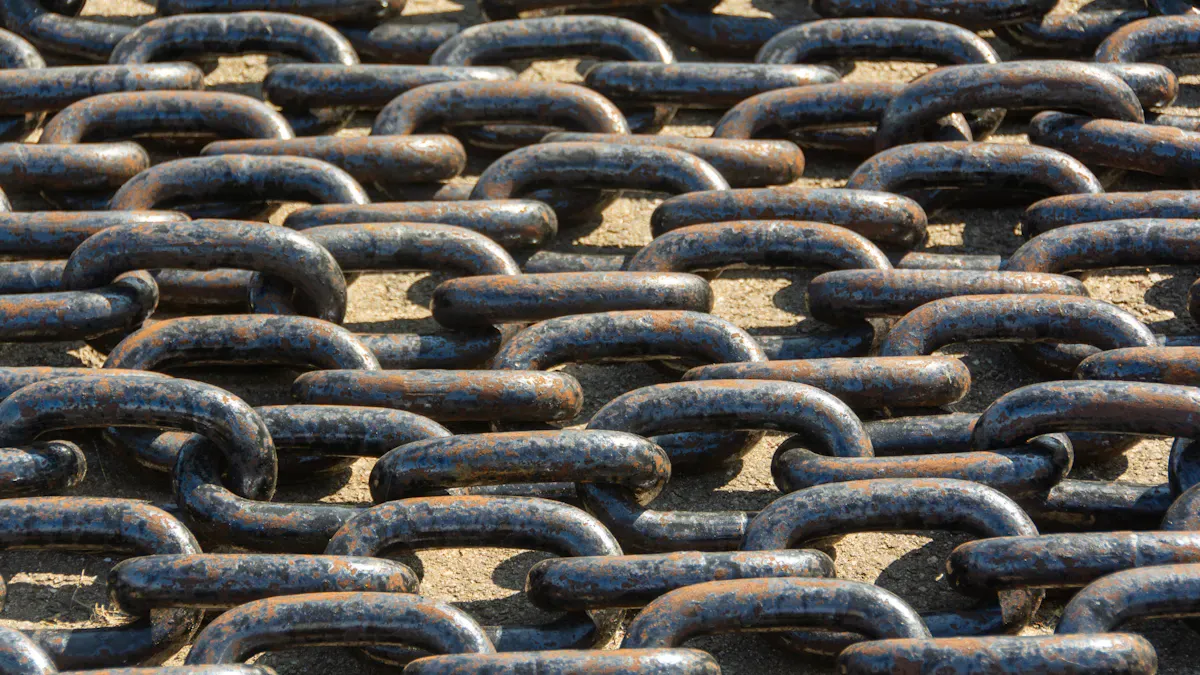
Industrial forged chains in operation
Industrial facilities rely on various types of forged chains to power their operations. These include standard, high-strength, coated, and specialty chains. Each type serves a distinct purpose — from handling heavy loads to functioning reliably in challenging environments. Advanced forging technology and rigorous quality control ensure these chains deliver exceptional strength and durability. Selecting the appropriate forged chain enhances workplace safety, reduces mechanical failures, and improves operational efficiency. The right chain extends service life and minimizes unexpected downtime.
Key Takeaways
Forged chains provide superior strength and longevity compared to welded or cast alternatives, making them ideal for heavy-duty industrial applications.
Regular lubrication every eight hours significantly extends chain life and prevents sudden mechanical failures.
Proper chain selection based on application requirements ensures worker safety and optimizes machinery performance.
Specialized forged chains can be customized to meet specific industry demands and operational conditions.
Investing in high-quality forged chains reduces long-term maintenance costs and improves production efficiency.
Forged Chain Overview
Modern forged chain manufacturing facility
Manufacturing and Materials
The manufacturing process for forged chains involves multiple precision steps. Raw materials undergo preparation and blank cutting, followed by controlled heating. Die forging shapes each link with exceptional accuracy. Trimming and punching operations remove excess material, while heat treatment enhances structural integrity. Surface treatments protect against corrosion, and final assembly includes comprehensive quality inspection.[1]
| Step Number | Manufacturing Process Step |
|---|---|
| 1 | Raw material preparation |
| 2 | Blank cutting |
| 3 | Heating |
| 4 | Die forging |
| 5 | Trimming & punching |
| 6 | Heat treatment |
| 7 | Surface treatment |
| 8 | Assembly & inspection |
Material selection significantly impacts chain performance. Carbon steel offers robust strength for general applications. Alloy steel provides enhanced durability and extended service life. Stainless steel resists corrosion in harsh environments. Aluminum and copper alloys suit lighter loads or specialized applications. High-quality alloy steel construction ensures optimal strength and reliability in demanding industrial settings.
Key Benefits in Industry
Forged chains deliver substantial advantages in manufacturing environments. Their superior strength and toughness outperform welded or cast alternatives. Industrial applications include heavy lifting operations, power transmission systems, and conveyor networks. These chains require less frequent maintenance and demonstrate exceptional longevity.[2]
| Property | Drop Forged Chain | Welded Chain | Cast Chain |
|---|---|---|---|
| Tensile Strength (MPa) | 400-600 | 300-450 | 250-400 |
| Impact Resistance | Excellent | Moderate | Poor |
| Operating Temperature Range | -40°C to 350°C | -20°C to 200°C | 0°C to 150°C |
| Typical Service Life | 5-10 years | 3-6 years | 2-4 years |
| Maintenance Frequency | Low | Medium | High |
Advanced forging technologies enhance production efficiency and reduce material waste. Intelligent monitoring systems detect and correct process anomalies in real-time. Automation and robotics accelerate manufacturing while ensuring worker safety. These innovations enable manufacturers to produce chains with superior consistency and performance characteristics.
Quality Standards and Certifications
Leading manufacturers maintain rigorous quality standards throughout production. ISO 9001 and CE certifications demonstrate commitment to excellence. Compliance with international standards including ISO, ASTM, and EN ensures product reliability. Every production batch undergoes comprehensive testing to verify specification adherence. These quality measures provide customers with dependable forged chain solutions they can trust.
ISO 9001 certification for quality management systems
CE certification for European market compliance
Adherence to ISO, ASTM, and EN international standards
Rigorous quality control and material testing protocols
Need High-Quality Forged Chains for Your Project?
Our team of experts can help you select the perfect forged chain solution for your specific industrial requirements. Get professional guidance and competitive pricing today.
Request a Quote NowTypes of Forged Chain
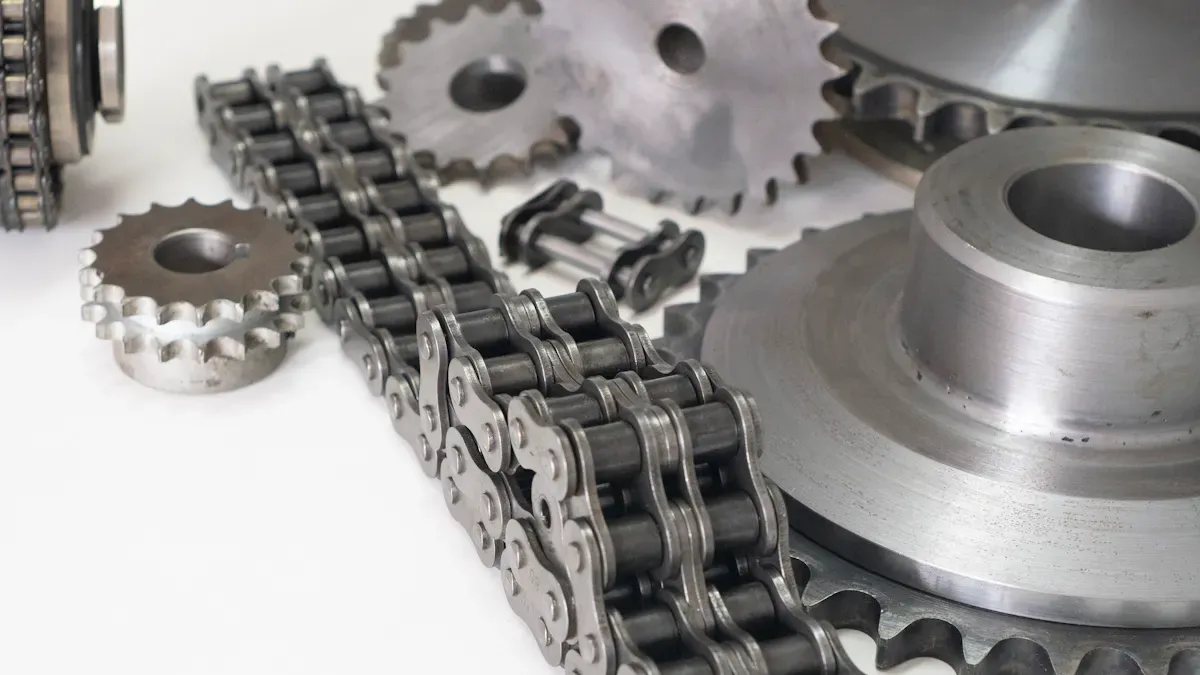 Different forged chain configurations for industrial use
Roller Chain Features
Roller chains feature cylindrical rollers connected by plates and pins, creating a flexible yet robust structure. This design excels at power transmission in machinery applications. Their efficiency makes them essential components in manufacturing equipment, agricultural machinery, and automotive systems. Regular lubrication significantly extends operational lifespan. Quality roller chains optimize machine performance and prevent costly equipment failures.[3]
Conveyor Chain Applications
Conveyor chains transport heavy materials throughout industrial facilities and warehouses. They excel in demanding environments including mining operations and production lines. These chains operate at high speeds while withstanding harsh conditions. Regular inspection and lubrication maintain optimal performance. The following comparison illustrates how conveyor chains differ from other forged chain types:
| Performance Metric | Conveyor Chains | Other Forged Chains |
|---|---|---|
| Load Capacity | Handles very heavy loads | Usually less than conveyor chains |
| Operational Speed | Designed for rapid operation | Often slower than conveyor chains |
| Maintenance Needs | Requires regular lubrication and inspection | Maintenance requirements vary |
| Application Suitability | Optimal for heavy-duty and mining applications | Suitable for various applications |
Professional-grade conveyor chains ensure safe and efficient material movement across diverse industrial environments.
Leaf Chain Strength
Leaf chains combine stacked plates and pins without rollers or bushings, resulting in exceptional strength and durability. This construction makes them ideal for heavy lifting applications. Common installations include warehouses, manufacturing facilities, and shipyards. These chains maintain workplace safety and operational stability. High-quality leaf chains deliver reliable performance in critical lifting operations.
Pintle Chain Uses
Pintle chains offer simplicity and strength, serving industrial needs for over a century. Their applications include:
Transporting bulk materials, heavy components, and livestock in conveyor systems
Moving food products along processing lines with specialized attachments
Securing and transferring containers in packaging facilities
Supporting engine timing systems in automotive applications
These chains resist contamination, work with various sprockets, and reduce maintenance costs. Their versatility makes them valuable for challenging industrial tasks.[4]
Hollow Pin Chain Flexibility
Hollow pin chains feature apertures in their pins, enabling rapid attachment or removal of components. This design allows facilities to reconfigure conveyor systems quickly. The flexibility accelerates production processes and simplifies operational adjustments. Manufacturers offer hollow pin chains for diverse conveyor configurations.
Cardan Chain for High-Torque Systems
Cardan chains excel in power-intensive machinery applications. Their robust construction transmits substantial torque in demanding equipment. Industries utilizing cardan chains include:
Steel mills requiring reliable power transmission
Mining equipment demanding exceptional strength
Paper mills needing continuous operation
Heavy commercial vehicles and agricultural machinery
These chains minimize downtime and maintain consistent equipment operation in challenging environments.
Customized Forged Chain Solutions
Specialized applications often require custom chain designs. Custom forged chains address unique operational challenges. Available customization options include:
Specialized link geometries for specific applications
High-performance alloys for enhanced strength or resistance
Precise dimensions and configurations for exact machinery requirements
Custom solutions solve problems that standard chains cannot address. Collaborative engineering ensures chains integrate seamlessly with existing machinery and deliver optimal performance.
The global forged chain market continues expanding as industries and construction sectors demand increasingly robust and safe chain solutions. Advanced manufacturing technologies and stringent quality standards position leading manufacturers at the forefront of this growing industry.
Selecting the Right Forged Chain
Load and Performance Factors
Proper chain selection begins with understanding application requirements. Each industry demands chains for specific tasks. Airports utilize forged chains to transport luggage and cargo, requiring exceptional strength and reliability. Marine industries depend on chains for anchoring vessels and handling rough seas. Railways employ chains to couple train cars and carry heavy loads. Heavy-duty trucks need chains for tire traction in snow and ice. Expert guidance helps identify optimal chains for weight capacity and stress requirements.[5]
Environmental and Wear Resistance
Operating environment significantly impacts chain longevity. Extreme temperatures compromise chain integrity. Moisture exposure causes rust and corrosion. Chemical contact with acids or bases accelerates deterioration. Humid conditions challenge most chains, though stainless steel offers superior rust resistance. Mining and metallurgy facilities experience high temperatures, requiring heat-resistant chains. Specialized materials address these demanding conditions effectively.
Maintenance and Service Life
Proper maintenance extends chain operational life. Regular lubrication prevents wear and corrosion. Lubrication schedules recommend application every eight hours or as needed. For chains in oil baths or using oil disks, daily oil level checks are essential. Oil changes after fifty hours, then every five hundred hours, ensure optimal performance. These practices maximize chain service life and prevent unexpected failures. Clear maintenance instructions support effective chain care.[6]
Expert Recommendations
Industries face challenges identifying appropriate chains. Success requires understanding supply chain dynamics and maintaining quality standards. Knowledge of manufacturing processes and risk management proves essential. Professional consultation guides customers through critical decisions. Expertise encompasses chain selection for specific machinery and environments, plus guidance on integrating chains with automated systems and legacy equipment. This support ensures optimal performance and extended operational life.
Appropriate chain selection enhances facility efficiency and workplace safety. The right chain handles heavy loads reliably and prevents machinery breakdowns. Facilities reduce expenditures and maintenance frequency by investing in quality forged chains.
Forged chains provide exceptional strength for demanding applications
Reduced maintenance requirements lower operational costs
A Thailand-based facility improved efficiency after implementing forged chain solutions
Leading manufacturers offer trusted forged chain solutions. Engineering teams provide expert consultation and develop specialized chains for diverse industries. Companies depend on manufacturers for robust chains and comprehensive support.
Ready to Upgrade Your Chain Systems?
Contact our technical team for a comprehensive chain assessment. We'll analyze your requirements and recommend the optimal solution for maximum efficiency and longevity.
Get Expert ConsultationFrequently Asked Questions
What distinguishes forged chains from welded chains?
Forged chains utilize high-pressure shaping for individual links, creating superior grain structure. Welded chains join links through welding processes. Forged chains demonstrate higher strength and better impact resistance.
How do manufacturers ensure forged chain quality?
Quality manufacturers implement ISO 9001 and API-certified systems. Every batch undergoes inspection from raw materials through finished products. Teams test chains for strength and safety compliance.
Which industries primarily use forged chains?
Manufacturing facilities, mining operations, shipyards, and construction companies extensively use forged chains. These chains facilitate heavy load movement and power machinery. Leading manufacturers supply forged chains across these sectors.
Are custom forged chain solutions available?
Custom chain designs accommodate specialized machinery requirements. Engineering teams collaborate with customers to match chain dimensions, materials, and configurations to specific applications.
What maintenance frequency do forged chains require?
Regular lubrication and inspection maintain optimal performance. Recommended practices include daily oil level checks and oil changes after fifty hours, then every five hundred hours. Consistent maintenance extends chain service life.
References
American Forging Association. (2024). "How Forging Improves Strength and Reliability in Critical Components." https://amfasinternational.com/newsroom/how-forging-improves-strength-and-reliability-in-critical-components/
Springer Nature. (2025). "New Forging Technology Innovations in Manufacturing Processes." Journal of Manufacturing Science. https://link.springer.com/article/10.1007/s00170-025-16842-8
E. Abel Conveyors. (2024). "Types of Industrial Chains and Their Applications." https://www.eabel.com/types-of-industrial-chains/
GZG Transmission Technology. (2024). "Advantages of Steel Pintle Chains Over Other Chain Types." https://www.gzg-transmission.com/blog/what-are-the-advantages-of-steel-pintle-chains-over-other-types-of-chains-1006758.html
RUD India. (2024). "Benefits of Using Forged Fork Link Chains in Industrial Applications." https://rudindia.com/blog/the-benefits-of-using-forged-fork-link-chains-in-industrial-application
Machinery Lubrication Magazine. (2024). "Best Practices for Chain Drive Lubrication." https://www.machinerylubrication.com/Read/316/chains-drives-lubricants

