


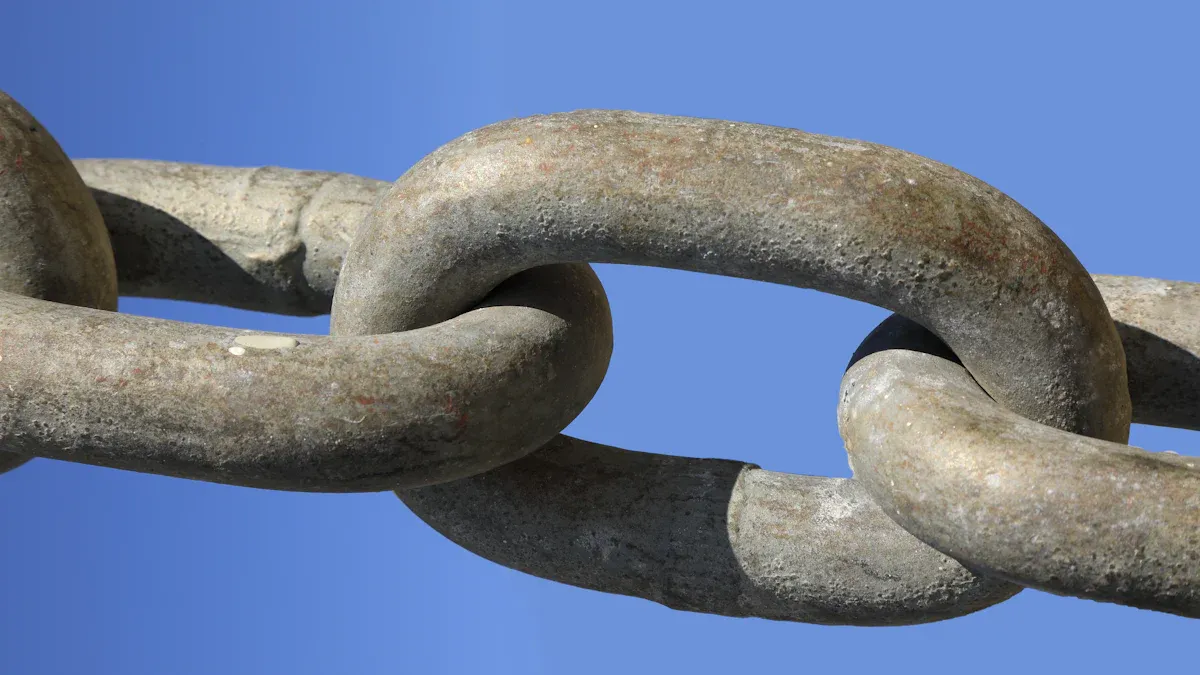
The most used grades of welded steel chain include Grade 30, Grade 43, Grade 70, Grade 80, Grade 100, and Grade 120. These chains serve many industries: Grade 30 and 43 are common for general utility and transport; Grade 70 is popular for transport and tie-down; Grade 80, 100, and 120 are ideal for lifting and heavy-duty rigging.
Chain grades show how strong and durable a chain is. Higher grades, like Grade 80 and Grade 100, offer better wear resistance and support heavier loads. The table below shows how grade affects strength and use:
| Chain Grade | Strength | Durability | Suitability for Heavy-Duty Lifting |
|---|---|---|---|
| Grade 80 | High | Excellent | Ideal for overhead lifting and rigging |
| Grade 100 | Higher | Superior | Designed for the most demanding applications |
DCC stands out as a trusted manufacturer. They help industries choose the right welded steel chain for safe and reliable performance.
Key Takeaways
Welded steel chains come in various grades, including Grade 30, 43, 70, 80, 100, and 120, each designed for specific tasks.
Higher grades, like Grade 80 and 100, offer greater strength and durability, making them suitable for heavy lifting and rigging.
Grade 30 and 43 are ideal for light-duty tasks, such as agriculture and towing, but should not be used for overhead lifting.
Always check the load ratings stamped on chain links to ensure safety and prevent accidents.
Consider environmental factors, like temperature and exposure to chemicals, when selecting a chain grade.
Regularly inspect chains for wear and damage to maintain safety and extend their lifespan.
Choosing the right chain grade protects workers and equipment, reducing the risk of costly downtime.
DCC Welded Steel Chain is known for its durability and reliability, making it a trusted choice for various industries.
Common Welded Steel Chain Grades
Grade Overview
Welded steel chain comes in several grades, each designed for specific tasks and strength requirements. The most common grades include Grade 30, Grade 43, Grade 70, Grade 80, Grade 100, and Grade 120. Each grade uses different materials and manufacturing processes to achieve the right balance of strength, durability, and cost.
The table below highlights the key features of each grade:
| Grade | Name | Features |
|---|---|---|
| G30 | Proof Coil | Made from low carbon steel. Lowest strength. Used for light-duty tasks. |
| G43 | High-Test | Medium carbon steel. About twice as strong as G30. Suitable for heavier pulling. |
| G70 | Transport | Heat-treated carbon steel. 20% stronger than G43. Often has yellow zinc coating. |
| G80 | Alloy Lifting | Heat-treated alloy steel. Very high strength. Common for overhead lifting. |
| G100 | High-Strength Alloy | 25% stronger than G80. Lighter slings, superior performance. |
| G120 | Super Alloy | Exceeds Grade 100 standards. Used for the most demanding lifting applications. |
DCC Welded Steel Chain stands out in this field. DCC uses high-grade materials and advanced manufacturing technology. Their chains show outstanding wear resistance and can handle extreme temperatures. DCC chains also last longer in harsh conditions compared to many standard chains.
Note: Choosing the right grade ensures safety and efficiency in every application.
Typical Applications
Each welded steel chain grade serves a unique purpose in industry. The table below shows where each grade works best:
| Chain Grade | Typical Applications |
|---|---|
| Grade 30 | Light construction, agriculture, marine industry, fencing, barriers |
| Grade 43 | Container securement, logging, farming, towing, animal chains |
| Grade 70 | Trucking, highway load securement, towing, heavy pulling |
| Grade 80 | Overhead lifting, sling components, heavy-duty tow chains |
| Grade 100 | Overhead lifting, construction, rigging, demanding industrial tasks |
| Grade 120 | Exceeds Grade 100, used for critical overhead lifting and rigging |
DCC Welded Steel Chain meets or exceeds the requirements for these applications. Their products support industries like mining, construction, energy, and transportation. DCC's commitment to quality and reliability makes their welded steel chain a trusted choice for heavy-duty and specialized uses.
Selecting the correct grade protects workers and equipment. It also helps companies avoid costly downtime. Always match the chain grade to the job's demands for the best results.
Need Expert Guidance on Welded Steel Chain Selection?
Our technical team is ready to help you choose the perfect chain grade for your specific application. Get professional advice and competitive quotes today.
Request a Quote NowUnderstanding Chain Grades
Grade Meaning
Chain grades help users understand the strength and quality of a welded steel chain. Each grade represents a specific set of standards that manufacturers must follow. These standards ensure that chains perform safely and reliably in different environments.
Manufacturers determine chain grades by looking at several important factors. According to industry guidelines from the ASTM International standards organization, the table below shows the main criteria used to classify welded steel chain grades:
| Criteria | Description |
|---|---|
| Material Composition | Different grades are made from various materials, such as carbon steel for lower grades and alloy steel for higher grades. |
| Manufacturing Processes | The production methods, including heat treatment, vary by grade, affecting strength and toughness. |
| Tensile Strength | Each grade has a minimum tensile strength, which is a key factor in its classification. |
Material composition plays a big role. Lower grades often use carbon steel, while higher grades use alloy steel for extra strength. The way the chain is made also matters. Heat treatment and other processes can make the chain tougher and more durable. Tensile strength, or the maximum force a chain can handle before breaking, is the most important factor in grading.
Tip: Always check the grade before choosing a chain for a specific job. The right grade keeps workers safe and equipment protected.
Strength Ratings
The grade number tells users how strong a chain is. Higher numbers mean the chain can handle more weight and stress. For example, Grade 80 and Grade 100 chains are much stronger than lower grades. These chains are often used for lifting heavy loads or in tough industrial settings.
The table below shows how the grade number relates to breaking strength and working load limit (WLL):
| Chain Grade | Minimum Breaking Strength | Working Load Limit (WLL) |
|---|---|---|
| Grade 80 | 8,000 lbs | 2,000 lbs |
| Grade 100 | 10,000 lbs | 2,500 lbs |
Breaking strength is the maximum force the chain can withstand before it fails. Working load limit is the maximum weight the chain should carry during normal use. Users should never exceed the working load limit, even if the chain's breaking strength is much higher.
Choosing the correct grade helps prevent accidents and equipment damage. For example, a welded steel chain with a higher grade works best for lifting or securing heavy items. Lower grades suit lighter tasks, such as fencing or general utility work.
Note: Always follow industry guidelines and manufacturer recommendations when selecting a chain grade. This practice ensures safety and extends the life of the chain.
Welded Steel Chain Grades In Detail
Grade 30
Material
Grade 30 chains use low-carbon steel. This material gives the chain moderate strength and some resistance to rust. The chain remains flexible because of its malleability. These properties make Grade 30 suitable for tasks that do not require high strength.
| Property | Description |
|---|---|
| Material Composition | Made from low-carbon steel, providing moderate strength and rust resistance. |
| Tensile Strength | Lower than higher-grade chains, not suitable for overhead lifting. |
| Malleability | Relatively malleable, suitable for flexible applications. |
| Common Applications | Used in agriculture, load securing in transportation, and general pulling. |
Uses
Grade 30 chains serve many industries. Workers use them for light construction, agriculture, and marine tasks. These chains often secure loads, create barriers, or support fencing. Grade 30 also appears in logging and as tie-down or binding chains.
Limitations
Grade 30 chains have lower tensile strength than higher grades. They do not work for overhead lifting. Users should avoid using them in situations that require high strength or where safety is critical.
| Uses | Limitations |
|---|---|
| Fabricating tow chains | Not suitable for overhead lifting |
| Logging chains | |
| Tie down or binding chains |
Note: Grade 30 chains offer flexibility and affordability, but users must not use them for lifting heavy loads.
Grade 43
Material
Manufacturers make Grade 43 chains from carbon steel. This grade is also known as G43 or G-4. The chain receives proof testing to ensure it meets strength requirements. Grade 43 chains often have bright galvanized or zinc-plated finishes. Sizes range from 1/4 inch to 3/4 inch in diameter.
Uses
Grade 43 chains work well for load binding, towing, and logging. Workers use them to secure cargo on trucks, pull heavy objects, or support logging operations. The chain's strength makes it a popular choice for demanding tasks in transportation and agriculture.
Limitations
Grade 43 chains are not suitable for overhead lifting. Even though they are proof tested, they do not meet the safety standards for lifting people or heavy loads above ground. Users should always follow safety guidelines and use these chains only for approved applications.
Tip: Grade 43 chains provide higher strength than Grade 30, but users must never use them for lifting above people or equipment.
Grade 70
Material
Grade 70 chains use heat-treated carbon steel. Manufacturers add a yellow chromate coating for easy identification and extra corrosion resistance. The chain's design gives it a high tensile strength, making it stronger than Grade 43.
Yellow chromate coating for visibility and corrosion resistance
1/4" – 3,150 lbs
5/16" – 4,700 lbs
3/8" – 6,600 lbs
1/2" – 11,300 lbs
5/8" – 16,800 lbs
Approximate tensile strength: 700 N/mm²
Minimum safety factor: 4:1
Uses
Grade 70 chains are common in the transportation industry. Workers use them for securing loads on trucks, towing vehicles, and heavy pulling. The chain's strength and coating make it ideal for highway load securement and other demanding tasks.
Limitations
Grade 70 chains are not rated for overhead lifting. Users should only use them for tie-downs, towing, and pulling. The chain's high strength does not replace the need for proper safety practices.
Note: Grade 70 chains offer excellent strength for transport and towing, but users must never use them for lifting above ground.
Grade 80
Material
Manufacturers produce Grade 80 chain using high-strength alloy steel. They apply advanced heat treatment to increase toughness and durability. This process gives the chain a black oxide finish, which helps resist corrosion and makes identification easier. Grade 80 chain meets strict industry standards for lifting and rigging.
| Property | Description |
|---|---|
| Steel Type | Alloy steel |
| Heat Treatment | Enhanced for strength and toughness |
| Finish | Black oxide for corrosion resistance |
| Certification | Meets lifting and rigging standards |
Uses
Grade 80 chain serves heavy-duty applications. Workers use it for overhead lifting, rigging, and making chain slings. It appears in construction, mining, and manufacturing. Grade 80 chain supports lifting equipment, hoists, and cranes. Many industries rely on this chain for safe and reliable performance.
Overhead lifting
Rigging and chain slings
Hoists and cranes
Construction and mining
Grade 80 chain offers high strength and durability. It protects workers and equipment during demanding tasks.
Limitations
Grade 80 chain does not suit every application. Users must avoid using it for tie-downs or transport. The chain requires regular inspection to maintain safety. It should not be exposed to chemicals that could weaken the steel.
| Limitation | Reason |
|---|---|
| Not for tie-downs | Designed for lifting only |
| Avoid chemical exposure | Chemicals may weaken steel |
| Requires inspection | Safety depends on condition |
Grade 100
Material
Grade 100 chain uses premium alloy steel. Manufacturers apply precise heat treatment to achieve superior strength. The chain often features a blue or green finish for easy identification. Grade 100 chain exceeds the strength of Grade 80 and meets the highest standards for lifting and rigging.
| Property | Description |
|---|---|
| Steel Type | Premium alloy steel |
| Heat Treatment | Advanced for maximum strength |
| Finish | Blue or green for identification |
| Certification | Exceeds lifting standards |
Uses
Grade 100 chain supports the most demanding lifting tasks. Workers use it for overhead lifting, heavy rigging, and making chain slings. It appears in construction, energy, and industrial settings. Grade 100 chain allows for lighter slings with higher working load limits.
Overhead lifting and rigging
Heavy-duty chain slings
Construction and energy industries
Industrial lifting equipment
Grade 100 chain provides superior strength and performance. It helps industries lift heavier loads safely.
Limitations
Grade 100 chain is not suitable for transport or tie-down applications. Users must inspect the chain regularly to ensure safety. The chain should not be exposed to acids or harsh chemicals.
| Limitation | Reason |
|---|---|
| Not for transport | Designed for lifting only |
| Avoid acid exposure | Acids may damage steel |
| Requires frequent inspection | Safety depends on condition |
Grade 120
Material
Manufacturers create Grade 120 chain from ultra-high-strength alloy steel. They use advanced heat treatment to maximize durability and performance. The chain often has a bright finish, such as silver or turquoise, for quick identification. Grade 120 chain represents the highest strength available for welded steel chain.
| Property | Description |
|---|---|
| Steel Type | Ultra-high-strength alloy steel |
| Heat Treatment | Maximized for durability |
| Finish | Silver or turquoise for visibility |
| Certification | Highest lifting standards |
Uses
Grade 120 chain handles critical overhead lifting and rigging. Workers use it for the most challenging industrial tasks. It appears in heavy manufacturing, construction, and energy sectors. Grade 120 chain allows for the lightest slings with the highest working load limits.
Critical overhead lifting
Rigging for heavy manufacturing
Construction and energy projects
Specialized industrial lifting
Grade 120 chain delivers unmatched strength and reliability. It supports the toughest jobs in industry.
Limitations
Grade 120 chain does not suit tie-down or transport tasks. Users must inspect the chain before each use. The chain should not contact chemicals that could affect its integrity.
| Limitation | Reason |
|---|---|
| Not for tie-downs | Designed for lifting only |
| Avoid chemical contact | Chemicals may weaken steel |
| Requires strict inspection | Safety depends on condition |
Note: Always select the right grade for the job. Grade 80, 100, and 120 chains offer exceptional strength for lifting, but users must follow safety guidelines and inspect chains regularly.
DCC Welded Steel Chain Features
Durability
DCC has built a reputation for producing chains that withstand tough industrial environments. The welded steel chain uses an all-welded construction, which eliminates the risk of link separation. This design provides superior strength, ranging from 15 kN to 150 kN, and ensures a long service life between 10,000 and 30,000 hours. DCC chains show a failure rate of less than 1%, which is much lower than many competitors. Maintenance needs remain manageable with regular monitoring. The table below compares DCC's durability features with other brands:
| Feature | DCC Welded Steel Chain | Competitors |
|---|---|---|
| Construction Type | Welded | Mechanically Assembled |
| Strength | Superior (15-150 kN) | Varies |
| Risk of Link Separation | Eliminated | Present |
| Service Life | 10,000-30,000 hours | Generally lower |
| Failure Rate | <1% | Higher |
| Ownership Costs | 30-50% lower | Higher |
| Maintenance Needs | Regular monitoring | Varies |
DCC chains also resist abrasion and perform well under high temperatures. These features make them ideal for handling slag, ash, and hot materials in industries such as metallurgy and energy.
Custom Solutions
DCC offers a wide range of custom solutions for industrial chain applications. The company designs precision roller chains that handle different tension levels and environmental factors. Customers can choose from standard and heavy series roller chains, maintenance-free options, and chains made from stainless steel or galvanized steel. DCC provides extensive customization, including attachments and material treatments, to meet specific needs. The company has over 20 years of experience in custom chain manufacturing and has developed hundreds of types for various industries. DCC focuses on high quality, competitive pricing, and excellent service. The table below highlights DCC's custom solution offerings:
| Custom Solution Type | Description |
|---|---|
| High-Quality Manufacturing | Products meet international standards and are tested and certified. |
| Extensive Customization | Attachments and material treatments available. |
| International Standards | Chains comply with DIN, ISO, and ANSI standards. |
DCC's expertise ensures reliable chains for demanding conditions.
Custom solutions help companies optimize performance and reduce downtime.
Quality Assurance
Quality assurance stands at the core of DCC's manufacturing process. The company follows strict protocols to guarantee product reliability and safety. DCC Welded Steel Chain holds API and ISO 9001 certifications. Each production batch undergoes proof load testing, applying loads two to two-and-a-half times the working load limit. Testing follows ASTM International and ISO standards. Sample chains receive destructive testing to verify breaking strength. DCC ensures compliance with ASTM A391 for Grade 80 alloy steel chain and ASTM A413 for carbon steel chain. These measures confirm that every chain meets or exceeds industry requirements.
API and ISO 9001 certifications demonstrate commitment to quality.
Comprehensive testing protocols ensure consistent performance.
Proof load and destructive testing verify chain strength and safety.
DCC's dedication to durability, custom solutions, and quality assurance helps industries operate safely and efficiently. Customers trust DCC to deliver welded steel chain products that meet the highest standards.
Chain Grade Comparison
Comparison Table
Selecting the right chain grade starts with understanding the differences in strength and typical uses. The table below shows how each grade compares in tensile strength and common applications. This helps workers and managers make informed choices for their projects.
| Chain Grade | Tensile Strength (Psi) | Typical Uses |
|---|---|---|
| G30 | 30,000 | Light load fixing, decorative applications |
| G43 | 43,000 | Cargo binding, light towing |
| G70 | 70,000 | Securing cargo during transport |
| G80 | 80,000 | Lifting and hoisting applications |
| G100 | >96,000 | Heavy lifting applications |
| G120 | Higher than G100 | Ultra high strength applications |
Higher grades offer greater strength and safety for demanding tasks. Lower grades suit lighter jobs and decorative purposes.
Selection Tips
Choosing the right chain grade protects workers and equipment. The following tips help avoid mistakes and ensure the chain matches the job:
Always check the load ratings stamped on chain links. Appearance can mislead.
Consider environmental conditions, such as extreme temperatures, which may affect chain performance.
Avoid using 304 grade in saltwater environments. Rust can weaken the chain.
Do not select chains based only on price. Cheaper chains may have hidden defects.
Tip: Matching the chain grade to the job's demands increases safety and reduces downtime.
Common Mistakes
Mistakes in chain selection can lead to accidents or equipment failure. The table below lists frequent errors and ways to prevent them:
| Common Mistakes | Prevention Strategies |
|---|---|
| Choosing the wrong material grade | Avoid using grades like 304 in saltwater environments to prevent rust and damage. |
| Ignoring load ratings | Always verify the stamped load rating on the chain links, regardless of appearance. |
| Overlooking environmental conditions | Ensure the chain grade is suitable for the specific temperature range of use. |
| Selecting based on price alone | Be cautious of cheaper chains that may have defects, leading to potential failures. |
Note: Careful selection and regular inspection of welded steel chain help maintain safety and reliability in every application.
The table below highlights key differences among the most used grades of welded steel chain:
| Chain Grade | Material Composition | Tensile Strength (Psi) | Recommended Applications |
|---|---|---|---|
| G30 | Low carbon steel | 30,000 | Light-duty, decorative |
| G43 | High carbon steel | 43,000 | Cargo binding, light towing |
| G80 | Alloy steel | Higher than G43 | Lifting, heavy-duty |
| G100 | Alloy steel | Higher than G80 | Heavy lifting |
| G120 | Alloy steel | Highest strength | Specialized lifting |
When choosing a chain grade, consider these tips:
Manufacturer support and technical expertise improve chain selection.
Quality assurance, including testing, ensures reliability.
Comprehensive support reduces ownership costs.
Safety and performance matter most. Industry standards like ASTM A391 and A413, along with manufacturer guidelines, help ensure chains meet strength and safety requirements.
Ready to Order High-Quality Welded Steel Chain?
Contact our sales team for product specifications, bulk pricing, and delivery options. We're here to support your business needs.
Contact Us TodayFAQ
What does "chain grade" mean?
Chain grade shows the strength and quality of a welded steel chain. Higher grades support heavier loads and offer better durability. Each grade follows industry standards for safety and performance.
How can someone identify the grade of a welded steel chain?
Manufacturers usually stamp the grade number on each chain link. Users should check for markings like "G70" or "G80" on the chain itself.
Which chain grade works best for overhead lifting?
Grades 80, 100, and 120 are suitable for overhead lifting. These grades use alloy steel and meet strict safety standards for lifting heavy loads.
Can Grade 70 chain be used for lifting?
No. Grade 70 chain is not rated for overhead lifting. It works best for transport, towing, and load securement.
What industries use DCC Welded Steel Chain?
DCC Welded Steel Chain supports industries such as metallurgy, energy, construction, mining, and transportation. These chains handle high temperatures and abrasive materials.
How often should chains be inspected?
Users should inspect chains before each use. Look for wear, deformation, or damage. Regular checks help prevent accidents and extend chain life.
Why is choosing the right chain grade important?
Selecting the correct chain grade protects workers and equipment. The right grade prevents failures, reduces downtime, and ensures safe operation in every application.

