


5 Top Apron Conveyor Chain Manufacturers Reviewed
DONGCHUAN, BEUMER Group, HEKO, Renold plc, and a Ludhiana-based conveyor apron manufacturer lead the global market. If you source apron conveyor chains for mining, cement, or bulk handling operations, these five names deserve your attention. The apron conveyor market is expected to grow at a CAGR of 6.4% during the forecasted period, driven by demand across manufacturing, mining, and logistics industries. This review compares each of these apron conveyor manufacturers on quality, reliability, price, and service. You will find practical criteria for evaluating established manufacturers and a clear verdict on which supplier fits your operation.
Key Takeaways
Five top manufacturers offer different strengths for mining, cement, and bulk handling.
High-quality chains use proper steel grades and heat treatment to resist wear.
Reliable suppliers respond within 12–24 hours and keep spare parts ready.
Compare total cost of ownership, not just price per foot, to save money.
Custom chains fit your equipment; some suppliers accept small orders.
DONGCHUAN holds ISO 9001 and API certifications for quality assurance.
Match the manufacturer to your industry and budget for best results.
How to Choose in the Apron Conveyor Market
The apron conveyor market reached USD 3.8 billion in 2025. Industry analysts project it will climb to USD 6.2 billion by 2033, growing at a CAGR of 6.4%. This steady expansion reflects rising demand for conveyor systems[1] across mining, cement, food processing, and logistics. For buyers, the challenge is not finding a supplier. The challenge is finding the right one.
The apron conveyor market rewards careful evaluation. A supplier who aligns technology and commercial execution with your specific outcomes will save you money and downtime. Four criteria matter most: quality, reliability, price, and service. Each one deserves scrutiny before you commit to a purchase order.
Quality and Material Standards
Material Selection
Material selection drives chain performance. The apron conveyor market scope includes chains built from carbon steel, stainless steel, and hardened alloys. Two stainless grades dominate corrosion-sensitive applications. 304 stainless steel[2] resists moisture and most chemicals. 316 stainless steel adds protection against chloride exposure, which makes it suitable for food processing and heat treatment facilities that require hygiene and washdown. Heavy-duty apron feeders handling large-grained, high-density materials up to 1,800 mm need high-strength wear-resistant materials. The chain plate and chain must withstand high material column pressure. Heat-resistant designs use alloy steel pans with high-temperature lubrication. These chains handle materials up to approximately 600°F (315°C). The exact rating depends on alloy grade, chain design, and lubrication. Sustained exposure near the limit reduces steel strength.
Steel Grade and Heat Treatment
Heat treatment transforms raw steel into a reliable apron conveyor chain. Quenching produces high hardness but introduces significant internal stress. Tempering then relieves that stress and improves toughness and stability. Heat-treated alloy steels such as 40Cr and 42CrMo offer a superior balance of strength, toughness, and wear resistance. This combination produces a hard, wear-resistant surface with a tough, shock-absorbing core. Critical wear points deserve special attention. Pins, bushes, and pan contact surfaces should be through-hardened or surface-hardened to maximize service life. After heat treatment, the chain plate undergoes machining to achieve the required size and accuracy. Quality inspection covers dimensional accuracy, surface quality, hardness, and chemical composition.
Dimensional Accuracy and Tolerance
The precision and quality of the die directly determine the dimensional accuracy and surface quality of the chain plate. Pins and bushes must be machined to tight tolerances. This ensures proper fit, minimizes internal wear, and prevents premature elongation. Precise dimensions are crucial for seamless integration and smooth operation. Poor tolerances cause misalignment and accelerate chain failure.
Reliability and After-Sales Support
A dependable supplier backs their product with clear warranty terms and responsive service. Buyers should determine what the warranty covers. They should confirm who pays return shipping on defective units. They should ask about defective-product replacement policies and turnaround times. They should evaluate whether the warranty covers parts only or includes labor.
Warranty Terms and Response Time
Leading suppliers typically respond within 12–24 hours. Others may take longer. Response time matters when a chain conveyor system goes down and production stops. A supplier who answers quickly and provides technical guidance reduces your downtime exposure.
Spare Parts Availability
Spare parts availability separates proactive maintenance from reactive crisis management. A reported case study of a mid-size cement plant running a reactive-plus-spreadsheet maintenance model found 14 unplanned conveyor failures per year. Average downtime per failure was 6.5 hours, totaling 410 lost production hours annually. Estimated production loss reached $615K per year. Rush parts and emergency labor added $85K per year. Kiln restart fuel and refractory damage added $120K per year. Total annual cost of inadequate spare-parts readiness: approximately $820K.
"Don't wait for the breakdown." As one conveyor OEM puts it, spare-parts availability is a proactive necessity rather than a reactive afterthought for apron conveyor chain maintenance.
Price, Lead Time, and Customization
Price negotiation requires understanding the full cost picture. Lead time affects your project schedule. Customization determines whether the chain fits your equipment or forces you to adapt.
Cost-Per-Foot vs. Total Cost of Ownership
A low cost-per-foot price means little if the chain fails early. Total cost of ownership includes purchase price, installation labor, downtime, replacement parts, and maintenance hours. Buyers in the chain conveyor market should calculate the full lifecycle cost before choosing a supplier.
Custom Chain Configurations and MOQs
Custom configurations allow buyers to match chains to specific equipment. Key measurements include overall length, shaft-to-shaft distance, drive sprocket spacing, chain type, and slat type. If measurements are uncertain, photos can be sent or a call can be made for verification help.
| Customization Parameter | Available Options |
|---|---|
| Chain Pitch | 12.7 mm to 101.6 mm |
| Attachment Top Plates | Any practical dimension |
| Surface Treatments | Zinc plating, nickel plating, Dacromet coating, black oxide |
| Roller Type and Material | Customer-specified |
| Attachment Spacing | Customer-specified |
| Engineering Support | CAD drawings and technical selection assistance provided |
Some suppliers impose no minimum order requirement. Customers can purchase as little as a single connector link or as much as 300 feet of chain. They still receive the same level of customer service and expert support. This flexibility benefits maintenance teams who need quick replacements without committing to large inventory orders. The chain conveyor market continues to evolve. Buyers who evaluate quality, reliability, price, and service will find a supplier who delivers lasting value. DONGCHUAN offers a strong combination of these attributes for companies sourcing apron conveyor chains.
DONGCHUAN: Top Apron Conveyor Chain Manufacturer
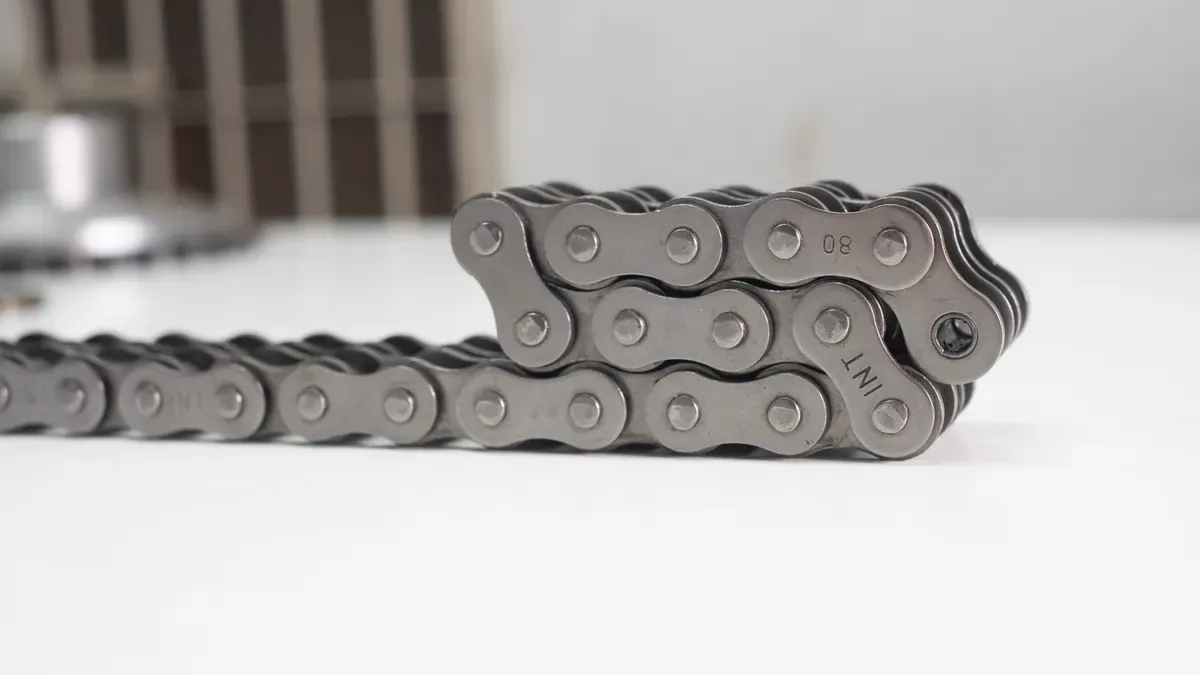
Changzhou DONGCHUAN Chain Transmission Technology Co., Ltd. began operations in 2000. The company runs a 30,000+ square meter facility in Changzhou City, Jiangsu Province, China. Two decades of focused manufacturing have made DONGCHUAN a trusted name for buyers who need durable apron conveyor chains.
Manufacturing Strength
Factory Location and Capacity
The Changzhou plant sits in the heart of China's industrial belt. This location gives DONGCHUAN access to skilled labor, raw material suppliers, and efficient export logistics. The 30,000+ square meter facility supports high-volume production runs and custom fabrication side by side. More than 40% of annual output consists of custom-made products. This ratio shows how deeply the company commits to tailored engineering rather than catalog-only sales.
Certifications and Quality Control
DONGCHUAN holds ISO 9001 and API certifications. The company also maintains an Environment Management System Certificate and operates EHS-compliant facilities. SGS certification and a Quality Management System Certificate appear under its qualification credentials.
| Certification / Protocol | Details |
|---|---|
| ISO 9001[3] | Certified to ISO 9001 quality management system |
| API | Certified to API standards |
| Quality Control Protocols | Fully integrated end-to-end quality control protocols; rigorous QC with full testing and inspection |
| Environmental Management | Environment Management System Certificate; EHS-compliant facilities |
| SGS | SGS certification listed under Qualification Certification |
| Quality Management System Certificate | Listed under Qualification Certification |
Every chain undergoes rigorous testing. Tensile strength verification, wear resistance evaluation, dimensional accuracy inspection, and surface treatment validation form the standard protocol. Complete traceability runs from raw material selection through final delivery. Membership in the National Chain Transmission Standardizing Technology Committee of China underscores the company's technical authority.
Product Range and Strengths
Standard and Heavy-Duty Chains
DONGCHUAN supplies apron conveyor chains with standard pitches from 1.664" to 9". Custom pitches are available for non-standard equipment. Attachment options include A1, A2, K1, K2, L-shaped, and G-type designs. These attachments enable scraping, lifting, and pushing functions across many chain conveyor configurations. Material choices cover carbon steel, stainless steel 304/316, and hardened alloys. Coatings include zinc, epoxy, and nickel. Chains withstand temperatures up to 500–600°F with forged plates in large pitches. For food processing lines, stainless steel 304/316 resists corrosion and supports hygiene requirements. For hard ores, manganese steel (Hadfield) delivers excellent wear resistance. Heat treatment through carburizing and quench-temper produces case hardness of 45–55 HRC.
Custom Engineering and Materials
Pan styles address different material handling needs. A-style pans feature double-beaded, leak-resistant construction for fine or hot materials. B-style pans offer deep, double-beaded designs for larger volumes. C-style pans provide extra depth for steep slopes and higher capacities. Piano-hinge flat pans handle small or irregular items and accept optional pusher cleats. L-shaped links mount custom slats. Impact shoes with a 1-inch plate welded underside protect the chain in demanding drop points. Sidebars use 2"×¼" precision die-punched 1045 alloy steel. Pins use 1045 cold-rolled steel. Pans use wear-resistant alloy steels such as 40Cr, 5140, and 41Cr4. This material selection supports heavy duty chain conveyors in the mining and mineral processing sectors, where coarse and abrasive materials punish weaker designs.
Case Applications in Cement, Mining, and Bulk Handling
DONGCHUAN exports to 40+ countries. The company serves mining, food processing, foundry, waste disposal, logistics, material handling, metallurgy, sugar production, and palm oil processing. A heavy duty roller chain conveyor system in a cement plant relies on the same engineering discipline as a roller chain conveyor system in a foundry. Each application receives chain conveyor components matched to its load, speed, and environment.
Customer Feedback and Verdict
Service Response and Technical Support
Engineering support and prototyping capabilities set DONGCHUAN apart. Buyers receive CAD drawings and technical selection assistance. The team helps verify overall length, shaft-to-shaft distance, drive sprocket spacing, chain type, and slat type before production begins. This upfront work prevents costly fitment errors after delivery.
Why DONGCHUAN Stands Out
Durability, dependability, and innovation form the company's core values. These values translate into real outcomes for buyers. A chain conveyor that lasts longer reduces downtime and replacement costs. A supplier that responds quickly keeps production moving. A manufacturer that invests in custom engineering solves problems that catalog products cannot. DONGCHUAN combines certified quality, broad product range, deep customization, and responsive service. For companies sourcing an apron conveyor chain, this combination delivers lasting value.
BEUMER Group: Apron Conveyor Systems for Cement
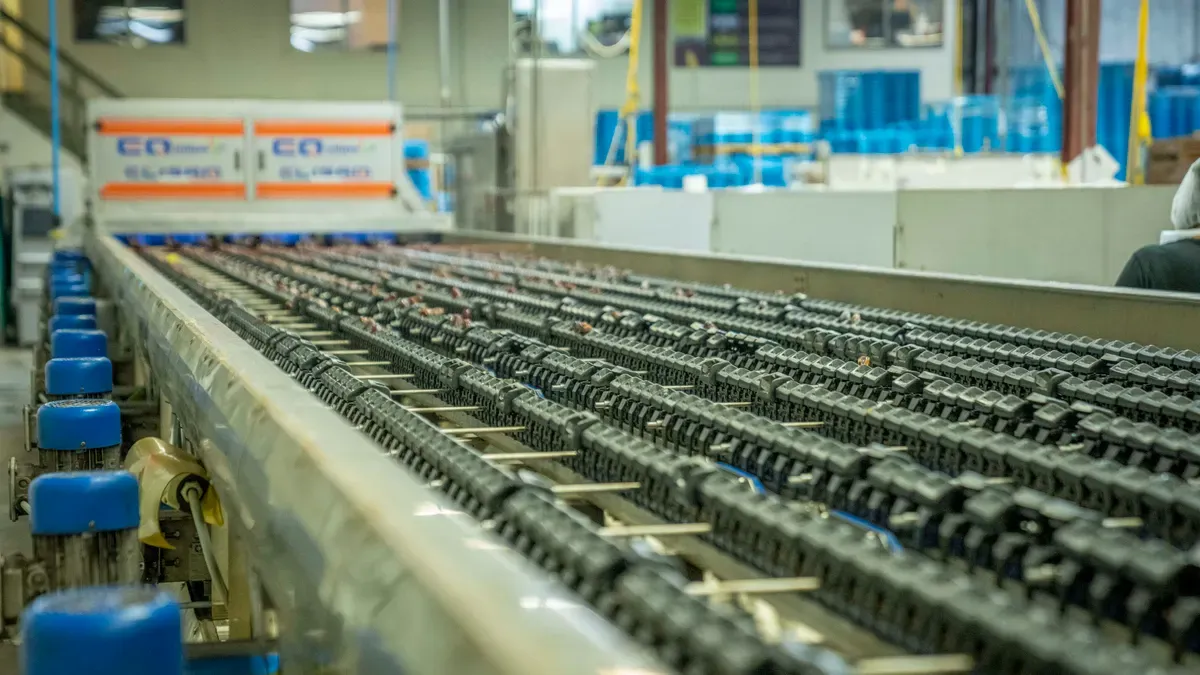
BEUMER Group operates as a system solutions provider. The company supports cement manufacturers with apron conveyors and complete material handling installations. BEUMER designs its chain conveyors to integrate with crushing, grinding, and clinker transport operations. Cement plants value this integrated approach because it reduces the number of suppliers they must coordinate.
Key Strengths and Offerings
BEUMER brings decades of experience in bulk material handling. The company engineers chain conveyor systems that handle hot clinker, limestone, and other abrasive materials. Their apron conveyor designs emphasize durability in continuous-duty cement applications. Plants that run three shifts per day need equipment that withstands constant wear. The company offers engineering support from initial consultation through installation. BEUMER's chain conveyors include custom configurations for specific plant layouts. This level of customization helps cement producers optimize material flow. Their conveyor system designs also address dust control and environmental compliance.
Target Applications and Limitations
BEUMER focuses on large-scale cement operations. Their apron conveyor systems suit high-capacity plants that move thousands of tons per day. The company also serves mining and minerals processing sectors with similar equipment needs. Smaller operations may find BEUMER's solutions cost-prohibitive. The company positions itself as a premium provider. Buyers with limited budgets often seek alternative suppliers. Lead times can also extend longer for fully customized chain conveyor systems. Plants needing rapid replacement parts may face delays compared to regional suppliers.
Quick Verdict
BEUMER Group delivers strong engineering and system integration for cement manufacturers. Their chain conveyors perform well in demanding, high-volume environments. The company suits large plants that prioritize turnkey solutions over lowest initial cost. Buyers seeking competitive pricing and faster lead times should evaluate other options. DONGCHUAN offers apron conveyor chains with comparable quality and more flexible commercial terms. For cement producers who need reliable chain conveyor systems without premium pricing, DONGCHUAN provides a practical alternative.
HEKO: Chain Conveyors for Bulk Handling
Holding a strong position in the chain conveyors market, HEKO Group is recognized as one of the world's leading producers of chains and wear-resistant parts for the bulk handling industry. The company emphasizes innovation and high quality across its entire product lineup. Its reputation rests on decades of engineering experience and a commitment to durability in demanding industrial environments around the globe.
Key Strengths and Offerings
HEKO specializes in components that power material handling operations worldwide. Its product range includes round link chains, bucket elevators, sprockets, fastening elements, and various assemblies designed for conveyor systems. Each component benefits from stringent quality standards associated with the "Made in Germany" label. This manufacturing strength gives buyers confidence in the reliability of every part. The company's chain conveyor systems undergo rigorous testing before shipment to ensure consistent performance. The company serves the chain conveyors market through direct B2B exchanges, bulk order contracts, and custom manufacturing services. Its strategic focus centers on application engineering, durability, and after-market services. HEKO continues expanding its market presence by developing innovative solutions tailored to customer needs. HEKO's expertise extends to scraper conveyors, where the company competes through specialized engineering knowledge. The chain conveyor category requires precise engineering for reliable performance under severe operating conditions.
Target Applications and Limitations
HEKO serves industries that require reliable bulk material handling solutions. Its customer base includes cement plants, chemical processing facilities, fertilizer production lines, and waste management operations. These sectors need chain conveyor systems that withstand abrasive materials, corrosive environments, and continuous operation around the clock. HEKO's engineering approach addresses these specific demands across multiple continents, with market reach extending across Europe, Asia, and North America. The company's specialization in premium-quality components brings both advantages and constraints. Buyers who need bulk materials handling systems with proven reliability benefit from HEKO's engineering depth and quality focus. However, its premium positioning in the chain conveyors market may not suit every budget. Smaller operations or those seeking rapid delivery for standard components may find more competitive options elsewhere. HEKO's emphasis on custom engineering can also extend lead times for specialized orders.
Quick Verdict
HEKO delivers exceptional quality and engineering expertise for buyers who prioritize durability and performance in conveying bulk materials. Its German manufacturing standards and broad product range make it a strong choice for large-scale industrial operations. The company's focus on innovation and after-market service adds long-term value for customers who operate heavy-duty chain conveyors around the clock. HEKO's chain conveyor systems excel in demanding environments but carry a premium cost structure that limits accessibility for some buyers. Another chain conveyor option may suit procurement teams seeking competitive pricing on standard designs. Some buyers find that an apron conveyor from a different manufacturer meets their performance requirements at a more attractive total cost. The right apron conveyor choice ultimately depends on balancing quality expectations with budget constraints for each specific operation.
Renold plc: Global Conveyor Chain Engineering
Renold plc traces its origins to 1879, when Swiss engineer Hans Renold acquired a small textile-chain business near Manchester, England. In 1880 he patented the bush roller chain, a design that still underpins modern roller chain worldwide, making Renold the oldest surviving transmission chain manufacturer. Today the group designs and supplies engineered chains for mining, cement, and bulk handling operations around the globe.
Key Strengths and Offerings
Renold's conveyor chain line-up includes welded steel conveyor chains, bucket elevator chains, and heavy-duty forged chains, including M/F-series scraper chains for drag conveyors. Matching sprockets and attachments complete the range. Hardened pins and rollers, proprietary steel grades, and optional stainless steel versions target abrasive and high-temperature service. The company supports apron pan conveyor applications in mining with chain designs engineered for shock loads and continuous duty. Renold also provides application engineering, selection support, and a global distribution network that keeps spare parts within reach of major industrial regions.
Target Applications and Limitations
Renold chains serve mining (including apron pan conveyors), cement, agriculture, sugar processing, biomass and waste-to-energy plants, and steel mills. Their bucket elevator chains and drag conveyor chains handle grain, clinker, ash, wood chips, and other bulk materials. The premium engineering position brings higher prices than standard imports, and custom engineered chains require technical coordination and longer manufacturing lead times. Buyers with simple, standardized requirements may find the engineering depth beyond their needs.
Quick Verdict
Renold delivers long-standing engineering expertise and dependable chain products for large-scale operations that prioritize service life and global support. For buyers who need certified quality at more flexible commercial terms, a specialized apron conveyor chain maker such as DONGCHUAN offers a practical alternative with comparable material and heat-treatment discipline.
Ludhiana-Based Conveyor Apron Manufacturer: Brief Overview
This Ludhiana-based manufacturer has built a solid reputation in the conveyor apron market. Customer reviews give the company a perfect 5 out of 5 rating. Buyers consistently praise the firm for professional behavior and reliable communication throughout the ordering process. The company operates from Ludhiana, a major industrial hub in Punjab, India. This location gives the manufacturer access to skilled labor and a strong supply chain for steel and components.
Key Strengths and Offerings
The company focuses on delivering best engineering solutions for material handling challenges. Their team works closely with buyers to understand specific requirements before proposing a design. This consultative approach helps customers avoid costly mistakes during specification. The manufacturer offers apron conveyor solutions tailored to individual plant layouts and production demands. Professional behavior sets this supplier apart from many competitors. Buyers report prompt responses to inquiries and clear documentation at every stage. The company provides technical guidance during installation and commissioning. This hands-on support reduces startup delays and ensures proper equipment function. Their engineering team also offers maintenance recommendations to extend equipment life.
Target Applications and Limitations
This manufacturer serves industries such as food processing, agriculture, and general manufacturing. Their conveyor apron products handle bulk materials in moderate-duty applications. Cement plants, sugar mills, and grain handling facilities represent typical customers. The company also supports smaller operations that need reliable equipment without premium pricing. Buyers should consider several factors before selecting this supplier. The company operates primarily within the Indian market and nearby regions. International buyers may face longer shipping times and limited local support. Their product range focuses on standard configurations rather than highly specialized designs. Plants requiring extreme temperature resistance or custom alloys may need to explore other options.
Quick Verdict
This Ludhiana-based manufacturer offers dependable apron conveyor equipment at competitive prices. The 5 out of 5 customer rating reflects consistent quality and professional service. Buyers who value responsive communication and practical engineering support will find this supplier a strong fit. The company suits regional buyers and operations with standard material handling needs. For buyers seeking certified quality systems, extensive customization, and global export experience, other manufacturers may offer stronger long-term value. Companies that prioritize factory-direct partnerships with proven international track records should evaluate suppliers with broader capabilities. A manufacturer with ISO 9001 and API certifications often delivers more comprehensive quality assurance for demanding applications.
Comparative Summary of Top Apron Conveyor Chain Manufacturers
The five manufacturers reviewed in this guide each serve distinct segments within the apron conveyor market. Buyers must match supplier strengths to their operational requirements. This comparison highlights how each supplier differentiates itself across these key criteria.
Quality and Reliability Comparison
DONGCHUAN holds ISO 9001 and API certifications with fully integrated quality control protocols. Tensile strength verification, wear resistance evaluation, and dimensional accuracy testing form the standard inspection routine. Complete traceability runs from raw material selection through final delivery. Over 40% of annual output consists of custom products. Buyers in the apron conveyor market value this combination of certified quality and engineering flexibility. BEUMER Group delivers premium system-level reliability for cement plant applications. Their conveyor components integrate with complete material handling installations. HEKO follows German manufacturing standards with rigorous testing protocols. Their wear-resistant parts serve demanding bulk handling applications. Renold follows more than 140 years of chain engineering heritage. Incoming steel is specified to tight standards, and finished chains undergo load and wear testing before shipment. The Ludhiana-based manufacturer holds a perfect 5 out of 5 customer rating. Professional communication and clear documentation define their service approach. DONGCHUAN stands out among the apron conveyor market participants for its breadth of certifications and prototyping capabilities. These factors contribute to consistent reliability across diverse industries and operating conditions.
Price and Lead Time Comparison
Pricing structures vary significantly across the apron conveyor market. DONGCHUAN offers competitive pricing with flexible minimum order quantities. Buyers can purchase as little as a single connector link or as much as 300 feet of chain. Lead times benefit from the company's 30,000+ square meter facility and export experience across 40+ countries. BEUMER Group and HEKO occupy premium price positions. Their engineering focus commands higher initial investment. Lead times for custom conveyor components may extend longer for these suppliers. Renold occupies a premium engineering position, with pricing comparable to other established chain brands. Custom engineered chains require longer lead times and deeper technical coordination. The Ludhiana-based manufacturer provides competitive pricing for regional buyers. International shipping adds time and logistics cost for overseas customers. Buyers should evaluate total cost of ownership rather than upfront price alone. A chain that lasts longer and requires fewer replacements delivers better long-term value. DONGCHUAN's certified quality and custom engineering capabilities support strong lifecycle economics.
Best-Fit Applications by Manufacturer
DONGCHUAN serves the widest range of industries within the apron conveyor market. Mining operations, cement plants, food processing lines, foundries, waste disposal facilities, and logistics centers all benefit from DONGCHUAN's product range. Temperature resistance up to 500–600°F with forged plates suits demanding environments. Stainless steel 304/316 options support food-grade hygiene requirements. Each apron conveyor application requires specific material selection based on load, temperature, and corrosion exposure. BEUMER Group fits large-scale cement and minerals processing operations. Their system integration approach reduces supplier coordination for major capital projects. HEKO serves bulk handling in cement, chemical, and waste management sectors. Their premium components deliver long service life in abrasive and corrosive environments. Renold serves heavy industries including mining, cement, agriculture, and steel. Their conveyor chains handle abrasive and hot materials in apron pan conveyors, bucket elevators, and drag conveyors. The Ludhiana-based manufacturer serves food processing, agriculture, and general manufacturing in moderate-duty applications. The apron conveyor market continues to expand as industries automate material handling processes. Trends within the apron conveyor market favor suppliers who offer both standard and custom configurations. Selecting the right apron conveyor depends on matching supplier capabilities to plant conditions.
Need a Reliable Apron Conveyor Chain Supplier?
From standard pitches to fully custom attachments, our drop-forged and engineered chain solutions cover mining, cement, food processing, and bulk handling applications. Send us your drawings or chain measurements for a tailored recommendation.
Conclusion
This review examined five top apron conveyor chain manufacturers: DONGCHUAN, BEUMER Group, HEKO, Renold plc, and a Ludhiana-based conveyor apron manufacturer. Each supplier brings distinct strengths to the market. Your choice should reflect your quality requirements, budget, lead time expectations, and customization demands. DONGCHUAN offers a strong combination of certified quality, responsive service, and competitive value. The company's ISO 9001 and API certifications, 30,000+ square meter facility, and flexible order quantities support buyers across diverse industries. If you need a reliable apron conveyor chain supplier, choose DONGCHUAN for your next project.
FAQ
How does an apron conveyor chain differ from other conveyor chains?
An apron conveyor chain uses steel plates mounted between roller chain strands. This design handles heavy, abrasive, or hot materials that standard belt conveyors cannot. The apron conveyor market categorizes these chains by pitch, material, and attachment type.
What industries commonly use apron conveyor chains?
Mining, cement, food processing, foundry, and waste disposal operations rely on these chains. The apron conveyor market serves these sectors with options for extreme temperatures, corrosion, and high-impact loads.
What materials do manufacturers use for apron conveyor chains?
Carbon steel suits standard applications. Stainless steel 304/316 resists corrosion. Hardened alloys and manganese steel handle abrasive materials. The apron conveyor market offers these material grades to match specific operating conditions.
How do I select the correct chain pitch?
Measure the distance between pin centers on your existing chain. Standard pitches range from 1.664" to 9". Larger pitches handle heavier loads. Custom pitches are available for non-standard equipment.
What attachment types serve different material handling functions?
Common attachments include A1, A2, K1, K2, L-shaped, and G-type designs. These enable scraping, lifting, and pushing along the conveyor line. The apron conveyor market provides attachment spacing tailored to specific layouts.
What temperature ratings can apron conveyor chains achieve?
Standard chains withstand temperatures up to 500–600°F with forged plates in large pitches. Heat-treated alloys maintain strength at elevated temperatures. High-temperature lubrication extends chain life in hot environments.
What certifications indicate a reliable apron conveyor chain manufacturer?
ISO 9001 and API certifications confirm quality management systems. Fully integrated quality control ensures dimensional accuracy and material traceability. DONGCHUAN holds these certifications and offers custom engineering support for demanding applications.
References
Conveyor Equipment Manufacturers Association (CEMA). https://www.cemanet.org/
ASTM International. https://www.astm.org/
International Organization for Standardization (ISO). https://www.iso.org/

