


Top 10 Engineering Chain Manufacturers in the Global Market
Selecting the right engineering chain manufacturer directly affects uptime, maintenance costs, and safety in 2026. The global market offers strong options, and the table below summarizes the leading manufacturers profiled in this guide, along with their headquarters and primary specialties. This article first explains how to evaluate manufacturers, then profiles each one, with special focus on DONGCHUAN (DCC) as a leading supplier.
| Manufacturer | Headquarters | Primary Specialty |
|---|---|---|
| DONGCHUAN (DCC) | Changzhou, China | Custom engineering chains |
| Tsubakimoto Chain Co. | Osaka, Japan | Power transmission chains |
| Renold plc | Manchester, UK | Industrial chains |
| The Timken Company | North Canton, USA | Bearings and chains |
| Rexnord Corporation | Milwaukee, USA | Conveyor chains |
| SKF | Gothenburg, Sweden | Bearings and power transmission |
| Daido Kogyo Co., Ltd. | Ishikawa, Japan | Roller and conveyor chains |
| Ketten Wulf | Kierspe, Germany | Engineered conveyor chains |
| Donghua Chain Group | Hangzhou, China | Transmission and roller chains |
| ContiTech Conveyor Belt Group | Hanover, Germany | Conveyor systems |
| Fives Group | Paris, France | Industrial automation and conveying |
Key Takeaways
Choose chain manufacturers by checking quality, certifications, and engineering support to lower costs and improve safety.
The manufacturers profiled in this guide serve industries like mining, automotive, and food processing with specialized chains.
DONGCHUAN holds ISO 9001 and API certifications and customizes over 40% of its output for demanding applications.
Automation trends increase demand for high-precision chains that maintain consistent performance over millions of cycles.
Sustainability pushes manufacturers toward eco-friendly practices and advanced coatings for longer chain life.
Buyers should evaluate total cost of ownership including initial price, maintenance, and replacement intervals.
Ask about warranty, lead times, and customization before selecting a chain supplier for your project.
DONGCHUAN offers reverse engineering from customer drawings or samples for tailored chain solutions.
How to Choose Engineering Chain Manufacturers
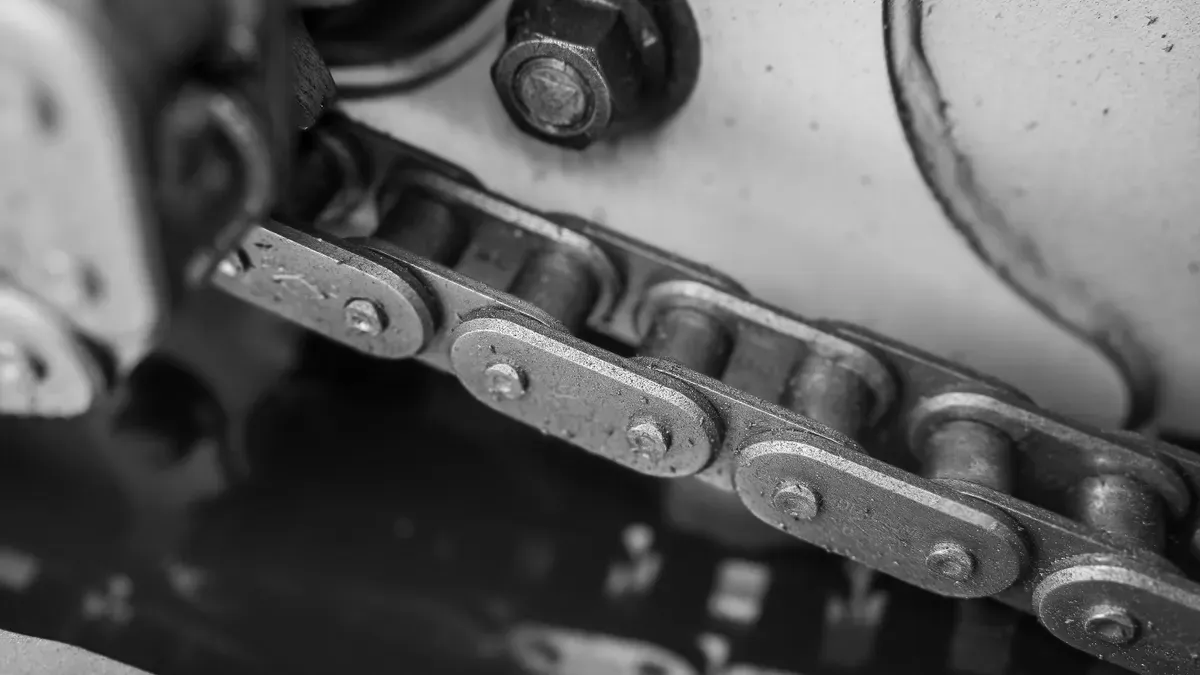
Evaluating suppliers requires a structured approach before comparing options. The global market provides numerous choices, each with different capabilities. Current market trends emphasize reliability and performance as top priorities. Market growth in industrial automation increases demand for quality components that withstand harsh conditions. Buyers in this market must assess multiple criteria carefully before selecting partners. The competitive market demands thorough analysis of every potential supplier.
Key Evaluation Factors
Product Quality and Material Standards
Quality ranks as the top evaluation criterion[1] for chain selection. Buyers should request material certifications and part inspection reports to verify compliance. Under the quality criterion, suppliers should provide a certificate of analysis and evidence of testing. Material selection directly affects chain durability. Carbon steel chains with heat treatment offer wear resistance. Alloy steel chains support overhead lifting applications. Stainless steel chains resist corrosion in aggressive environments. A chain's material grade determines its safe operating limits. Selecting the wrong grade can cause chain failure without warning signs, leading to load loss or injury.
Industry Certifications and Compliance
Certifications serve as strong indicators of manufacturing reliability. The table below shows relevant standards:
| Standard | Application |
|---|---|
| ISO 9001 | Generic quality management system applicable across all industries |
| IATF 16949 | Automotive industry quality management (replaced ISO/TS 16949 in 2016) |
| ISO 29001 | Oil, petrochemical, and gas industries |
Each standard requires documented processes and consistent quality controls. These certifications verify production controls and quality management systems.
Customization and Engineering Support
Many applications require custom solutions rather than standard products. A manufacturer with strong engineering support can match chain specifications to real operating conditions. This includes load profiles, duty cycles, environmental exposure, temperature ranges, and corrosion risks. Custom transmission chains meet specific power needs for unique applications. Proper customization prevents premature failures and reduces replacement costs over the asset's life.
Manufacturing Capabilities to Consider
Production Capacity and Lead Times
Production capacity must match buyer requirements for volume and consistency. Insufficient capacity causes schedule delays and missed deadlines. Lead times affect project timelines and ongoing operations. Buyers should verify that suppliers can meet required production demands without compromising quality.
Global Distribution and After-Sales Service
Global distribution networks enable timely delivery worldwide. After-sales service includes technical support, warranty handling, and spare parts availability. Reliable after-sales support reduces downtime when issues arise. A strong service network minimizes operational losses.
Why These Criteria Matter
In industrial environments, the lowest bid rarely represents the lowest lifecycle cost. Equipment sourced for real operating extremes prevents premature failures. Total cost modeling reveals long-term expenses including acquisition, installation, maintenance, and replacement. Mapping compliance requirements avoids approval delays and costly retrofits.
Industrial chains for transmission applications must meet strict standards. Quality chains reduce maintenance costs and improve operational safety. Proper evaluation leads to fewer change orders and more predictable asset performance over the full operating life.
Top 10 Engineering Chain Manufacturers in 2026
DONGCHUAN (DCC) — A Leading Engineering Chain Manufacturer
Headquarters and Founding Year
DONGCHUAN Chain Transmission Technology Co., Ltd. was founded in 2000. The company is based in Changzhou, Jiangsu, China. Its production facility covers more than 30,000 square meters. This dedicated site supports all manufacturing and engineering operations.
Product Range and Specialties
DONGCHUAN supplies a wide range of products including engineering chains, conveyor chains, forged chains, cardan chains, welded steel chains, and sprockets. Specialized items such as Offset Link Chains, Hollow Pin Chains, Cold Bed Chains, and 81X Series Lumber Conveyor Chains address specific operational demands. Over 40% of annual output consists of custom-engineered solutions. The company also manufactures roller chains for various material handling systems. Roller chains are used extensively in automotive and logistics applications. These heavy-duty chains handle high impacts and elevated operating temperatures. DONGCHUAN offers heavy-load capacity chains for mining and metallurgy sectors.
Key Industries Served
The company serves over 40 global customers across industries such as logistics, material handling, metallurgy, sugar processing, palm oil extraction, automotive manufacturing, paper production, grain handling, and mining. Each sector needs custom solutions to handle harsh environments. The competitive market requires high performance and reliability. DONGCHUAN provides high-load conveying solutions for demanding operations like steel mills and mines. The company's modular conveyor chain systems enable flexible configuration for complex production lines.
Competitive Strengths
DONGCHUAN holds ISO 9001 and API certifications that confirm rigorous quality controls. The company uses advanced heat treatment, chrome plating, and pre-lubrication to improve chain durability. A strong R&D team performs reverse engineering based on customer drawings or samples. This engineering support allows DONGCHUAN to meet unique application specifications. The company focuses on delivering reliable power transmission solutions that reduce downtime. The global market for heavy-duty chains continues to expand, driven by industrial automation trends.
Tsubakimoto Chain Co. — Brief Overview
Headquarters and Product Focus
Tsubakimoto Chain Co. is headquartered in Osaka, Japan. The company specializes in power transmission chains and motion control products. Its portfolio includes roller chains, engineering class chains, sprockets, flexible couplings, and cable carriers. Tsubakimoto also supplies smart conveyor systems for automated production lines.
Key Industries and Strengths
The company serves the automotive, machine tool, and material handling sectors. Tsubakimoto's precision chains support high-speed manufacturing environments. Its product range supports high-speed automotive and logistics lines where consistent tolerance is critical.
Renold plc — Brief Overview
Headquarters and Product Focus
Renold plc is headquartered in Manchester, United Kingdom[2]. The company specializes in industrial chains, with a strong emphasis on large conveyor chain for heavy-load applications[3]. Renold also manufactures conveyor chains for cement and mining industries.
Key Industries and Strengths
Renold serves industries such as mining, cement, power generation, oil and gas, and food and beverage. Its large conveyor chain portfolio includes products designed for bulk material handling in harsh environments, where durability and reliability matter most.
More Top Engineering Chain Manufacturers
The Timken Company — Brief Overview
Headquarters and Product Focus
The Timken Company operates from North Canton, Ohio, in the United States. Timken built its reputation on engineered bearings and mechanical power transmission products. The product portfolio spans two broad categories. Engineered Bearings includes tapered roller bearings and plain bearings. Industrial Motion covers linear motion, power transmission, lubrication systems, and specialty gear drives. This dual focus gives buyers a single source for connected drivetrain components.
Key Industries and Strengths
Timken competes on engineering, reliability, channel position, and availability rather than on a single commodity price dimension. The company's marketing approach is fundamentally business-to-business and engineering-led. Pricing power rests on brand reputation and application engineering. These products represent a small cost of the equipment, but failure cost is high. Timken aims to be a global leader in engineered bearings, mechanical power transmission products, and related services. Differentiators include technology and know-how in materials, friction management, and mechanical systems.
Rexnord Corporation — Brief Overview
Headquarters and Product Focus
Rexnord Corporation is headquartered in Milwaukee, Wisconsin, in the United States. The company manufactures a broad range of power transmission and conveying components. Product lines include engineered chains[4], conveying chains, flat top chains, and roller chains. Rexnord also produces conveying equipment such as bucket elevators, industrial elevators, and apron conveyors. Additional offerings cover bearings and seals, couplings, clutches, brakes, drives, idlers, sprockets, and electronic components. This wide portfolio supports complete material handling systems.
Key Industries and Strengths
Rexnord serves food and beverage processing, pharmaceutical, commercial aerospace, chemical and petrochemical, coal, oil field, and energy sectors. The company also supports construction and machinery, agriculture and farm machinery, transportation and sanitation, cement and forest products, and general industrial equipment. This industry breadth reflects the market demand for reliable conveying solutions.
SKF — Brief Overview
Headquarters and Product Focus
SKF is headquartered in Gothenburg, Sweden. The company is a global supplier of bearings, seals, lubrication systems, and power transmission solutions. SKF's product range includes roller chains, conveyor chains, and related components for industrial machinery. The company combines bearing technology with chain and transmission expertise.
Key Industries and Strengths
SKF serves automotive, aerospace, energy, food and beverage, and heavy industry sectors. The company's engineering capabilities support demanding operating conditions. SKF invests in research and development to address market trends toward efficiency and sustainability. Its global distribution network ensures reliable product availability for industrial buyers.
Additional Industrial Chain Manufacturers
Daido Kogyo Co., Ltd. — Brief Overview
Headquarters and Product Focus
Daido Kogyo Co., Ltd. operates from Ishikawa, Japan. The company has built a strong reputation in the power transmission and industrial chain market. Its product range includes roller chains, conveyor chains, and specialty chains for demanding applications. Daido also manufactures large conveyor chain products for heavy industries. The company focuses on precision engineering and consistent quality across its entire product line.
Key Industries and Strengths
Daido serves sectors such as automotive, steel, cement, and material handling. The company is valued for its reliable roller chain designs and strong technical support. It invests in research to meet evolving market trends. Its large conveyor chain offerings support bulk material handling operations. Daido's engineering capabilities help customers reduce downtime and improve efficiency.
Ketten Wulf — Brief Overview
Headquarters and Product Focus
Ketten Wulf is headquartered in Kierspe, Germany. The company specializes in high-performance engineered conveyor chains[5], drive chains, and sprockets. Its product portfolio serves a wide range of industrial applications worldwide.
Over decades, the company has established itself as a notable supplier of advanced chain and drive technologies, providing customizable engineered solutions for heavy industries ranging from mining, steelmaking, and bulk-material handling to other specialty applications.
Key Industries and Strengths
Ketten Wulf supports heavy-duty sectors including mining, steelmaking, and bulk-material handling. The company is trusted for customizable engineered solutions that meet specific operational demands. Its large conveyor chain products handle tough environments with reliability. The company's focus on advanced chain and drive technologies positions it well for future market growth.
Donghua Chain Group — Brief Overview
Headquarters and Product Focus
Donghua Chain Group is based in Hangzhou, China. The company manufactures a broad range of transmission chains, roller chains, and conveyor chains. Its product line also includes specialty chains for agricultural and industrial applications. Donghua serves both domestic and international markets with a focus on volume production.
Key Industries and Strengths
Donghua supports industries such as agriculture, automotive, and general manufacturing. The company is recognized for its large conveyor chain options and competitive pricing. Its roller chains are widely used in power transmission systems. Donghua continues to expand its global footprint through consistent product quality. Its growth reflects the broader expansion of the industrial chain market in Asia.
Final Engineering Chain Manufacturers on the List
ContiTech Conveyor Belt Group — Brief Overview
Headquarters and Product Focus
ContiTech Conveyor Belt Group operates from Hanover, Germany, as part of Continental AG. The company produces belts and chain conveyors for industrial applications. These systems handle heavy loads in harsh industrial conditions. Adjustable widths and lengths allow customization for different operations. The company combines belt and drive technology for efficient conveying.
Key Industries and Strengths
The company serves mining, cement, and power generation sectors. ContiTech offers large conveyor chain systems for bulk material handling. Its durable systems and technical expertise help operators reduce downtime, and its conveyor chains support continuous material flow in demanding environments.
Fives Group — Brief Overview
Headquarters and Product Focus
Fives Group is headquartered in Paris, France. The company supplies machines, process equipment, and production lines to industrial groups worldwide. Fives operates in 25 countries with 8,500 employees. Its product range covers process industries and high precision machines. The company provides smart automation systems for sorting, handling, and conveying tasks. Fives supplies complete conveying and automation systems in which chain components support material transfer.
Key Industries and Strengths
Fives serves aerospace, automotive, aluminum, cement, and sugar sectors in the global market. The company is valued for its broad technical capabilities across 25 countries. Market trends toward automation increase demand for Fives' smart systems. Chains serve as part of Fives' material handling offerings.
How the Top 10 Compare
Strengths Summary
The table below summarizes key strengths for all manufacturers.
| Manufacturer | Strengths |
|---|---|
| DONGCHUAN (DCC) | Reliable chain solutions, ISO 9001 & API certified, over 40% custom output |
| Tsubakimoto Chain Co. | Precision power transmission chains, motion control expertise |
| Renold plc | Large conveyor chain for heavy-load mining and cement |
| The Timken Company | Engineered bearings and integrated drivetrain systems |
| Rexnord Corporation | Broad chain and conveying equipment portfolio |
| SKF | Bearings, seals, and power transmission with global service |
| Daido Kogyo Co., Ltd. | Reliable roller chains for automotive and steel industries |
| Ketten Wulf | Customizable engineered conveyor chains for heavy industry |
| Donghua Chain Group | Volume production of transmission and conveyor chains |
| ContiTech Conveyor Belt Group | Belt and chain conveyor systems for bulk material handling |
| Fives Group | Industrial automation and complete conveying systems |
Which Manufacturer Fits Your Needs
Each manufacturer serves different market application requirements. DONGCHUAN (DCC) stands out as a top choice for engineering chain solutions. Its dedicated R&D team and API certification make it well suited to demanding industries. Buyers seeking large conveyor chain options for mining or cement should evaluate Renold and Ketten Wulf. Those needing roller chains for automotive applications might consider Tsubakimoto or Daido. For customers who require tailored chain systems with technical support, DONGCHUAN provides a strong combination of customization and engineering assistance.
Each supplier brings distinct advantages. Evaluating after-sales support and delivery timelines helps buyers match specifications to operating conditions. DONGCHUAN provides strong technical support for custom orders. This flexibility makes it a preferred partner for complex projects. Buyers should review sample parts and request references before final selection. Reliable partners offer consistent quality across production batches.
Key Trends for Industrial Chain Manufacturers in 2026
Automation and Smart Manufacturing
Demand for High-Precision Chains
Industrial automation continues to reshape the global conveyor chain market. Factories now deploy robotic systems that demand exact tolerances from every component. This shift creates strong demand for high-precision chains that maintain consistent performance across millions of cycles. Manufacturers must invest in advanced machining equipment to meet these tighter specifications.
Smart conveyor systems rely on sensors and real-time data to optimize material flow. These systems require chains with minimal elongation and predictable wear patterns. The market for such high-performance solutions expands as more facilities adopt Industry 4.0 principles. Buyers should evaluate whether a supplier can deliver the precision their automated lines require.
Sustainability and Material Innovation
Eco-Friendly Manufacturing Practices
Environmental responsibility now shapes purchasing decisions across the industrial chain manufacturers landscape. The market rewards suppliers who reduce carbon footprints and embrace circular economy models. Electric Arc Furnace adoption supports the use of recycled content and lowers emissions. Hydrogen metallurgy pilot projects target carbon-free steel production. Renewable energy integration moves some facilities toward carbon-neutral operations.
These practices affect manufacturer selection because buyers increasingly track supply chain sustainability. A supplier with documented eco-friendly processes offers better compliance with corporate environmental goals.
Advanced Alloys and Coatings
Material science drives the next wave of chain performance. Advanced surface treatments and advanced coatings improve wear and corrosion resistance. Laser modification, plasma nitriding, and nano-coatings extend service life in harsh environments. Additive manufacturing enables complex geometries and material efficiency. AI and machine learning accelerate new alloy composition development.
DONGCHUAN (DCC) invests in advanced heat treatment, chrome plating, and pre-lubrication to meet these trends. These processes enhance durability for heavy-duty applications. The company's focus on material innovation positions it well as the market demands longer-lasting solutions.
Supply Chain Resilience and Localization
Regional Production Hubs
Geopolitical disruptions push manufacturers to establish regional production hubs. Local sourcing reduces dependency on distant suppliers and shortens delivery routes. This trend affects the global conveyor chain market by creating more distributed supply networks.
Impact on Lead Times and Costs
Regional production can reduce lead times for large conveyor chain orders. Local manufacturing also lowers transportation costs and tariff exposure. Buyers should weigh these benefits against potential price differences. A supplier with multiple production locations offers greater flexibility. DONGCHUAN serves over 40 global customers from its Changzhou facility, demonstrating how a focused production base can support international demand.
The market for conveyor chains continues to evolve. Manufacturers that adapt to automation, sustainability, and localization trends will lead the industry. Buyers who understand these forces can select partners positioned for long-term success.
Buyer's Guide for Engineering Chain Selection
Matching Chain Specifications to Your Application
Load Capacity and Speed Requirements
Engineering class chains[6] handle heavy-duty conveyance with higher tensile capacity than standard roller chains. Standard roller chains suit light to medium loads. Selection must consider load capacity and speed requirements together. Engineering class chains work best for slower, heavy-load operations where roller chains cannot handle the stress.
Common industry guidance recommends a minimum 7:1 safety factor for normal conveying applications. This ratio divides chain breaking strength by maximum working tension. Increase to 10:1 or higher for shock loading, high speeds, or critical applications. Calculate total chain pull by accounting for material weight, chain weight, attachment weight, friction forces, and elevation components. Multiply maximum working tension by the safety factor to determine minimum required ultimate tensile strength.
Pitch determines load capacity and speed compatibility. Smaller pitch chains run at higher speeds but carry lighter loads. Larger pitch chains handle heavier loads but operate at slower speeds. Higher speeds require smaller pitch chains with tighter manufacturing tolerances. Speed also affects lubrication requirements and articulation frequency.
Environmental and Operating Conditions
Operating environments shape chain selection significantly. High-moisture conditions demand corrosion-resistant materials. High-temperature applications require heat-treated alloys. Dusty environments need sealed designs. Buyers should document temperature ranges, humidity levels, and exposure to chemicals or abrasives. These factors determine material grade and coating requirements.
Evaluating Total Cost of Ownership
Initial Price vs. Long-Term Durability
A higher unit price often leads to lower total cost of ownership when quality and support are strong. Compare failure rates, installation time, maintenance costs, and shipping fees across suppliers. The market rewards buyers who model lifecycle expenses rather than acquisition costs alone.
Maintenance and Replacement Costs
Extended warranties can reduce replacement costs over time. Evaluate whether warranty terms cover parts only or include labor. Calculate expected replacement intervals based on duty cycles. Factor in downtime costs when comparing options.
Questions to Ask Before You Buy
Warranty and Support Terms
Ask what exactly is covered under warranty. Confirm who pays return shipping on defective units. Ask about defective-product replacement policies and specific turnaround times. Response times vary by supplier; leading suppliers typically respond within 12–24 hours, while others may take longer. Read the fine print carefully. A five-year warranty that excludes common failure modes offers little value.
Customization and Lead Time Expectations
Confirm availability of custom labeling, packaging, and technical parameters within existing designs. Ask whether the supplier supports OEM and ODM projects. Request examples of past customization work. Send a genuine application question before ordering. If pre-sales response takes a week, post-sales will take longer.
DONGCHUAN (DCC) offers reverse engineering and production based on customer drawings or samples. This capability supports buyers who need tailored solutions for demanding applications.
Need a Custom Engineering Chain Supplier?
Tell us your chain type, load requirements, and operating environment. Our engineering team will help you select or custom-build the right chain for your application.
Send Us an InquiryReferences
Fictiv — Five Key Factors to Consider When Performing a Supplier Evaluation. https://www.fictiv.com/articles/five-key-factors-to-consider-when-performing-a-supplier-evaluation
LeadIQ — Renold Ltd Company Profile. https://leadiq.com/c/renold-ltd/5a1d7f4a24000024005a7e26
Spherical Insights — Top 25 Companies in the Global Large Conveyor Chain Market. https://www.sphericalinsights.com/blogs/top-25-companies-in-global-large-conveyor-chain-market-statistics-report-till-2035
Encyclopedia.com — Rexnord Corp (company profile). https://www.encyclopedia.com/social-sciences-and-law/economics-business-and-labor/businesses-and-occupations/rexnord-corp
Made in Alabama — KettenWulf Announces New Manufacturing Operation in Auburn. https://www.madeinalabama.com/2026/01/global-chain-manufacturer-kettenwulf-announces-new-manufacturing-operation-in-auburn/
CEMA — Conveyor Equipment Manufacturers Association. https://www.cemanet.org/

