


Essential Tips for Maintaining Engineering Chains in 2026
Taking care of an engineering chain needs regular checks and good planning. If you fix things before they break, you can save up to 25% in costs and make machines work 40% more often. Many factories lose significant revenue when machines stop without warning. Selecting quality industrial conveyor chains and building a strong maintenance plan helps prevent these problems before they happen.
Key Takeaways
Checking chains often can save money and keep machines working longer.
Visual inspections catch rust, wear, and misalignment before they cause costly breakdowns.
Use quality chain materials — such as those from DCC — to extend service life and reduce wear.
Clean chains every two tank fills and lubricate every 100–200 hours of operation.
Log every inspection, cleaning, and replacement to identify recurring problems.
Follow manufacturer guidelines for installation and maintenance to avoid errors.
Monitor environmental conditions — heat, moisture, and chemicals accelerate chain wear.
Replace chains showing elongation, cracks, or deformation to maintain safety and efficiency.
Engineering Chain Inspection
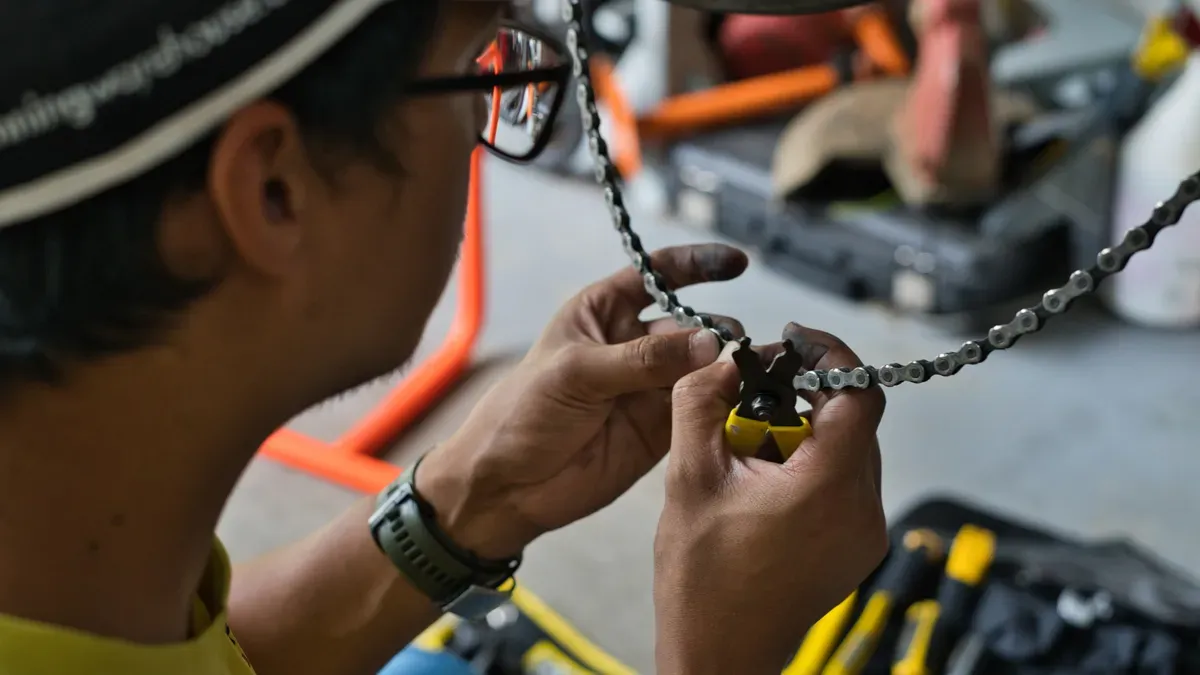
Regular inspection is the foundation of good chain performance. Detecting problems early prevents failures and keeps machines productive. According to Plant Engineering, routine chain checks — including sprocket wear inspection and timely link replacement — are fundamental to any industrial maintenance program. Inspections also protect workers, reduce downtime, and extend equipment lifespan.
Routine Visual Checks
Spotting Wear and Rust
Wear and rust weaken chains and can cause sudden breakdowns. Check these areas every inspection cycle:
Surface problems such as cracks or pits
Rust or corrosion on links and pins
Scratches or rough spots on contact surfaces
Areas where the chain appears visibly thinned or damaged
Tip: DCC chains use high-grade alloy steel and carbon steel, offering better resistance to rust and wear compared to lower-grade alternatives.
Identifying Misalignment
Misalignment accelerates uneven wear and can cause premature chain failure. Look for links that are not straight, chains rubbing against guides or sprockets, and uneven gaps between links.
Note: Proper alignment is critical for industrial conveyor chains. Even slight misalignment significantly increases friction and speeds up wear.
Wear Indicators
Measuring Elongation
Chains stretch incrementally over time. Measure the distance between pins regularly to determine whether the chain has exceeded its elongation limit. Chains that are stretched beyond specification should be replaced promptly.
Recognizing Deformation
Deformation — bent links or twisted sections — indicates the chain may be unsafe. Any chain with visible deformation should be replaced immediately, regardless of its service hours.
Common Inspection Mistakes
| Common Mistake | Recommended Solution |
|---|---|
| Ignoring inspection data | Collect current data and review it consistently. |
| Misinterpreting results | Train your team and establish clear inspection procedures. |
| Inadequate follow-up on findings | Review results with all stakeholders and assign corrective actions. |
| Overreliance on manual methods | Integrate digital tools and automation to reduce human error. |
| Incomplete documentation | Use digital checklists and forms to maintain thorough records. |
| Skipping key steps | Follow SOPs and use automated reminders to stay on schedule. |
| Poor sampling methods | Apply standardized sampling techniques and train your team. |
| Lack of inspector training | Provide ongoing training and competency development. |
| Poor communication | Establish clear reporting channels and hold regular review meetings. |
Safety Assurance: Regular inspections maintain chain integrity and reduce risk for workers.
Preventing Downtime: Early problem detection enables proactive repairs before failures occur.
Equipment Longevity: Identifying wear on time allows for planned part replacement rather than emergency repairs.
DCC chains are manufactured using advanced forging technology, which improves grain structure for superior strength and toughness. Every product undergoes rigorous quality testing and holds ISO 9001 and CE certifications. Choosing chains with high-quality materials and strict quality control — like DCC — simplifies inspection and reduces failure risk.
Cleaning and Lubrication
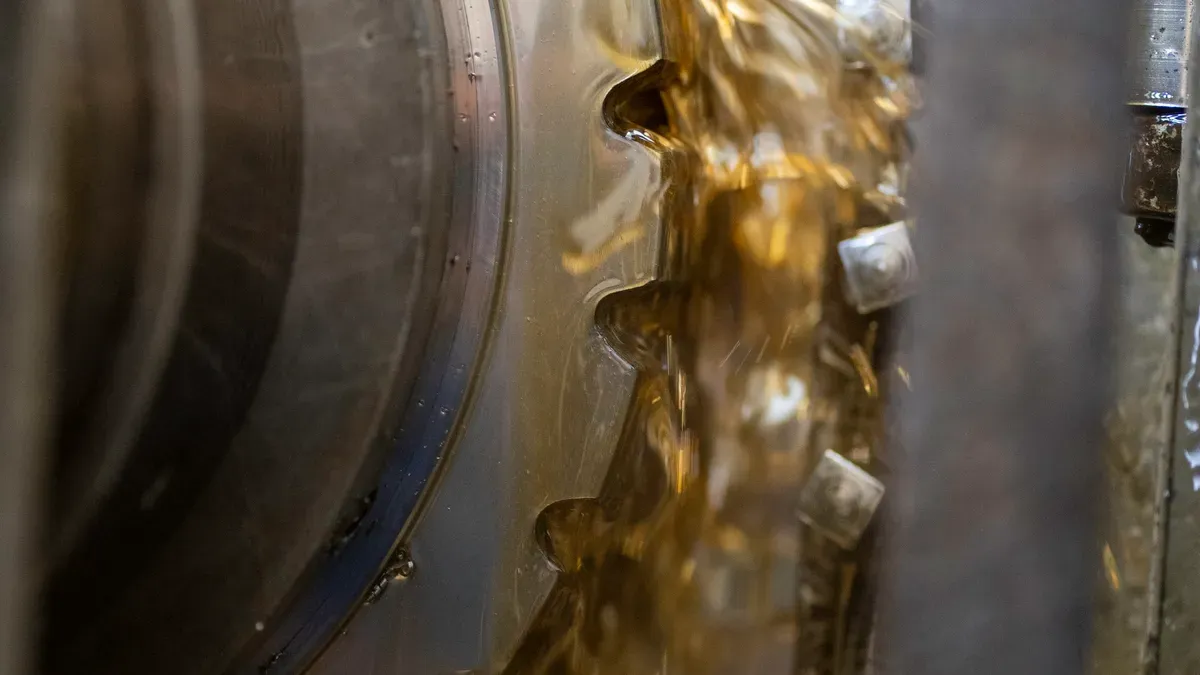
Cleaning and lubrication are essential to keeping chains strong and performing well. These practices reduce friction, wear, and corrosion. Even high-quality DCC chains need consistent care to deliver optimal results.
Cleaning Engineering Chains
Tools and Safe Methods
Use a soft chain brush and a chain-safe cleaner with kerosene. Avoid wire brushes, which can scratch chain surfaces. Wipe away dirt with a clean cloth. For thorough cleaning, mild soap and water work well — but always dry the chain completely to prevent rust.
Tip: Label each chain with its type, size, and date. Store chains flat, flip them occasionally if unpackaged, and never stack chains without protective packaging. Keep storage areas free from vibration.
Avoiding Damage During Cleaning
Use gentle methods throughout. Harsh chemicals and abrasive brushes damage links and pins. Always ensure the chain is fully dry before applying lubricant — moisture trapped under oil accelerates rust. As a general guideline, clean chains every two tank fills, before winter storage, and after the first spring ride. For off-road use, clean after muddy rides or at least once a week.
Engineering Chain Lubrication
Choosing the Right Lubricant
Select lubricants based on your operating environment. As detailed by Machinery Lubrication, the ASME B29 series standards provide guidance on recommended lubrication methods for industrial chain drives — including manual application, drip, oil bath, slinger disk, and oil stream systems. The appropriate method depends on chain speed, pitch, and load conditions.
Dry oils — leave a clean film; ideal for dry indoor environments
Wet oils — thick and rust-resistant; suited to wet or muddy conditions
Wax oils — repel water and keep chains clean; may stiffen in cold temperatures
High-temperature oils — formulated for elevated heat environments; support energy efficiency
Lubrication Frequency
Lubricate roller chains every 100–200 hours of use. The ideal interval depends on operating intensity and environment. Monitor chain condition regularly — if it appears dry or dirty, apply oil immediately. Always follow manufacturer recommendations for best results.
Application Techniques
Apply lubricant to the inside of the chain where it contacts the sprockets, ensuring oil penetrates deep into the rollers. Use a drip or spray applicator for thorough coverage, then wipe off excess to keep the chain clean. According to the ASME B29 standards, oil should be applied to the upper edges of the link plate in the lower span of the chain, allowing gravity and centrifugal force to carry it into the critical bearing areas.
Note: Proper lubrication reduces friction, wear, noise, and corrosion — directly extending chain service life.
Lubrication Mistakes to Avoid
Using the wrong lubricant type for the operating environment
Mixing incompatible greases, which can cause chemical reactions and equipment damage
Failing to label lubricants, leading to incorrect product use
Allowing contaminants into lubrication systems, accelerating wear
Relying on OEM breathers and dust caps that may not adequately block particulates
Operating without standardized lubrication procedures, leading to inconsistency
DCC Chains in Demanding Environments
| Chain Type | Design Features | Performance in Demanding Environments |
|---|---|---|
| Standard Chains | Thinner plates; suitable for lighter applications | May wear faster under heavy or shock loads |
| Heavy-Duty Chains | Thicker plates; reinforced for tough conditions | Superior performance under high shock and continuous heavy use |
| Maintenance Requirement | Consistent inspection and tensioning | Extends service life and sustains output quality |
Conveyor Chain Maintenance Routines
A structured maintenance schedule keeps conveyor chains operating reliably and prevents unexpected failures. Regular routines save costs and improve machine availability — key outcomes for any factory running industrial conveyor chains.
Daily and Weekly Tasks
Quick Checks and Cleaning
| Frequency | Maintenance Tasks |
|---|---|
| Daily | Inspect conveyor chains for wear and elongation. Remove accumulated debris from the chain. Check drivetrain tensioners and lubricate drive sprockets as necessary. |
| Weekly | Inspect and clean the chain to remove debris and dirt. Lubricate all chains, sprockets, and components as needed. Recheck drivetrain tensioners to ensure they are within acceptable range. |
Lubrication Schedule
Consistent lubrication is essential for a healthy engineering chain. Apply oil to the chain and sprockets during weekly checks to reduce friction and prevent rust. Always match the lubricant type to your workplace conditions.
Monthly and Quarterly Maintenance
Deep Inspection
Take time each month and quarter for a thorough assessment. Inspect the chain both while running and at rest. Use visual, auditory, and tactile cues to identify potential issues, and record measurements for trend analysis.
Inspect chains both under load and at rest.
Use multiple senses to detect abnormalities.
Record measurements for baseline comparison and trend tracking.
Look for visible damage, wear, and deformation.
Verify all components are properly aligned and operational.
Engage a specialist for quarterly assessments when required.
Part Replacement
Replace worn or damaged parts during these scheduled checks. Lubricate all moving parts every few months and maintain an inventory of critical spare parts to minimize wait times during unplanned repairs.
Maintenance Logs
Tracking Activities
Maintenance logs provide a complete record of every task performed — what was done, when, and by whom. Consistent logging ensures nothing is missed between inspection cycles.
Benefits of Record-Keeping
Logs reveal recurring patterns, such as components that fail repeatedly. Reviewing records helps identify systemic issues and supports continuous improvement. Internal audits can expose gaps in documentation, revealing where tasks may have been skipped.
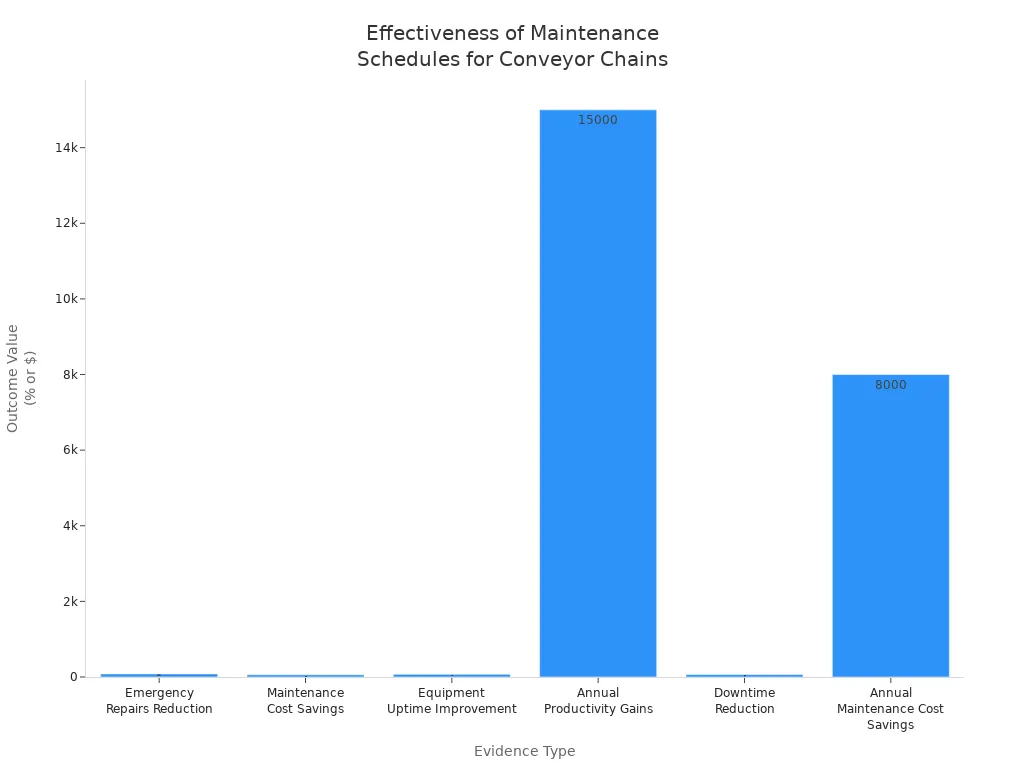
A structured conveyor chain maintenance program can cut emergency repairs by up to 82%, reduce costs by 58%, and boost equipment uptime by 71%.
Extending Conveyor Chain Life
Choosing quality components and following the right procedures significantly extends chain service life. Smart decisions at the procurement and installation stages lead to lower long-term costs and better machine performance.
Using Quality Parts
| Feature | Genuine Components | Inferior Components |
|---|---|---|
| Manufacturing Process | Adheres to OEM specifications with thorough inspection and testing | Often lacks proper inspection; may be reconditioned used parts |
| Materials Used | High-quality alloys, precision manufacturing | Substandard materials and manufacturing processes |
| Reliability | Meets original performance standards; typically backed by warranty | Prone to early failure; lacks quality verification |
Inferior parts may appear cost-effective upfront but frequently result in higher long-term maintenance and replacement costs. DCC is recognized for strict quality control and customized solutions across multiple industries.
| Aspect | Impact on Lifespan |
|---|---|
| Material Quality | High-strength materials withstand harsh operating conditions |
| Wear and Tear Reduction | Fewer repairs needed over the chain's service life |
| Maintenance Needs | Minimizes downtime and overall cost of ownership |
Correct Installation
Alignment and Tension
Proper installation starts with correct alignment and tensioning. Chains must be straight and properly tensioned to prevent slipping, premature wear, and early failure. Always verify that the chain seats correctly on the sprockets and moves freely without binding.
Avoiding Common Errors
Do not force components together during installation. Follow the manufacturer's guidelines for your specific industrial conveyor chains. Use the correct tools and verify your work at each step to prevent damage and ensure long-term reliability.
Environmental Factors
| Environmental Factor | Impact on Conveyor Chains |
|---|---|
| High Temperature | Weakens chain materials; causes strength loss and misalignment through thermal expansion |
| Low Temperature | Causes stiffness; increases risk of cracking and bending under load |
| Humidity | Accelerates corrosion of metal components |
| Chemicals | Requires specialized materials and protective coatings to prevent degradation |
| Dust and Contaminants | Initiates and escalates corrosion, especially in wet or dusty environments |
Tip: Adapting your maintenance routine to suit your operating environment can extend conveyor chain life by up to 50%. Premium chains like those from DCC often deliver lower total cost of ownership due to their extended service life and reduced repair requirements.
Manufacturer Guidelines and Support
Following manufacturer recommendations is the most reliable way to keep engineering chains performing at their best. DCC provides clear, easy-to-read manuals and responsive technical support to help customers achieve optimal results.
Reading Manuals
Finding Key Information
Manuals contain essential guidance for operation and maintenance. Key areas to review include:
Cleaning procedures and approved cleaning agents
Lubrication schedules and recommended lubricant types
Inspection criteria and wear indicators
Replacement intervals for chains and sprockets
Avoid using kerosene on sealed chains, as it can damage seal rings and accelerate corrosion. Use only cleaners and lubricants approved for seal-ring compatibility. Replace chains and sprockets when you observe excessive elongation, rust, stiffness, or missing seals.
Adapting to Your Application
Every operating environment is different. Chains in wet or dusty environments need more frequent cleaning. High-temperature applications require specialized lubricants. DCC provides tailored recommendations for diverse industries including sugar processing, mining, and palm oil production — helping customers maximize the performance of their industrial conveyor chains.
When to Seek Expert Help
Custom Solutions
Standard guidelines may not cover every application. Specialized operations may require custom chain designs or application-specific maintenance programs. DCC's engineering team can design chains for unique requirements and provide comprehensive support for selection, installation, and ongoing maintenance.
Reverse Engineering Support
For legacy or discontinued chains, DCC can analyze a sample or technical drawing to manufacture a precise replacement. This service keeps machinery running even when original spare parts are no longer available.
| Support Service | Benefit |
|---|---|
| Manual Guidance | Clear steps for maintenance and operation |
| Custom Engineering | Chains designed for specialized applications |
| Reverse Engineering | Replacement chains for legacy or rare specifications |
| Technical Support | Expert answers for maintenance and installation queries |
When to Replace Your Engineering Chain
Signs of Irreversible Wear
Engineering chains give clear signals when they are no longer serviceable. Replace the chain immediately when you observe:
Chain elongation exceeding the manufacturer's specified limit
Cracks or fractures in links or pins
Bent, twisted, or deformed sections that restrict smooth movement
Corrosion that cannot be removed with cleaning, or has caused deep pitting
Stiff or frozen links that resist flexing
Unusual sounds — grinding or clanking — during operation
Chain jumping or slipping off sprockets
Tip: If any of these conditions are present, stop using the chain immediately. Continuing to operate a damaged chain risks machine failure and serious safety incidents.
Replacement Process
Follow this sequence when replacing an engineering chain:
Shut down the machine and apply lockout/tagout procedures to prevent accidental restart.
Wear appropriate PPE — gloves and eye protection.
Relieve chain tension and disconnect the master link to remove the old chain.
Clean the sprockets thoroughly and inspect them for wear. Replace sprockets if necessary.
Install the new chain, ensuring it matches the required size and type.
Connect the ends with a new master link and adjust tension — neither too tight nor too loose.
Lubricate the chain before startup and run the machine slowly to verify smooth operation.
Note: Always follow the manufacturer's chain installation instructions specific to your machine model.
Choosing a Supplier
The right supplier ensures long-term performance and value. Key selection criteria include:
Material properties — check weight, hardness, and surface finish specifications
Suitability for your operating environment (temperature range, chemical exposure, dust levels)
Physical compatibility with your existing equipment
Warranty coverage and after-sales support
Total cost of ownership — not just purchase price
Availability of technical assistance for installation and maintenance
Why DCC Is a Trusted Choice
DCC stands out as a reliable engineering chain supplier. The company applies high-quality alloy and carbon steel with advanced forging and casting processes. DCC offers custom solutions for a broad range of industries including those relying on industrial conveyor chains. Every product undergoes strength and durability testing. With ISO 9001 and API certifications, DCC delivers consistent quality backed by responsive technical support — including reverse engineering services for hard-to-source parts.
Choosing DCC means you get a chain engineered for your needs, built to last, and supported by experts throughout its service life.
Need a Reliable Engineering Chain for Your Operation?
Get expert guidance on chain selection, custom specifications, or maintenance support — our team is ready to help you reduce downtime and lower your total cost of ownership.
FAQ
How often should I inspect my engineering chain?
Inspect your chain daily for visible damage or wear. Perform weekly checks to catch developing issues early, and carry out a thorough deep inspection each month. Consistent inspections keep machines safe and operational.
What is the best way to clean a conveyor chain?
Use a soft brush and a chain-safe cleaner. Avoid harsh chemicals and wire brushes. Dry the chain thoroughly before applying lubricant — clean, dry chains last longer and operate more reliably.
Which lubricant works best for DCC chains?
Select lubricant based on your operating environment: high-temperature oil for hot conditions, rust-inhibiting oil for wet environments. Always consult the manufacturer's manual for specific product recommendations.
How can I tell if my chain needs replacing?
Look for stretched links, deep corrosion, cracks, stiff sections, or unusual noise during operation. If the chain slips off sprockets, replacement is overdue. Always follow manufacturer replacement criteria.
Why is chain alignment important?
Correct alignment reduces friction and wear. Misaligned chains wear unevenly, fail sooner, and can damage connected equipment. Check alignment during installation and at each scheduled maintenance interval.
Can DCC help with custom chain solutions?
Yes. DCC can engineer chains for specialized applications and reproduce legacy parts through reverse engineering. Contact DCC for expert consultation.
What records should I keep for chain maintenance?
Log every inspection, cleaning session, lubrication application, and part replacement — including dates, findings, and actions taken. Maintenance logs support trend analysis and improve long-term reliability.
How does the operating environment affect chain life?
Heat, humidity, chemical exposure, and dust all accelerate chain degradation. Tailor your maintenance schedule to match your specific environment. DCC chains are engineered for durability but still require appropriate care to achieve their full service life.
References
MaintainX — Maintenance Statistics, Trends and Insights: https://www.getmaintainx.com/blog/maintenance-stats-trends-and-insights
Plant Engineering — Maintenance and Troubleshooting Fundamentals for Industrial Automation: https://www.plantengineering.com/maintenance-and-troubleshooting-fundamentals-for-industrial-automation/
Machinery Lubrication — Chain Lubrication Best Practices for Drives and Conveyors: https://www.machinerylubrication.com/Read/316/chains-drives-lubricants
Safety Culture — Visual Inspection Guide: https://safetyculture.com/topics/visual-inspection
OxMaint — Maintenance Checklist for Small Factories 2025: https://oxmaint.com/article/maintenance-checklist-for-small-factories-2025
Wikipedia — Conveyor Chain: https://en.wikipedia.org/wiki/Conveyor_chain

