


High-strength welded steel chain is essential in industries that demand durability and reliability. These chains support heavy loads in agriculture, construction, material handling, forestry, mining, cement, recycling, sugar mills, and palm oil mills. Selecting the right chain technology improves equipment reliability and operational safety. Chains with continuous welded construction resist impact and distribute shock forces, which is vital for environments with fluctuating loads. Proper chain selection reduces maintenance costs and enhances efficiency.
Key Takeaways
High-strength welded steel chains are vital for industries needing durability and reliability.
These chains support heavy loads in agriculture, construction, and material handling.
Continuous welded construction resists impact and distributes shock forces effectively.
Proper chain selection reduces maintenance costs and enhances operational efficiency.
Welded steel chains offer superior strength due to permanently fused links.
Choosing the right chain grade and material extends equipment life and reduces costs.
Regular inspection and lubrication prevent chain failure and costly downtime.
Selecting a certified manufacturer ensures quality and safety in demanding applications.
Welded Steel Chain Overview
Key Features
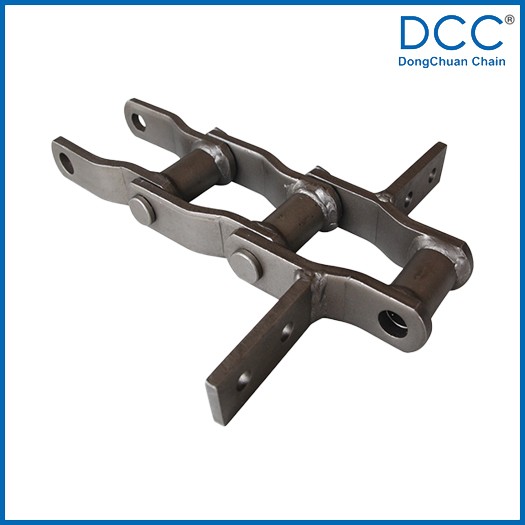
The welded steel chain stands out in industrial applications because of its unique construction. Each link is permanently fused, which eliminates weak points found in chains with mechanical connections. This design provides superior strength and reliability. Manufacturers use electric resistance welding or flash butt welding to create continuous metal bonds at every junction. These processes fuse the base metals at the molecular level, resulting in joints with high tensile strength. The chain resists deformation and stretching, even under heavy loads. It is built to handle extreme abrasion and high temperatures, making it ideal for mills and plants. DCC Welded Steel Chain also comes with ISO 9001 certification[1], ensuring strict quality management throughout production.
Permanently fused links for maximum strength
Continuous metal bonds at each junction
High resistance to abrasion and heat
ISO 9001 certified for quality assurance
Advantages
Welded steel chain offers several advantages over other chain types. It distributes shock forces evenly, which reduces the risk of failure during fluctuating loads. The chain's robust design allows it to perform well in overhead lifting and heavy-duty applications. It provides higher load capacities and breaking strengths compared to lower-grade carbon chains. The chain resists corrosion, making it suitable for harsh and humid environments. DCC's experience in custom solutions ensures that each chain meets the specific needs of demanding industries.
Tip: Choosing a welded steel chain with the right grade and material can extend equipment life and reduce maintenance costs.
| Scenario | Advantage | Reasoning |
|---|---|---|
| Harsh Environments | Exceptional durability and heat resistance | Reliable performance under high loads and temperatures |
| Corrosive Environments | Corrosion-resistant alloys | Longevity where other materials degrade quickly |
Grades and Specifications
Welded steel chain comes in several grades and specifications to match different industrial requirements. Carbon steel is the preferred material because it handles heavy loads and resists wear. Chains undergo heat treatment processes like quenching and tempering to enhance durability. Common strength classifications include Grade 30, 43, 70, 80, and 100, with increasing load capacities. Grade 80 and Grade 100 chains achieve tensile strengths of 800 MPa and 1000 MPa. Working load limits range from 1,300 to 47,700 pounds, depending on size and grade. Safety factors are typically 4:1 or 5:1 above working load limits. Standard pitches range from 1 inch to 6 inches, with link wire diameters from 3mm to 32mm. Specifications comply with ASTM[2] and DIN standards.
| Property | Description |
|---|---|
| Material | Carbon steel with 0.15%–0.35% carbon content |
| Temperature Range | Maintains strength from -40°C to 200°C |
| Heat Treatment | Quenching and tempering for toughness |
| Tensile Strength | Grade 80: 800 MPa, Grade 100: 1000 MPa |
| Abrasion Resistance | Alloy compositions may include chromium for improved wear resistance |
DCC Welded Steel Chain provides custom solutions for demanding industries, ensuring reliable performance and long service life.
Agriculture Uses
High-strength chains play a vital role in modern agriculture. Farmers and operators rely on these chains for lifting, conveying, and processing tasks that demand both strength and reliability. The right chain choice helps prevent equipment failure and keeps operations running smoothly.
Equipment Lifting
Agricultural equipment often requires lifting and securing heavy loads. Tractors, harvesters, and other machinery use chains to hoist attachments, move implements, and secure cargo. The working load limit and chain diameter must match the task to ensure safety and efficiency.
| Application Type | Working Load Limit (WLL) | Chain Diameter |
|---|---|---|
| Light-Duty Applications | 1,300 - 5,000 lbs | 1/4" to 3/8" |
Note: Always check the manufacturer's guidelines for load limits before using any lifting chain in the field.
Grain Handling
Grain handling systems depend on strong, durable chains to move large volumes of crops efficiently. Chains power conveyors, elevators, and augers that transport grain from storage bins to trucks or processing equipment. Performance requirements include high wear resistance, long service life, and easy maintenance.
| Chain Model | Description | Features |
|---|---|---|
| WH124 | 4.0" welded steel chain | Induction hardened for long life, assembled with press fit pins for installation and maintenance. |
| WH132 | 6.0" welded steel chain | High working load for high capacity and long lengths in heavy-duty en masse chain conveyors. |
Sugar Mill Chain
Sugar mills require specialized chains to handle the unique challenges of processing sugarcane. These chains must withstand high impact, abrasive materials, and continuous operation.
Cane Carrier
The cane carrier moves freshly cut sugarcane from the unloading area to the crushing mill. Chains in this application face constant exposure to dirt, moisture, and heavy loads. High-strength welded steel chain resists stretching and deformation, ensuring reliable movement of cane through the system.
Bagasse Carrier
After juice extraction, the leftover fibrous material, called bagasse, must be transported for further processing or disposal. The bagasse carrier chain operates in a harsh environment with high humidity and abrasive particles. Durable welded steel chains maintain their strength and shape, reducing maintenance needs and supporting continuous mill operation.
Tip: Regular inspection and lubrication of carrier chains can extend their service life and prevent unexpected breakdowns.
Construction and Heavy-Duty
Welded steel chains play a vital role in construction and heavy-duty industries. These chains handle tough jobs, from moving heavy materials to securing loads and supporting demolition work. Their strength and durability make them a top choice for demanding environments.
Lifting and Hoisting
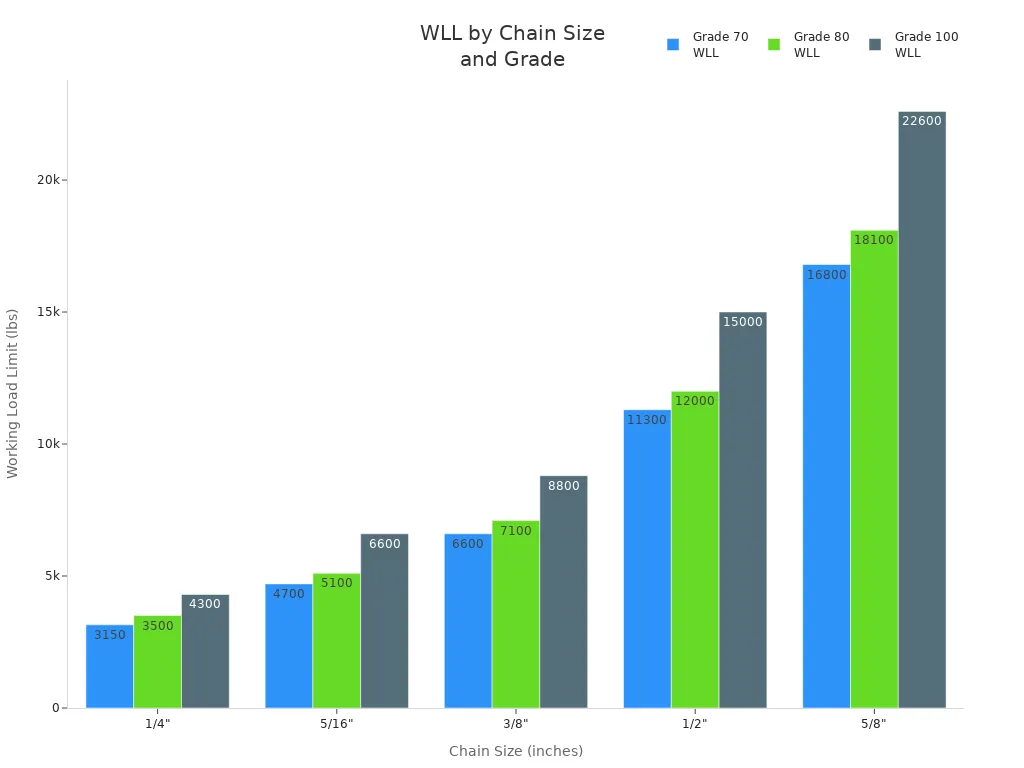
Lifting and hoisting tasks require chains that can handle significant weight without stretching or breaking. Welded steel chains are used with cranes, hoists, and lifting slings to move beams, machinery, and building materials. Each chain must meet strict safety standards. Engineering guidelines require a minimum safety factor of 4:1, which means the chain can handle four times its rated working load limit. This margin protects against unexpected force spikes and wear.
| Chain Size (inches) | Grade 70 WLL (lbs) | Grade 80 WLL (lbs) | Grade 100 WLL (lbs) | Safety Factor |
|---|---|---|---|---|
| 1/4" | 3,150 | 3,500 | 4,300 | 4:1 minimum |
| 5/16" | 4,700 | 5,100 | 6,600 | 4:1 minimum |
| 3/8" | 6,600 | 7,100 | 8,800 | 4:1 minimum |
| 1/2" | 11,300 | 12,000 | 15,000 | 4:1 minimum |
| 5/8" | 16,800 | 18,100 | 22,600 | 4:1 minimum |
Before certification, each batch of chain undergoes proof load testing. This process applies loads up to 2.5 times the working limit to ensure the chain will not deform or fail during use.
Note: Always inspect chains before use. Look for signs of wear or damage to maintain safety on the job site.
Load Securing
Securing loads is essential for safe transport and storage. Welded steel chains are used to tie down equipment, secure building materials, and anchor machinery. Their high strength-to-weight ratio makes them more effective than many alternatives. Only alloy steel chains, Grade 80 and above, are approved for overhead lifting by OSHA[3] and ASME. Safety factors for these applications are even higher, often reaching 5:1.
| Aspect | Details |
|---|---|
| Strength-to-Weight Ratio | Welded steel chains provide superior strength-to-weight ratios compared to alternatives. |
| Safety Factors | Overhead lifting applications require a minimum safety factor of 5:1. |
| Approved Grades | Only alloy steel chains (Grade 80 and above) are approved by OSHA and ASME for lifting. |
| Inspection Protocols | Systematic inspections are required before each use, with detailed inspections based on usage intensity. |
| Testing Standards | Chains undergo proof load testing to verify structural integrity before certification. |
Demolition
Demolition work demands chains that can withstand shock, impact, and heavy loads. Alloy chain slings are used to lift and hold large debris or structural elements during demolition and transport. These chains are made from high-strength alloy steel, which provides greater durability than standard steel chains. They must meet or exceed industry standards for tensile strength and elongation, with a minimum elongation at break of 20%.
Chains are regularly inspected, with thorough checks at least once every 12 months.
Any chain showing excessive wear is immediately removed from service.
Chains are designed to handle the toughest conditions found in demolition sites.
Material Handling and Conveying
Material handling and conveying systems are the backbone of many industries. These systems move bulk materials, finished products, and waste efficiently. The right chain technology ensures smooth operation, reduces downtime, and keeps workers safe.
Conveyor Systems
Conveyor systems use chains to move materials through factories, plants, and processing facilities. Welded steel chain is a popular choice because it handles heavy loads and resists wear. Common conveyor systems that use welded steel chains include:
Drag chain conveyors in cement plants for moving raw materials
Steel mill scale pit conveyors for removing production waste
Quarry conveyors for transporting crushed stone and gravel
Sludge removal systems in wastewater treatment plants
These systems often run for long hours and carry heavy or abrasive materials. Chains must meet strict load and speed requirements. Drag chain conveyors may operate at speeds of 10 to 60 feet per minute and carry loads from hundreds to thousands of pounds per hour.
Key maintenance tasks for conveyor chains:
| Maintenance Task | Details |
|---|---|
| Regular Inspection | Check for wear, measure elongation, and inspect sprockets. Document findings regularly. |
| Lubrication Monitoring | Lubricate every 8–24 hours. Adjust based on wear and operating conditions. |
| Common Issues | Watch for rapid wear, misalignment, and corrosion. Replace chains when elongation exceeds 3%. |
| Chain Replacement | Replace damaged chains and sprockets together. |
| Performance Optimization | Clean chains and optimize speeds to extend service life. |
| Chain Type | Typical WLL Range | Safety Factor | Primary Failure Mode |
|---|---|---|---|
| Welded Chain (Grade 30) | 800–13,000 lbs | 4:1 | Link deformation/fracture |
| Welded Chain (Grade 70) | 1,300–22,600 lbs | 4:1 | Link deformation/fracture |
| Alloy Steel Welded | 3,500–47,700 lbs | 4:1 | Link deformation/fracture |
Tip: Regular inspection and lubrication help prevent chain failure and costly downtime.
Palm Oil Mill Chain
Palm oil mills use specialized conveyor chains to move palm fruit bunches and processed materials. These chains must work in tough tropical environments — high humidity, organic acids, and high temperatures are common challenges.
Chains operate in highly corrosive conditions.
They resist aggressive acids from palm fruit processing.
Chains endure continuous exposure to water during sterilization and pressing.
Bunch Conveyor
The bunch conveyor moves fresh palm fruit bunches from trucks to the processing area. Chains in this system must handle heavy, wet loads and resist corrosion. They operate at slow speeds to prevent fruit damage. Consistent performance is key for keeping the mill running smoothly.
Sterilizer Chain
Sterilizer chains move fruit bunches through high-temperature steam chambers. These chains face constant moisture, heat, and acidic conditions. They must maintain strength and shape under stress. Proper lubrication and protective coatings help prevent rust and wear.
Note:Environmental factors like acids, humidity, and heat can shorten chain life. Use chains designed for these conditions and follow a strict maintenance schedule.
Warehouse Uses
Warehouses depend on reliable chains for moving goods and materials. Welded steel chains are common in heavy-duty environments such as agriculture, construction, and bulk material handling. Their robust design allows them to withstand harsh conditions and heavy loads. Warehouse managers schedule regular inspections and maintenance to keep chains in top condition, preventing unexpected failures and supporting safe, efficient operations.
Forestry, Mining, and Recycling
Log Skidding
Forestry operations rely on high-strength welded steel chain for moving heavy logs through rough terrain. Log skidding is a process where chains attach to felled trees, allowing machinery to drag them to collection points. These chains must handle high tension, resist abrasion, and perform in muddy or wet conditions.
| Specification | Details |
|---|---|
| Type | Lumber Conveyor Chain |
| Pitch | 66.27mm |
| Material | Carbon Steel |
| Tensile Strength | 106.7 kN |
| Chain Overall Width | 27mm |
| Roller Diameter | 23mm |
| Application | Wood Industry |
Tip: Always check for signs of wear or deformation before each use to prevent accidents in the field.
Mining Chain
Mining environments are some of the harshest for any equipment. High-strength welded steel chain is essential for moving heavy, abrasive materials like coal and ore. Chains must resist wear from constant contact with sharp rocks and minerals, and support heavy loads without breaking or stretching.
Drag Conveyor
Drag conveyors use welded steel chains to move bulk materials through mining tunnels and processing plants. These chains must endure continuous abrasion and high impact. The design allows the chain to scrape or drag material along the conveyor path, making it ideal for transporting coal, ore, and other mined substances.
Shuttle Car
Shuttle cars transport mined material from the face to the main conveyor system. Chains in shuttle cars must handle frequent starts and stops, heavy loads, and exposure to dust and debris. Welded steel chains provide the necessary strength and durability for these demanding tasks, maintaining consistent performance in underground mining operations.
Cement Plant
Cement plants use high-strength welded steel chain in many conveying applications. Chains move raw materials, clinker, and finished cement through various stages of production, facing high impact, abrasion, and sometimes extreme heat.
Chains are used in medium to heavy-duty conveyors.
They must resist wear from abrasive materials like limestone and clinker.
Chains operate reliably in harsh weather and dusty conditions.
Note: Regular maintenance and inspection are key to extending the life of chains in cement plants and ensuring safe operation.
Recycling Chain
Recycling facilities depend on high-strength welded steel chain to keep operations running smoothly. These chains play a crucial role in moving, sorting, and processing recyclable materials. Their robust construction helps them withstand heavy loads, sharp debris, and constant motion found in recycling plants.
Key applications in recycling operations:
Scrap Conveyors: Transport metal, plastic, and other recyclables through shredders, separators, and balers. The chain must resist abrasion from sharp edges and heavy impacts.
Sorting and Transfer Systems: Move materials between different stages of sorting, ensuring glass, paper, metals, and plastics reach the correct processing zones quickly and efficiently.
| Feature | Benefit |
|---|---|
| All-welded construction | Prevents link separation under heavy loads |
| Abrasion resistance | Reduces wear from sharp or rough materials |
| Corrosion protection | Extends service life in wet or humid areas |
| High tensile strength | Handles large volumes and heavy items |
Choosing the Right Welded Steel Chain
Load Requirements
Selecting the correct chain starts with understanding the load it must carry. Each application has unique demands — the strength of the steel, the way the chain is attached, and the angle of the load all play a role in performance.
| Factor | Description |
|---|---|
| Material strength | The inherent strength of the steel used in the chain. |
| Design factor | A safety factor that accounts for potential overloads. |
| Type of hitch | The method of attaching the chain, which affects load distribution. |
| Angle of loading | The angle at which the load is applied, influencing the effective load. |
| Diameter of curvature | The ratio of the diameter of the curvature to the diameter of the chain. |
| Fabrication efficiency | The quality and method of manufacturing the chain, impacting its performance. |
Environment Factors
Chains often operate in challenging environments. Moisture, chemicals, and temperature changes can all affect performance and lifespan. When choosing a chain, consider these environmental influences:
Moisture can shorten the life of steel chains if they are not protected.
Chemical exposure may cause corrosion and increase wear.
Selecting the right coating or finish helps chains last longer in harsh conditions.
Tip: Chains exposed to water or chemicals should be inspected more often to catch early signs of wear.
Maintenance
Proper maintenance keeps chains working safely and extends their service life. Good installation, regular lubrication, and timely inspections are essential.
| Maintenance Practice | Details |
|---|---|
| Proper Installation | Ensure proper alignment of sprockets and guides, maintain appropriate tensioning, verify lubrication, check for free movement. |
| Lubrication | Use high-temperature extreme pressure lithium-based grease, establish regular lubrication intervals, ensure proper penetration. |
| Regular Inspection | Monitor chain elongation, check for loose pins and damaged components, inspect sprockets for wear. |
| Component Replacement | Replace chains in complete sets, replace worn sprockets simultaneously, use proper tools for assembly. |
Manufacturer Selection
Selecting the right manufacturer is a critical step when sourcing high-strength welded steel chain. The quality and reliability of the chain depend not only on the materials used but also on the expertise and standards upheld by the manufacturer.
When evaluating potential manufacturers, consider:
Quality of materials used: Chains made from premium-grade steel offer better durability and resistance to wear.
Manufacturing standards: Look for companies that follow strict production protocols and quality control measures.
Surface treatments: Protective coatings or finishes can extend the life of the chain, especially in harsh environments.
Compatibility with existing systems: The chain should fit seamlessly with your current equipment and processes.
Certification adherence: Reliable manufacturers comply with national and international standards, such as NACM and ASTM.
| Benefit | Description |
|---|---|
| High-Quality Materials | Ensures durability and reliability in various applications. |
| Safety Standards | Compliance with ISO 3075 / EN 818 certification enhances safety. |
| Customization | Tailored solutions available in various grades, sizes, and finishes. |
| Global Support | Over 20 years of experience in multiple sectors ensures reliable service. |
Tip: Always ask for documentation of certifications and quality control processes before making a purchase. This step helps verify that the manufacturer meets industry standards.
Welded steel chain supports many industries with its strength and durability. Common uses include agriculture machinery, construction lifting, material handling, forestry, grain conveying, cement processing, and lumber mills. Choosing the right chain improves safety and efficiency. For those seeking reliable welded chain solutions, DCC offers expert guidance and dependable products.
FAQ
What is a high-strength welded steel chain?
A high-strength welded steel chain is a type of industrial chain made from strong steel links fused together. This design gives the chain extra durability and resistance to heavy loads, abrasion, and heat.
Where is high-strength welded steel chain most commonly used?
Industries like agriculture, construction, mining, recycling, and material handling use high-strength welded steel chain. These chains help move, lift, or secure heavy materials in tough environments.
How do I choose the right chain for my application?
Start by checking the load requirements, environment, and chain size. Review the working load limit and safety factor. Consult with a chain expert if you need help matching the chain to your equipment.
What maintenance does a high-strength welded steel chain require?
Regular inspection, cleaning, and lubrication keep the chain in good condition. Replace worn or damaged chains promptly. Follow the manufacturer's guidelines for best results.
Can high-strength welded steel chain resist corrosion?
Yes, many high-strength welded steel chains have protective coatings or are made from special alloys. These features help the chain resist rust and corrosion in wet or harsh environments.
What safety tips should I follow when using high-strength welded steel chain?
Always check the chain for damage before use. Do not exceed the working load limit. Use proper lifting techniques and wear safety gear. Replace chains that show signs of wear or stretching.
Are there different grades of high-strength welded steel chain?
Yes, chains come in several grades, such as Grade 70, 80, and 100. Higher grades offer greater strength and are suitable for more demanding applications.
Need a Custom Welded Steel Chain Solution?
Our engineering team is ready to help you select the right chain grade, size, and specification for your industry — whether it's agriculture, mining, cement, palm oil, or heavy-duty conveying. Get a fast, professional response today.
Send Your Inquiry Now
