


Understanding the Manufacturing Process of Welded Steel Chains
Welded steel chain is made through a precise manufacturing process that transforms high-quality alloy steel into strong, durable links. Each step — from material selection to final inspection — is vital for the chain's strength and reliability, especially in challenging industrial settings. DCC brings over 20 years of expertise to this process, with ISO 9001 certification ensuring quality at every stage.
Key Takeaways
Welded steel chains are made from high-quality alloy steel, ensuring strength and durability for industrial applications.
DCC's ISO 9001 certification guarantees consistent quality throughout the manufacturing process.
Choosing the right alloy steel is crucial for chains to withstand harsh environments and heavy loads.
Advanced welding techniques, like Flash Butt Welding, create strong joints that enhance chain reliability.
Heat treatment improves strength and durability, making chains suitable for demanding conditions.
Surface finishing and protective coatings extend service life by preventing corrosion and wear.
Rigorous quality assurance testing ensures every chain meets safety and performance standards.
DCC offers customized solutions tailored to specific industry needs and applications.
Raw Materials for Welded Steel Chain
High-grade alloy steel — the foundation of every reliable chain.
The foundation of every high-performance chain lies in the quality of its raw materials. DCC places a strong emphasis on selecting and preparing the right alloy steel to ensure each welded steel chain meets the demands of heavy-duty industrial applications.
Alloy Steel Selection
Choosing the correct alloy steel is essential for producing chains that can withstand harsh environments. DCC customizes alloy steel selection based on the specific needs of each industry, delivering chains that perform reliably in challenging conditions such as high temperatures or abrasive settings.
Properties for High-Temperature Use
Chains used in industries like metallurgy or waste-to-energy must resist deformation and maintain strength at elevated temperatures. DCC uses specially heat-treated steels and alloy steels that retain their mechanical properties even when exposed to intense heat. Per ASTM A391 and ASTM A973, Grade 80 and Grade 100 alloy steel are commonly chosen for their ability to handle overhead lifting and heavy loads.
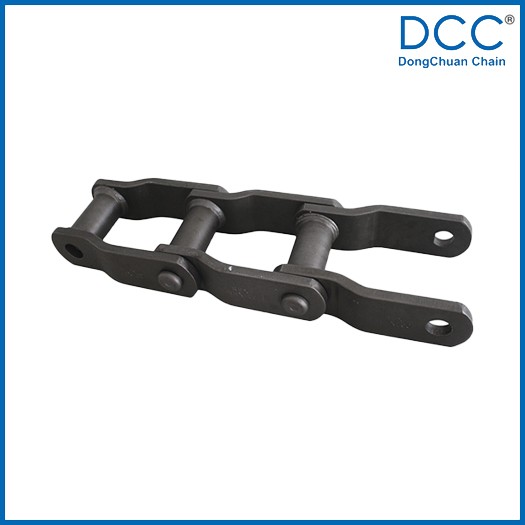
Grade 80 and Grade 100 alloy steel chains are recommended for applications where safety and durability are critical, such as sling assemblies and material handling systems.
Corrosion and Wear Resistance
Industrial chains often face corrosive environments and abrasive materials. DCC addresses these challenges by selecting alloy steels with enhanced resistance to rust and wear, ensuring a longer service life and reducing the need for frequent replacements — vital for industries handling slag, ash, or grain.
Material Preparation Steps
Before forming the chain links, raw steel undergoes several preparation steps to guarantee optimal performance and weld quality.
Cutting and Straightening
The process begins with cutting the steel wire to precise lengths. Each piece is then straightened to remove any bends or irregularities, ensuring that every link has consistent dimensions and strength.
Surface Cleaning
Clean steel surfaces are essential for strong welds and reliable chains. DCC employs a thorough cleaning process including chemical cleaning and pickling to remove surface oxides, drawing oils, and mill residue. Key steps include:
Chemical cleaning to eliminate contaminants
Pickling to remove oxides and residues
DCC's ISO 9001 quality management extends to material sourcing and preparation. Every batch of steel is inspected and documented, ensuring traceability and consistent quality from the very start.
Chain Making Process: Forming and Shaping
This stage transforms prepared steel wire into strong, uniform links — critical for the performance and reliability of every welded steel chain. DCC uses advanced machinery and strict quality checks to ensure each chain meets demanding industrial standards.
Wire Drawing and Sizing
Large coils of alloy steel wire are pulled through a series of dies that reduce the wire's diameter progressively, making it smoother and more uniform. After drawing, the wire is measured and checked for accuracy. DCC follows strict tolerances including:
Measuring the wire diameter
Checking the pitch and internal dimensions
Inspecting the shape and V notch of each link
These checks ensure every chain fits standard sprockets and can handle heavy loads without failure.
Automated Link Forming
DCC uses fully automated chain-forming machines that cut, bend, and align the steel wire into perfect links, improving both speed and quality.
Precision Bending
Precision bending shapes each piece of wire into a consistent link. Machines use sensors and guides to control the bending angle and link shape. Any link that does not meet standards is immediately removed.
Consistent link shape is essential for smooth operation and even load distribution in a welded steel chain.
Consistency and Efficiency
Automated link forming delivers multiple advantages:
Every link is made to the same size and shape
The process is far faster than manual methods
Quality checks happen at each step
Advanced welding techniques such as Flash Butt Welding are then used to join link ends using electric current, producing a clean weld as strong as the base metal.
Welding Process in Industrial Chain Production
The welding process forms the backbone of industrial chain manufacturing, determining the strength and reliability of each link. DCC uses advanced welding methods to ensure every welded steel chain meets strict performance standards.
Welding Techniques
Electric Resistance Welding
This technique uses electric current to heat the ends of steel links. The heated metal bonds at the molecular level, forming a continuous joint with high tensile strength. Operators monitor welding parameters closely to maintain consistent quality.
Flash Butt Welding
A powerful electric current heats link ends rapidly, then they are pressed together to form a seamless weld nearly as strong as the base metal. This method is essential for chains used in high-strength applications such as metallurgy or waste-to-energy plants.
Flash butt welding ensures the welded area maintains strength comparable to the original steel — crucial for demanding industrial chain applications.
Weld Quality Control
Burr Removal
After welding, DCC removes burrs using mechanical tools or grinding machines. This ensures each chain link is smooth and free from defects, improving performance and preventing damage during use.
Seam Inspection
DCC uses visual examination and advanced testing methods to detect flaws, inspecting for cracks, incomplete fusion, or other defects. Refer to the international guidelines outlined by ASQ on ISO 9001 for the framework governing such quality controls.
| Phase | Quality Control Measures |
|---|---|
| Pre-Weld | Personnel qualification, calibrated equipment, verified base metals, approved welding techniques, monitored environmental conditions |
| In-Process | Operator self-inspection, regulated welding parameters, accurate meters and sensors, monitored bead profiles and cleaning |
| Post-Weld | Visual examination, non-destructive testing (PT, MT, UT, RT), destructive bend/tensile tests, leak testing |
Heat Treatment and Hardening
Heat treatment is a critical step in welded steel chain manufacturing. This controlled process modifies the metal's internal structure, improving hardness, strength, ductility, toughness — and relieving internal stresses. DCC uses advanced heat treatment to ensure every chain performs reliably in demanding industrial environments.
Purpose and Benefits
Chains are heat-treated for maximum wear life
The process increases shock load resistance
Each pin and link can endure challenging operating conditions
Heat treatment ensures that welded steel chain can withstand high impact loads and abrasive materials — vital for chains used in metallurgy and waste-to-energy applications.
Key Heat Treatment Methods
Annealing
The chain is heated to a specific temperature then cooled slowly. This softens the steel, removes internal stresses, and improves the uniformity of the metal structure — helping prevent cracks during later manufacturing stages.
Quenching and Tempering
After heating, the chain is rapidly cooled in oil or water (quenching) to lock in a hard structure. Tempering follows, reheating to a lower temperature to reduce brittleness and improve toughness.
| Heat Treatment Step | Effect on Chain Properties |
|---|---|
| Quenching | Increases hardness and strength |
| Tempering | Enhances toughness and reduces brittleness |
Hardness values for SAE 8620 steel after tempering at 300°C–500°C are around HRC = 30.6, with central sections showing lower hardness to balance strength and flexibility. DCC's expertise in heat treatment guarantees that every chain delivers reliable performance and long service life.
Surface Finishing and Coating
Surface finishing and coating protect the chain from corrosion, improve appearance, and extend service life. DCC uses advanced finishing techniques to ensure every chain meets the highest standards for industrial use.
Cleaning and Polishing
Before any protective layer is applied, the chain is thoroughly cleaned and polished through several stages:
Graining / Pre-Polishing: Workers create a uniform scratch pattern on the surface.
Abrasive Polishing: Multiple stages from coarse grits (80–120) through medium (150–240) to fine polishing (280–400).
Final Buffing: Cut buffing removes fine scratches; color buffing gives a bright, shiny appearance.
Protective Coatings
DCC selects the best coating based on each chain's application:
Stainless Steel (304/316): Strong rust resistance; Type 316 ideal for saltwater or high-chloride environments.
Galvanized Steel: Zinc coating for outdoor corrosion resistance; hot-dip galvanization provides thicker protection.
Black Oxide Finish: Moderate corrosion resistance with reduced glare.
Galvanizing
The chain is coated with zinc, which acts as a barrier against moisture and air. If the chain is scratched, zinc serves as a sacrificial anode — corroding before the steel does, extending the chain's usable life significantly.
Tip: Hot-dip galvanizing provides a thicker, more durable coating than electro-galvanizing — recommended for outdoor and wet environments.
Painting or Plating
Paint adds color and elemental protection. Plating — such as nickel or chrome — gives a smooth, shiny finish with extra corrosion resistance, often used when appearance matters or chemical exposure is a factor.
Looking for a Reliable Welded Steel Chain Supplier?
DCC has delivered ISO 9001-certified welded steel chain solutions to clients across 40+ countries for over 20 years. Whether you need standard grades or fully customized configurations, our team is ready to help you find the right solution for your industry.
Request an Inquiry NowFast response · Custom specifications available · Trusted by industries in 40+ countries
Quality Assurance in Welded Steel Chain Manufacturing
Quality assurance is a vital part of the manufacturing process. DCC follows strict quality management practices backed by ISO 9001 certification, with detailed checks at every stage from raw material selection to final inspection.
Dimensional and Strength Testing
Proof load testing applies loads 2 to 2.5 times the working load limit
Destructive testing on sample chains checks if breaking strength meets required specifications
Inspection protocols include visual checks, hardness testing, load testing, and elongation testing
Non-Destructive Testing
Magnetic Particle Inspection
The chain is magnetized and iron particles applied. Any cracks cause particles to gather at those spots, making defects immediately visible.
Ultrasonic Testing
High-frequency sound waves travel through the chain, and any flaw reflects the waves back. This precise method detects hidden internal weaknesses without causing damage.
| NDT Technique | Advantages | Limitations |
|---|---|---|
| Eddy Current Testing (ECT) | Effective for surface defects on conductive materials | Limited penetration depth |
| Pulse Eddy Current (PEC) | Detects volume-type defects on weld surfaces | May miss internal defects |
| EMAT | Non-contact, effective for internal defects | Requires specific conditions |
| Ultrasonic Testing (UT) | Precise detection of internal defects, widely used | Requires coupling medium |
Certification and Compliance
| Organization | Role in Standards |
|---|---|
| ASTM | Publishes safety standards for manufacturing and testing of chains |
| ASME | Sets regulations for the use and inspection of chains |
| OSHA | Enforces safety regulations for chain usage in industrial settings |
DCC's ISO 9001 certification means every step is documented and inspected, guaranteeing that each chain is traceable from raw material to finished product and meets the highest levels of quality and safety.
Final Inspection, Marking, and Packaging
Visual and Functional Checks
The final inspection stage uses both visual and functional checks to confirm quality and safety. The table below shows common crack types and their detection methods:
| Type of Crack | Detection Method |
|---|---|
| Cold Cracks | Visual Testing (VT) |
| Hot Cracks | Dye Penetrant Testing (PT) |
| Hydrogen-Induced Cracking | Magnetic Particle Testing (MT) |
| Crater Cracks | Ultrasonic Testing (UT) |
| Longitudinal Cracks | Radiographic Testing (RT) |
| Transverse / Underbead Cracks | Visual Testing (VT) |
Inspectors also verify proper link alignment, smooth movement, and correct dimensions. Any defective chain does not advance to the next stage.
Marking for Traceability
Each chain receives a unique laser-engraved or stamped mark recording the production date, batch number, and material grade. This enables customers to trace any chain back to its origin and supports compliance with international standards.
Packaging and Shipping
DCC selects packaging based on size, weight, and shape to ensure every chain arrives in perfect condition:
| Packaging Method | Features | Advantages |
|---|---|---|
| Pallet Packaging | For regular-shaped products in batches | Efficient loading, basic ground protection |
| Protective Film & Wrapping | For surface-sensitive products | Prevents scratches and moisture damage |
| Steel Frame Packaging | For heavy or large products | Stability during transport |
| Wooden Box Packaging | For delicate or easily damaged products | Solid protection, meets international standards |
| Oscillating Wound Coil | Reduces downtime and material handling | Improves efficiency, lowers costs |
Why Choose DCC for Your Welded Steel Chain Needs
Every step in the welded steel chain process matters for strength and reliability. DCC uses high-strength materials and meets international standards at every stage:
Rods are cleaned and processed
Pins are made and shaped
Links are formed, welded, and checked for tolerance
Chains are heat treated for durability
| Reason to Choose DCC | Description |
|---|---|
| Quality Assurance | API and ISO 9001 certified production |
| Customization | Tailored solutions for specific industry needs |
| International Support | Trusted by clients in over 40 countries |
Frequently Asked Questions
What industries use welded steel chains?
Welded steel chains are used in metallurgy, waste-to-energy, grain processing, and material handling — industries that need strong, durable chains for moving heavy or hot materials.
How does DCC ensure quality in chain manufacturing?
DCC follows ISO 9001 standards. Every step from raw material selection to final inspection includes strict checks, ensuring each chain meets high performance and safety requirements.
Why is heat treatment important for welded steel chains?
Heat treatment makes chains stronger and more durable, helping them resist wear, impact, and high temperatures — essential for reliable operation in tough environments.
What coatings are available for welded steel chains?
DCC offers galvanizing, black oxide, and plating. These coatings protect chains from rust, chemicals, and abrasion, extending service life.
Can DCC customize welded steel chains for special applications?
Yes. DCC provides customized solutions — chains can be made to fit unique equipment sizes or environmental requirements to meet specific industry needs.
How are welded steel chains packaged for shipping?
Chains are packed using pallets, protective films, steel frames, or wooden boxes. Each method protects the chain from damage during transport and storage.
How can I trace the origin of a DCC welded steel chain?
Each chain receives a unique mark or code recording the batch number and production date. Customers can trace any chain back to its origin through this traceability system.
References
ISO — ISO 9000 Family: Quality Management Standards. International Organization for Standardization.
ASQ — What is ISO 9001? American Society for Quality.
ASTM A391/A391M — Standard Specification for Grade 80 Alloy Steel Chain. ASTM International.
ASTM A973/A973M — Standard Specification for Grade 100 Alloy Steel Chain. ASTM International.

